 13 citations
,
September 2018 in “Scientific Reports”
13 citations
,
September 2018 in “Scientific Reports” In this study, researchers found that microRNAs and specific target genes, such as MiR-195 and genes like CHP1, SMAD2, FZD6, and SIAH1, play significant roles in regulating hair follicle initiation in cashmere goats.
This article describes the "naked" mouse mutation, which results in hair loss and is linked to chromosome 15, noting similarities and differences with human ectodermal dysplasia, but provides no new experimental findings.
November 2024 in “Journal of Investigative Dermatology” Genetic defects in the Wnt/PCP pathway may cause congenital yellow nail syndrome.
 1 citations
,
September 2022 in “KnE medicine”
1 citations
,
September 2022 in “KnE medicine” This study demonstrated that a nanoemulsion hair tonic containing 7% candlenut oil accelerated hair growth more effectively in Mus musculus than both lower concentrations and a commercial ginseng tonic.
This study found that the proteins Par3, mInsc, and Gαi3 cooperate to regulate LGN polarization and promote perpendicular cell divisions during murine epidermal morphogenesis.
March 2024 in “Journal of pharmacy & pharmaceutical sciences” This review discusses the design strategies and applications of long-acting polymeric microneedles, noting their potential to improve patient compliance and reduce side effects in chronic disease management, but reports no new experimental results.
14 citations
,
August 2013 in “Journal of Parasitology” This study reported that 39.7% of Amargosa voles had mite-associated lesions, which may severely impact their health and fitness.
 11 citations
,
October 2011 in “Allergologia et immunopathologia”
11 citations
,
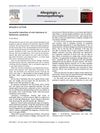
October 2011 in “Allergologia et immunopathologia” A girl with Netherton syndrome was able to eat wheat without allergies after a special treatment.
 4 citations
,
February 2022 in “International Journal of Molecular Sciences”
4 citations
,
February 2022 in “International Journal of Molecular Sciences” This review discusses the similarities between myotonic dystrophy and aging, highlighting the role of cellular senescence in its pathophysiology, and reports no new clinical findings; the authors note potential anti-aging therapy applications.
49 citations
,
August 1999 in “Journal of Investigative Dermatology” In this study, transgenic mice expressing Msx-2 developed flaky skin with hyperproliferation and misalignment in epidermal cells, suggesting Msx-2 plays a role in skin and appendage growth control.
2 citations
,
January 2024 in “Revista Paulista de Pediatria” In this case report, researchers described a 6-year-old girl with severe mandibuloacral dysplasia type A, noting unique physical deformities and a rare homozygous LMNA gene mutation not commonly associated with the condition.
June 2008 in “Wound Repair and Regeneration” In this study, Msx-2 knockout mice showed enhanced re-epithelialization and faster wound closure compared to wild-type controls, suggesting Msx-2 may influence skin morphogenesis during wound repair.
115 citations
,
December 2019 in “The Plant Journal” This study found that nitrate, rather than ammonium, significantly enhances phosphate starvation responses in plants through a regulatory cascade involving NIGT1, SPX, and PHR1 proteins.
This paper offers detailed tables of genotypic and phenotypic data on horses, including markers, variants, and haplotypes, but reports no new research results.
July 2026 in “Journal of the European Academy of Dermatology and Venereology”  76 citations
,
March 2005 in “Journal of Molecular Medicine”
76 citations
,
March 2005 in “Journal of Molecular Medicine” This study found that premature hair loss due to stress does not occur in NK-1 receptor knockout or mast cell deficient mice, suggesting a key role for neurokinin substance P and mast cell interaction in stress-related hair follicle changes.
11 citations
,
November 1991 in “Journal of Neuropathology & Experimental Neurology” This study found that brindled mottled mice, a model of Kinky hair syndrome, exhibited abnormal development of catecholamine neurons, with increased TH-immunoreactive neurons and altered neurochemical profiles compared to controls.
 December 2025 in “Cell Communication and Signaling”
 This study discovered that minoxidil affects hematopoiesis by downregulating wnt4, leading to suppression of hematopoietic stem and progenitor cells and alleviating MDS-like symptoms in zebrafish and mice, with hematologic safety achieved at optimized doses.

In this thesis, researchers explored ways to enhance the management of myotonic dystrophy type 1 by investigating the genetic inheritance patterns, especially small-sized repeat expansions, and assessing cardiac care, energy expenditure, and body composition in affected individuals.
 268 citations
,
April 2009 in “International Journal of Pharmaceutics”
268 citations
,
April 2009 in “International Journal of Pharmaceutics” In this study, niosomal formulations enhanced minoxidil skin accumulation compared to commercial and control solutions, suggesting a potential improvement for topical delivery in hair loss treatment.
10 citations
,
December 1991 in “Annals of the New York Academy of Sciences” This study found that minoxidil increases the expression of a reporter gene linked to hair growth in cultured hair follicles from transgenic mice, suggesting a potential model for studying hair biology.
 November 2022 in “The journal of investigative dermatology/Journal of investigative dermatology”
 In this case study, a 26-year-old female with PLEC mutations and features of muscular dystrophy and myasthenia gravis showed significant improvement in symptoms following steroid treatment.
 April 2026 in “Human Genome Variation”
 In this study, researchers identified a recurrent MBTPS2 splice-site variant as a mutational hotspot in IFAP syndrome across diverse families, with phenotype severity suggesting the influence of additional modifiers.
14 citations
,
August 2014 in “The FASEB Journal” This study found that the catalytically inactive serine protease CAP1/Prss8 can still induce skin disorders in mice and is subject to inhibition by nexin-1, independent of its catalytic activity.
January 2026 in “New Journal of Chemistry” This study synthesized calcium citrate nanoparticles to improve the solubility and reduce the irritation of minoxidil solutions for treating androgenetic alopecia.
April 2022 in “Microbiology and Immunology” This study suggests that a specific short sequence repeat in Malassezia restricta may be linked to increased colonization and the development or exacerbation of androgenetic alopecia.
April 2023 in “Chinese Medical Journal” In this study, human hair follicle-derived mesenchymal stem cells promoted Achilles tendon repair in rabbits by upregulating collagen types I and III, suggesting potential as a treatment for tendinopathy.
 55 citations
,
January 2016 in “Annals of Dermatology”
55 citations
,
January 2016 in “Annals of Dermatology” This study found that repeated microneedle stimulation in mice promoted hair growth and increased the expression of hair-growth-related genes, suggesting potential therapeutic uses for alopecia.
 September 2016 in “Hair transplant forum international”
 This abstract provides author information and location affiliations for a study conducted in Bangkok, Thailand, but it does not include reported results or study details.
 6 citations
,
February 1996 in “Clinical Pharmacology & Therapeutics”
6 citations
,
February 1996 in “Clinical Pharmacology & Therapeutics” Scale created to measure hair loss in men and women; MK-386 reduces acne; Niaspan treats dyslipidemia; minoxidil increases heart rate.