 March 2022 in “The Journal of Family Practice”
 Following treatment plans is crucial to prevent worsening skin and hair conditions.
 January 2020 in “Elsevier eBooks”
 This chapter provides an overview of phytochemicals with properties to combat alopecia and discusses the potential of flavonoids, found in several herbs, as a safer alternative to synthetic hair loss treatments due to their long-term skin compatibility.
 October 2019 in “Asian Journal of Research in Animal and Veterinary Sciences”
 This review discusses dermatophytosis in equines, caused primarily by T. equinum, noting its global prevalence and highlighting diagnostic methods; it reports no new clinical results.
 January 2017 in “Springer eBooks”
 Over 40% of postmenopausal women experience hair loss, with treatments aiming to stop further loss and possibly thicken hair.
 January 2017 in “Elsevier eBooks”
 This review discusses the potential of Ziziphus species and its extracted oil as new therapeutic agents in drug development and highlights the need for further studies to fully exploit this species for human health benefits.
 July 2016 in “American Journal of Dermatopathology”
 The meeting showcased rare skin disease cases, highlighting the need for accurate diagnosis and treatment.
 351 citations
,
February 2010 in “Nature Cell Biology”
351 citations
,
February 2010 in “Nature Cell Biology” Basal cell carcinoma mostly starts from cells in the upper skin layers, not hair follicle stem cells.
 330 citations
,
December 2009 in “Cell stem cell”
330 citations
,
December 2009 in “Cell stem cell” This study suggests that skin-derived precursors from Sox2(+) hair follicle dermal cells have the potential to function as dermal stem cells, supporting hair morphogenesis, dermal maintenance, and wound-healing.
 304 citations
,
July 2006 in “Journal of The American Academy of Dermatology”
304 citations
,
July 2006 in “Journal of The American Academy of Dermatology” This study found that videodermoscopy enhances diagnostic accuracy for scalp and hair disorders beyond simple clinical inspection and reveals novel disease features that could improve clinical understanding.
 211 citations
,
October 2001 in “The FASEB Journal”
211 citations
,
October 2001 in “The FASEB Journal” This study found that the BMP antagonist noggin induces hair growth in postnatal skin by neutralizing BMP4's inhibitory activity, potentially mediated by changes in Shh expression.
 184 citations
,
September 2006 in “PLoS Genetics”
184 citations
,
September 2006 in “PLoS Genetics” This study found that loss of Apc due to K14-cre-mediated gene recombination in mice led to aberrant growth in ectodermally derived squamous epithelia, implicating its critical role in specifying epithelial cell fates during embryonic development.
 131 citations
,
March 2004 in “The American journal of pathology”
131 citations
,
March 2004 in “The American journal of pathology” This study found that modulating BMP activity in transgenic mice affects the development and characteristics of several ectodermal organs, such as skin, hair, and claws, highlighting a stage-dependent influence on organogenesis.
 26 citations
,
October 2017 in “Scientific reports”
26 citations
,
October 2017 in “Scientific reports” This study found that a bacterial endophyte from Zea nicaraguensis effectively targets and colonizes plant root hair cells, promoting growth and solubilizing insoluble phosphorus for nutrient uptake.
 14 citations
,
November 2020 in “International Journal of Biological Macromolecules”
14 citations
,
November 2020 in “International Journal of Biological Macromolecules” This study found that Flammulina velutipes polysaccharides-derived scaffolds greatly enhanced wound healing and hair follicle regeneration in a rat model, particularly with the FPS/NaOH variant showing the best results.
 6 citations
,
January 2016 in “Springer eBooks”
6 citations
,
January 2016 in “Springer eBooks” Invasomes effectively deliver drugs through the skin and have potential for improved treatments.
 3 citations
,
January 2000
3 citations
,
January 2000 This chapter discusses various substances and therapies for dermatological applications, including heliotherapy, UVB, khellin, and others, but reports no new research findings.
 3 citations
,
May 1980 in “American Journal of Nursing”
3 citations
,
May 1980 in “American Journal of Nursing” Scalp tourniquets did not significantly prevent hair loss from chemotherapy.
 2 citations
,
December 2024 in “Bulletin of Rehabilitation Medicine”
2 citations
,
December 2024 in “Bulletin of Rehabilitation Medicine” In this study, chitosan glycolate sponges demonstrated the highest cell survival rates and blood absorption, highlighting their potential as hemostatic materials, whereas chitosan ascorbate sponges inhibited cell growth and metabolic activity, indicating further development is needed.
 2 citations
,
March 2020 in “International Journal of Molecular Sciences”
2 citations
,
March 2020 in “International Journal of Molecular Sciences” This article reviews advanced strategies for enhancing drug delivery to cutaneous stem cells to improve treatment for skin conditions and reports no new experimental findings.
 September 2025 in “AYUSHDHARA”
 This case report describes a 5-year-old girl with Folliculitis Decalvans, whose symptoms of scaling, itching, and painful pustules improved after two weeks of Ayurvedic treatment, suggesting this approach may be effective for managing infectious scalp diseases.
 April 2024 in “bioRxiv (Cold Spring Harbor Laboratory)”
 In this study, researchers identified a gene regulatory network in Arabidopsis that controls root hair growth under low-temperature conditions, revealing specific transcription factors and downstream targets that contribute to this growth response despite overall plant development being halted.
 January 2023 in “Editora Conhecimento Livre eBooks”
 A balanced diet with key nutrients and possible supplements can help manage post-COVID-19 symptoms.
 December 2022 in “Revista Medicina Cutánea Ibero-Latino-Americana”
 This review summarizes current knowledge on the role of the JAK/STAT signaling pathway in alopecia areata and suggests moderate efficacy of systemic inhibitors, with low adverse events but high recurrence rates.
 January 2025 in “International Journal of Biological Innovations”
 This review article discusses the potential benefits of phytochemicals in hair care, highlighting their ability to improve scalp health, reduce dandruff, and promote hair growth, while emphasizing their safety and minimal side effects compared to conventional therapies.
 June 2021 in “bioRxiv (Cold Spring Harbor Laboratory)”
 This study discovered that the gene Tfap2b identifies a melanocyte stem cell population in zebrafish, essential for regenerating melanocytes with multi-fate potential into adult pigment cells.
 March 2019 in “Applied sciences”
 This case report suggests that 1064 nm picosecond Nd:YAG laser therapy may effectively improve alopecia totalis when used as an alternative adjuvant treatment, as demonstrated in a split-scalp study showing better results than steroid treatment alone.
 July 2020 in “Environmental Science and Pollution Research”
 This study found that finasteride and melengestrol acetate exhibit varying levels of toxicity to freshwater mussels, amphipods, and mayflies, but current environmental concentrations suggest minimal direct effects on these aquatic invertebrates.
 220 citations
,
March 2020 in “Advanced functional materials”
220 citations
,
March 2020 in “Advanced functional materials” This review discusses the mechanisms and potential therapeutic benefits of mesenchymal stromal cell-derived extracellular vesicles delivered via biomaterials, but reports no new clinical results.
 10 citations
,
May 2018 in “Neuropharmacology”
10 citations
,
May 2018 in “Neuropharmacology” This study suggests that inhibitors of steroidogenic enzymes may have therapeutic potential for certain behavioral disorders linked to dopaminergic hyperfunction, despite concerns about their endocrine impacts.
 48 citations
,
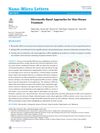
February 2025 in “Nano-Micro Letters”
48 citations
,
February 2025 in “Nano-Micro Letters” This review summarizes the application of microneedles in treating various skin diseases and highlights challenges like low drug loading, noting no new clinical results are reported.