46 citations
,
November 2019 in “Journal of Integrative Plant Biology” This study found that calmodulin 7 (CaM7) inhibits the calcium channel CNGC14 in root hairs, affecting their polar growth by controlling calcium signaling.
34 citations
,
May 2001 in “Endocrinology” This study found that MRP3 is induced in wound edge keratinocytes during wound healing and may play a role as a growth or angiogenesis factor in this process and the hair follicle cycle.
January 1964 in “OSTI OAI (U.S. Department of Energy Office of Scientific and Technical Information)” This study found that platelet-secreted chemokines like CXCL7 are crucial for early neutrophil recruitment and efficient muscle regeneration in injured mice.
505 citations
,
October 2011 in “Journal of clinical oncology” This phase I study found that MK-2206 was well tolerated and demonstrated evidence of AKT signaling blockade in patients with advanced solid tumors, with the maximum-tolerated dose established at 60 mg.
15 citations
,
June 2020 in “The journal of investigative dermatology/Journal of investigative dermatology” This study identifies KLK14 as a significant factor contributing to hair defects and skin inflammation in a mouse model of Netherton syndrome.
22 citations
,
August 1999 in “Mechanisms of Development” This study identified two novel genes, pmg-1 and pmg-2, expressed in various skin and gland tissues and potentially involved in the differentiation of epithelial cells in epidermal appendages.
53 citations
,
October 2003 in “Genetics” This study identified a mutation hotspot in the caracul (Ca) locus of mice, implicating the mK6irs1/Krt2-6g gene in hair formation and potentially human hair and skin diseases.
 3 citations
,
December 2021 in “Recent patents on anti-cancer drug discovery”
3 citations
,
December 2021 in “Recent patents on anti-cancer drug discovery” This review examines the role of SET7/9 in non-histone methylation and its implications in various diseases, including cancer, but presents no new clinical results.
 133 citations
,
May 2016 in “Cell Host & Microbe”
133 citations
,
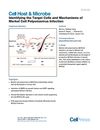
May 2016 in “Cell Host & Microbe” In this study, human dermal fibroblasts were identified as natural host cells that support productive Merkel cell polyomavirus infection, and the MEK antagonist trametinib was introduced as an effective inhibitor to control the virus.
 20 citations
,
May 2013 in “International Journal of Molecular Medicine”
20 citations
,
May 2013 in “International Journal of Molecular Medicine” This study identified a novel missense MAFB variant in a family with some unaffected members, suggesting incomplete penetrance and the potential influence of modifier genes, epigenetic mechanisms, or environmental factors on MCTO phenotype.
32 citations
,
January 2020 in “Journal of Molecular Histology” This research identified K31 as a new marker for distinguishing clear secretory cells in human eccrine sweat glands, aiding in differentiating between distinct cell types within these glands.
February 2026 in “Toxicology Letters” This study used an in silico/in vitro approach to identify potential inhibitors of the enzyme SRD5A2, finding that the androgen receptor modulator MK-0773 is a moderate inhibitor, although it does not act as a covalent inhibitor like finasteride.
3 citations
,
May 2018 in “The Indian Journal of Animal Sciences” This study suggests that the KAP 7 gene may serve as a potential molecular marker for genetic selection to improve staple length and greasy fleece weight in Rambouillet sheep.
December 2015 in “OPAL (Open@LaTrobe) (La Trobe University)” In human hair follicle keratinocytes, this study found that treatment with the pharmacological inhibitor QLT0267 led to a strong inhibition of proliferation and migration and induced nearly 100% apoptosis.
10 citations
,
January 2004 in “Journal of Investigative Dermatology” Krt6a-Cre transgenic mice help study gene effects on hair follicle development and tumor suppression.
 6 citations
,
August 2015 in “Journal of Molecular Histology”
6 citations
,
August 2015 in “Journal of Molecular Histology” Caspase-7 has functions in skin and hair that are not related to cell death.
This study found that overexpression of antizyme in mice with activated MEK reduced skin tumor growth by inhibiting putrescine accumulation, slowing cell growth, and increasing G2/M transit time.
1 citations
,
October 1988 in “Clinics in Dermatology” Scientists identified and cloned specific keratin proteins in mouse hair.
57 citations
,
January 1987 in “Journal of Biological Chemistry” This study identified and sequenced several keratin cDNA clones showing distinct expression patterns in mouse epithelia, with in situ hybridization highlighting differences in keratin distribution between normal and hyperproliferative tissues.
 March 2026 in “The Indian Journal of Animal Sciences”
 This study on Indian dromedary camel breeds investigated the KRTAP7 protein, finding all four breeds shared an identical gene sequence, with 13 phosphorylation and glycosylation sites influencing hair characteristics, alongside predicted interactions with other biosynthesis-related proteins.
 2 citations
,
December 2022 in “Pharmaceutics”
2 citations
,
December 2022 in “Pharmaceutics” This study found that activating both PKM2 and Wnt/β-catenin signaling pathways significantly enhanced hair regrowth and hair follicle neogenesis in mice, suggesting a potential strategy for treating alopecia.
August 2001 in “The Journal of Cell Biology” In this study, the researchers identified a third keratin 6 gene in mice and developed a double knockout model that could aid in hair growth research.
 10 citations
,
September 1997 in “Molecular carcinogenesis”
10 citations
,
September 1997 in “Molecular carcinogenesis” This study found that mirex and TPA promote papilloma formation in CD-1 mouse skin through distinct populations of mutant Ha-ras cells, resulting in additive tumor yields.
26 citations
,
October 2018 in “Cancer Management and Research” This study suggests that elevated DKK1 expression, influenced by promoter methylation, is a significant prognostic biomarker for patients with head and neck squamous cell carcinoma.
42 citations
,
September 2003 in “Journal of Investigative Dermatology” A missing mK6irs1 gene causes hair loss in mice.
 4 citations
,
September 2010 in “Journal of Dermatological Science”
4 citations
,
September 2010 in “Journal of Dermatological Science” This article reviews keratosis follicularis squamosa, a keratinizing disorder predominantly found in the Japanese population, but reports no new clinical results.
2 citations
,
May 2019 in “Small ruminant research” This study identified polymorphisms in HGT-KRTAP7-1 and KRTAP8-1 genes in Argentine llamas that may impact fiber characteristics by altering amino acid residues critical for keratin-associated protein properties.
 September 2024 in “Journal of Medicine and Life”
 In this study, researchers identified a recurrent nonsense mutation, c.409C>T (p.Arg137*), in the COL7A1 gene through whole exome sequencing in a family with autosomal recessive dystrophic epidermolysis bullosa, demonstrating the importance of this method for diagnosing genetically complex conditions.
July 2024 in “Journal of Investigative Dermatology” This study found that systemic treatment with DS77754007, a KLK5 inhibitor, improved skin symptoms in a mouse model of Netherton Syndrome more effectively than certain antibody treatments, suggesting KLK5 inhibition as a promising therapeutic approach for this condition.
 November 2023 in “The journal of investigative dermatology/Journal of investigative dermatology”
 In this study, mice lacking the Mcpip1 gene in their myeloid cells did not develop SCC-like tumors but instead showed increased melanocyte activity and hair loss, indicating a distinct role for myeloid Mcpip1 in skin cancer development compared to keratinocyte Mcpip1.