1 citations
,
June 2015 in “Journal of anatomy” This study reported that novel kainate derivatives, especially ZCZ90, maintained potency in affecting proprioceptive sensory organ firing, aiding future receptor studies for potential treatment innovations.
3 citations
,
October 2024 in “Frontiers in Pharmacology” This laboratory study found that PI extract, along with its metabolites Ang and Mac, inhibited cell proliferation and protein expression linked to pathways involved in BPH, suggesting potential for therapeutic use, although the Ang-Mac combination showed no significant effect on apoptosis through the p53 pathway.

In this study, researchers engineered extracellular vesicles enriched with functional mitochondria to enhance healing in diabetic wounds by reversing mitochondrial and immunometabolic dysfunction in macrophages.
248 citations
,
September 2006 in “PLANT PHYSIOLOGY” This study observed that extracellular ATP is present in Medicago truncatula and correlates with regions of active cell growth, suggesting its integral role in plant development.
 August 2026 in “Nature Communications”
 This study found that early mitochondrial reprogramming, specifically through fatty acid oxidation fueling oxidative phosphorylation, is crucial for initiating differentiation in epidermal stem cells, highlighting a potential therapeutic target for differentiation defects in skin disorders.
75 citations
,
June 2007 in “Journal of Biological Chemistry” This study found that the combination of MT-DADMe-ImmA and MTA selectively induced apoptosis in head and neck squamous cell carcinoma cell lines FaDu and Cal27, but not in normal fibroblasts or MTAP-deficient breast cancer cells.
 29 citations
,
April 2019 in “Acta neuropathologica communications”
29 citations
,
April 2019 in “Acta neuropathologica communications” This study found that β-sitosterol, a brain-penetrable phytosterol, reduced melanoma cell growth and brain metastasis formation by interfering with mitochondrial respiration, suggesting its potential as an adjuvant therapy to BRAF inhibitors for patients with melanoma brain metastases.
 74 citations
,
June 2018 in “Cell death and disease”
74 citations
,
June 2018 in “Cell death and disease” In this study, researchers found that depleting mtDNA in mice caused skin wrinkles and hair loss but restoring mitochondrial function reversed these effects, highlighting mtDNA's significant role in skin and hair health.
 November 2022 in “bioRxiv (Cold Spring Harbor Laboratory)”
 This study found that conditional deletion of Mof in mice resulted in severe defects in skin development, including compromised epidermal differentiation and hair growth, leading to perinatal lethality.
39 citations
,
January 2010 in “Trends in Parasitology” This opinion article explores the possibility of repurposing anticancer drugs, like methotrexate, as antimalarials, highlighting that toxicity might be manageable with appropriate dosing according to Paracelsus' law.
January 2024 in “International Journal of Physics and Applications” This review discusses the therapeutic effects of soft laser therapy on humans and animals, highlighting increased ATP and reactive oxygen species production in cells with high mitochondrial activity.
January 2026 in “Biochemical Pharmacology” This study investigated how the antioxidant MitoQ and the enzyme CYP19A1 influence mitochondrial function in androgenetic alopecia. In a mouse model, both CYP19A1 overexpression and MitoQ treatment improved mitochondrial health and reversed DHT-induced hair loss factors, suggesting potential therapeutic targets for this condition.
 3 citations
,
September 2020 in “Molecular Brain”
3 citations
,
September 2020 in “Molecular Brain” This study reports that Elvitegravir, a drug currently approved for other uses, shows potential as a neuro- and mitoprotective agent by attenuating mitochondrial damage caused by NMDA receptors in primary mouse cortical neurons.
March 2024 in “International journal of molecular sciences” This review summarizes current literature associating mitochondrial dysfunction with dermatologic issues like skin aging, hair loss, and poor wound healing, noting potential benefits in targeting mitochondrial components for treatments.
384 citations
,
January 2008 in “Journal of Internal Medicine” This review discusses the role of mitochondrial dysfunction in the ageing process and reports that its significance compared to other factors in mammalian ageing remains uncertain.
 6 citations
,
April 2021 in “Scientific Reports”
6 citations
,
April 2021 in “Scientific Reports” This study found that Phytochrome A is crucial for regulating central metabolism and the transition to mature seedling proteomes in tomato seedlings grown under far-red light.
2 citations
,
January 2025 in “Journal of Nanobiotechnology” This study demonstrated that genetically engineered, ATP-responsive nanozymes effectively reduce cardiac fibrosis by targeting activated cardiac fibroblasts, resulting in decreased myofibroblast accumulation and improved cardiac function, suggesting that this approach has significant potential for therapeutic applications.
1 citations
,
March 2018 in “F1000Research” This study found that diazepam has an exaggerated effect on GABAergic inhibitory tone in diabetic neuropathy mouse models, likely due to upregulated neurosteroidogenic enzymes responding to mitochondrial dysfunction.
5 citations
,
March 2017 in “Molecular biology of the cell” This article summarizes discussions from a minisymposium on organelle contact sites, highlighting new insights into their roles in cellular processes, but reports no novel experimental results.
 1 citations
,
January 2022 in “European Journal of Pharmacology”
1 citations
,
January 2022 in “European Journal of Pharmacology” In this study, FMN was found to inhibit androgen receptor function and androgen-regulated gene expression in prostate cancer cells, suggesting potential as an antiandrogen therapy.
 506 citations
,
January 2012 in “Molecular and Cellular Endocrinology”
506 citations
,
January 2012 in “Molecular and Cellular Endocrinology” This review details the expression and diverse functions of melatonin receptors in non-neural tissues and reports no new clinical findings, emphasizing their potential as therapeutic targets across various physiological and pathological processes.
222 citations
,
August 2014 in “Cell Metabolism” In this study, researchers found that mitochondrial complex I plays a crucial role in regulating innate immunity and bone remodeling, with Ndufs4 deletion causing systemic inflammation and osteopetrosis through various metabolic shifts and cellular mechanisms.
 13 citations
,
May 2011 in “Bioorganic & Medicinal Chemistry”
13 citations
,
May 2011 in “Bioorganic & Medicinal Chemistry” This study identified certain benzopyran derivatives with a bulky tert-butyloxycarbonylamino group as effective KATP channel openers that inhibit insulin secretion in rat pancreatic islets.
March 2022 in “Biomedical Journal of Scientific & Technical Research” This review discusses therapeutics for mitochondrial dysfunction and reports no new clinical findings.
May 2019 in “CINECA IRIS Institutial Research Information System (University of Genoa)” This study found that patients with the MITF p.E318K variant are more likely to develop multiple primary melanomas and dysplastic nevi with uncommon dermoscopic patterns compared to non-carriers.
 1 citations
,
January 2025 in “International Research Journal of Multidisciplinary Scope”
1 citations
,
January 2025 in “International Research Journal of Multidisciplinary Scope” This review systematically summarizes the ethnopharmacology, phytochemistry, and pharmacological activities of Caryota mitis, highlighting its rich phytochemical profile and potential uses in treating various ailments, though many traditional uses still require further scientific validation.
January 2015 in “Journals & Books Hosting (International Knowledge Sharing Platform)” This study synthesized and evaluated five 6-mercaptopurine derivatives for anticancer activity against three cancer cell lines, detailing the promising results of compound 1.
 December 2020 in “Innovation in aging”
 This study suggests that inhibiting PKC, similar to rapamycin treatment, can extend lifespan and reduce neurological symptoms and inflammation in mice with mitochondrial dysfunction, potentially involving the mTORC2 pathway.
 December 2023 in “Journal of ethnopharmacology”
 This study found that tribuloside, a flavonoid from Tribulus terrestris L., enhances melanin production in human melanocytes, zebrafish, and human skin samples without causing toxicity, potentially through inhibiting PDE to increase cAMP levels and promote the melanin biosynthesis pathway.
 133 citations
,
May 2016 in “Cell Host & Microbe”
133 citations
,
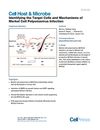
May 2016 in “Cell Host & Microbe” In this study, human dermal fibroblasts were identified as natural host cells that support productive Merkel cell polyomavirus infection, and the MEK antagonist trametinib was introduced as an effective inhibitor to control the virus.