
This article discusses a novel device for applying mediums to human and animal tissues and reports no new clinical results, focusing on its potential for precise applications and enhanced cell transplants.
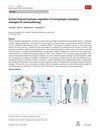
This review highlights that surface mechanical regulation can program macrophage behavior through specific mechanical cues on material surfaces, potentially advancing immunotherapies and regenerative medicine by enabling precise control over macrophage functions.
11 citations
,
January 2022 in “Methods in cell biology”  1 citations
,
January 2000 in “Journal of pharmacopuncture”
1 citations
,
January 2000 in “Journal of pharmacopuncture” This study confirmed that microneedle therapy systems (MTS) significantly improve hair growth and skin conditions, including acne and acne scars, without serious side effects.
May 2026 in “Drug Delivery” This study introduces a co-design framework using finite element analysis to optimize separable bubble microneedles, demonstrating enhanced transdermal and sublingual drug delivery in preclinical models. In vivo results showed faster hair regrowth and glucose lowering in animals, indicating potential improvements over traditional methods.
21 citations
,
October 2025 in “Advanced Materials” This study found that a newly created biomimetic microneedle platform effectively expedited wound repair in diabetic animal models by reducing inflammation, enhancing angiogenesis, and promoting skin regeneration through targeted drug delivery and immune response modification.
 1 citations
,
December 2023 in “Scientific reports”
1 citations
,
December 2023 in “Scientific reports” This study investigated the use of 3D cell culture technology to explore hair follicle regeneration, examining the impact of the 3D cellular environment on hair follicle morphogenesis and the effects of microwell depth on spheroid formation.
 September 2025 in “Medical Materials Research”
 This review explores the recent developments and diverse applications of microneedles in drug delivery and diagnostic platforms but reports no new clinical results.

This study found that finite element analysis-guided design improved bubble microneedles' controlled tip separation and insertion strength, supporting effective transdermal and sublingual drug delivery.
 25 citations
,
August 2010 in “Acta Biomaterialia”
25 citations
,
August 2010 in “Acta Biomaterialia” This study achieved a first by successfully forming large quantities of dermal papilla spheroidal microtissues, which retained their hair induction potential, using a micropatterned culture system.
63 citations
,
February 2010 in “Journal of Neurophysiology” This study observed that electrical stimulation of specific mechanoreceptive afferents in the orofacial region can evoke sensations consistent with their response properties, while others may require multiple afferents to access perceptual levels.

This study developed a directional pressure-pump hydrogel delivery platform that enhances wound healing in diabetic mechanically dynamic wounds by targeting antibacterial agents and nanozymes directly to the lesion site, disrupting biofilms, mitigating tissue damage, and supporting proper skin closure and vascular remodeling in animal models.
1 citations
,
August 2025 in “Frontiers in Pharmacology” This review discusses advancements in using dissolving microneedle systems for transdermal delivery of traditional Chinese medicine, highlighting potential benefits for simplifying application, enhancing safety, and increasing efficacy, and underscores its possible impact on modernizing traditional medicine practices.
 August 2026 in “npj Flexible Electronics”
 This review outlines the potential of soft bioelectronics in wound care, emphasizing their ability to monitor and manage wounds through integrated smart systems and identifying challenges for future advancements in the field.
 4 citations
,
January 2022 in “Yonsei Medical Journal”
4 citations
,
January 2022 in “Yonsei Medical Journal” This article discusses the potential of novel microneedle transdermal systems for enhanced drug and vaccine delivery through the skin, but reports no clinical results and emphasizes ongoing trials.
December 2025 in “eScience” This study presents a new wireless bioelectronic system powered by ambient Wi-Fi signals that enhances wound healing by providing electrical stimulation and real-time monitoring, offering a promising solution for at-home treatment and regenerative therapy.
August 2018 in “Zenodo (CERN European Organization for Nuclear Research)” This review discusses the history and evolution of techniques for detecting bioelectromagnetic emissions from living tissues, exploring potential medical applications, but does not present new experimental results.
17 citations
,
September 2022 in “Biomaterials Research” This study found that the film-trigger applicator system enhanced drug delivery efficiency and skin penetration of dissolving microneedles compared to traditional patch systems in both lab and animal models.
March 2026 in “ACS Applied Materials & Interfaces” This study introduced an innovative nanozyme system called MCP@G, which was shown to improve diabetic wound healing in rats by alleviating mitochondrial oxidative stress, enhancing fibroblast migration, and promoting blood vessel and hair follicle regeneration, offering a promising approach for treating challenging diabetic wounds.
July 2026 in “Organoid Research” This review focuses on hydrogel microsphere-mediated strategies to improve organoid culture by addressing deficiencies in extracellular matrix organization, potentially enhancing the physiological accuracy and clinical translatability of osteomuscular in vitro models as reported in this study.
1 citations
,
January 2001 in “PubMed” This study proposes that the terminal tuft structure in sensory nerve endings, involving Schwann cell processes and axon fingers, potentially plays a role in mechano-electric transduction in rats.
 1 citations
,
August 2018 in “International Journal of Research -GRANTHAALAYAH”
1 citations
,
August 2018 in “International Journal of Research -GRANTHAALAYAH” This review discusses the history and development of techniques for detecting bioelectromagnetic emissions in living tissue and reports no new experimental results; potential medical applications are explored.
10 citations
,
April 2018 in “Journal of Mind and Medical Sciences” This article argues that the mind-body problem is a false issue, proposing that the mind merely temporally associates immaterial data with material support without actual interaction.
 1 citations
,
December 2014 in “Scanning”
1 citations
,
December 2014 in “Scanning” This study used multiphoton microscopy to successfully visualize rabbit skin microstructure, highlighting its noninvasive potential for future skin research related to diseases and wound healing.
 5 citations
,
January 2021 in “IEEE Access”
5 citations
,
January 2021 in “IEEE Access” In this study, researchers demonstrated that treating platelet rich plasma with microsecond pulsed electric fields effectively activates platelets and induces similar or higher growth factor release compared to traditional bovine thrombin, suggesting a potential clinical use that may be more cost-effective and practical.
April 2026 in “Biomaterials”  April 2018 in “Journal of Investigative Dermatology”
 This paper presents a new methodology combining magnetic tweezers and traction force microscopy to study keratinocyte mechanobiology, but reports no experimental results yet.
April 2017 in “bioRxiv (Cold Spring Harbor Laboratory)” This study introduced the dual-flow-RootChip platform to demonstrate that Arabidopsis roots exhibit non-autonomous adaptations, such as hair growth regulation, when subjected to varied environmental conditions on opposite sides.
 1 citations
,
May 2001 in “Proceedings of SPIE, the International Society for Optical Engineering/Proceedings of SPIE”
1 citations
,
May 2001 in “Proceedings of SPIE, the International Society for Optical Engineering/Proceedings of SPIE” This paper presents an RGB video microscopic system to monitor optical properties of hair shafts and follicles in vitro, but reports no new clinical results.
February 2023 in “Default Digital Object Group” This study demonstrated that a single multimode fiber can be used for single-shot wide-field reflectance imaging, achieving high correlation with the ground truth and enabling real-time microendoscopy at up to 180 frames per second.