6 citations
,
July 2004 in “JDDG Journal der Deutschen Dermatologischen Gesellschaft” This case report documents two postmenopausal women with frontal fibrosing alopecia whose hair loss stabilized after treatment with topical corticosteroids, one also using minoxidil.
This study found that fibroblast growth factor 20 (Fgf20) orchestrates the movement and behavior of dermal fibroblasts, directing their formation into dermal condensates during hair follicle development in mice.
2 citations
,
July 2012 in “BMJ” In this case report, a woman initially misdiagnosed with rosacea was later correctly diagnosed with frontal fibrosing alopecia after further examination and treated with oral finasteride and hydroxychloroquine to stabilize her condition.
 2 citations
,
July 2022 in “Stem cell research & therapy”
2 citations
,
July 2022 in “Stem cell research & therapy” This study found that a large number of pelage hair follicle mesenchymal stem cells can be efficiently isolated using two-step Ficoll Density Gradient Sedimentation, promoting hair growth by secreting exosomes in mice.
 103 citations
,
June 2018 in “International Journal of Molecular Sciences”
103 citations
,
June 2018 in “International Journal of Molecular Sciences” This review discusses the applications and research on fibroblast growth factors, including their use in wound healing, diabetes, and cancer, but it reports no new clinical results.
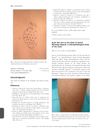 31 citations
,
April 2010 in “British journal of dermatology/British journal of dermatology, Supplement”
31 citations
,
April 2010 in “British journal of dermatology/British journal of dermatology, Supplement” This report describes two patients with frontal fibrosing alopecia who developed acute hair loss on their limbs, revealing that the limb alopecia had similar histological features to scalp alopecia.
51 citations
,
May 1984 in “Journal of the American Academy of Dermatology” In this study, the authors observed that cell-mediated immune mechanisms may be involved in the pathogenesis of benign follicular mucinosis, based on the cellular and immunological characteristics of two patient cases.
 March 2005 in “Journal of The American Academy of Dermatology”
 Mycophenolate mofetil improved skin condition in a man with nephrogenic fibrosing dermopathy.
 20 citations
,
January 2017 in “Scientific reports”
20 citations
,
January 2017 in “Scientific reports” This study found that cetaceans have adapted their fibroblast growth factors to assist in low bone density, hypoxia tolerance, and the development of rigid flippers, reflecting significant evolutionary changes for aquatic life.
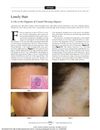 63 citations
,
October 2011 in “Archives of Dermatology”
63 citations
,
October 2011 in “Archives of Dermatology” Isolated long hairs at the original hairline can help diagnose Frontal Fibrosing Alopecia.
54 citations
,
November 2007 in “Actas Dermo-Sifiliográficas” Early diagnosis of frontal fibrosing alopecia is crucial to prevent permanent hair loss.
 37 citations
,
August 2012 in “European Journal of Obstetrics & Gynecology and Reproductive Biology”
37 citations
,
August 2012 in “European Journal of Obstetrics & Gynecology and Reproductive Biology” In this study, a modified Ferriman-Galwey score greater than 4 was found to be effective for diagnosing hirsutism in Asian women, highlighting key areas such as the upper lip, thighs, and lower abdomen.
 October 2023 in “Al-Anbar medical journal”
 This study found that a new clinic-based modified hair fall count method is a valid tool for assessing hair loss in women, showing strong association and high precision compared to the conventional home-based method.
 November 2022 in “The journal of investigative dermatology/Journal of investigative dermatology”
 This study suggests that allergens like linalool found in personal care products may contribute to the pathobiology of frontal fibrosing alopecia by affecting immune responses and stem cell function in hair follicles.
May 2025 in “Skin Appendage Disorders” In this case study, a 74-year-old patient with frontal fibrosing alopecia displayed unique trichoscopic and histopathological features, and treatments like 5-alpha reductase inhibitors and oral minoxidil effectively halted disease progression, highlighting the importance of comprehensive facial analysis for prognosis.
3 citations
,
December 2024 in “Journal of Animal Physiology and Animal Nutrition” In this study, researchers found that reducing FGF20 expression in dermal papilla cells of fine-wool sheep impedes the growth and differentiation of hair follicle stem cells, providing insights into wool trait improvement and regenerative medicine applications.
 June 2021 in “International journal of research in dermatology”
 This report describes a child and his father with hereditary hypotrichosis simplex, an uncommon isolated form of hair loss, with no other ectodermal or systemic abnormalities noted.
3 citations
,
June 2016 in “JEADV. Journal of the European Academy of Dermatology and Venereology/Journal of the European Academy of Dermatology and Venereology” This letter to the editor describes a case of postcast hypertrichosis in a patient with frontal fibrosing alopecia and reports no new research findings.
 May 2019 in “The Journal of Sexual Medicine”
 This study found no baseline factors that predicted flibanserin efficacy for HSDD, though low testosterone or use of hormonal contraceptives were associated with reduced efficacy.
 33 citations
,
August 2013 in “British Journal of Dermatology”
33 citations
,
August 2013 in “British Journal of Dermatology” Lack of small, fine hair on the front hairline is a key sign of frontal fibrosing alopecia.
13 citations
,
February 2024 in “World Journal of Stem Cells” This review examined the role of molecular markers in isolating and tracing hair follicle stem cells, emphasizing their regulatory roles as revealed by single-cell transcriptomics data.
 123 citations
,
August 2005 in “Journal of the European Academy of Dermatology and Venereology”
123 citations
,
August 2005 in “Journal of the European Academy of Dermatology and Venereology” In this study, the researchers observed that treatment with intralesional and topical corticosteroids, finasteride, and minoxidil may stop the progression of frontal fibrosing alopecia in postmenopausal and premenopausal women.
 5 citations
,
April 2019 in “Journal of The American Academy of Dermatology”
5 citations
,
April 2019 in “Journal of The American Academy of Dermatology” This review discusses the complex nature of frontal fibrosing alopecia, suggesting it is a misnomer and possibly a subset of lichen planopilaris, but reports no new clinical results.
 July 2023 in “Journal of Education, Health and Sport”
 This literature review reports that micro-needle radiofrequency is increasingly recognized in aesthetic medicine as a safe, effective treatment for various skin conditions, but further research is needed to optimize treatment parameters for the best outcomes.
23 citations
,
March 2017 in “JAAD case reports” This study reports a new family with hereditary fibrosing poikiloderma (POIKTMP) and identifies a pancreatic cancer occurrence in a family member, raising questions about FAM111B's role as a potential cancer predisposition gene.
 89 citations
,
February 2002 in “Australasian journal of dermatology”
89 citations
,
February 2002 in “Australasian journal of dermatology” This case report describes the first known instance of fibrosing alopecia associated with cutaneous lichen planus, suggesting fibrosing alopecia may be a variant of lichen planopilaris.
 January 2019 in “Springer Reference Medizin”
 This article reviews the role of factor Xa inhibitors like Rivaroxaban and suggests they may eventually replace vitamin K antagonists, but their side effects require further clarification.
 8 citations
,
December 2017 in “Journal of The American Academy of Dermatology”
8 citations
,
December 2017 in “Journal of The American Academy of Dermatology” This correspondence discusses the diagnostic criteria for frontal fibrosing alopecia but reports no new research findings, agreeing with many previously suggested criteria.
January 2026 in “Dermatologic Therapy” This study found that treatment with human foreskin fibroblast conditioned medium improved both objective measures like hair density and subjective satisfaction in patients with androgenetic alopecia.
 14 citations
,
November 2013 in “PloS one”
14 citations
,
November 2013 in “PloS one” This study found that transgenic mice overexpressing HGF/SF are more susceptible to UVA-induced melanoma, with melanin in the papillary dermis interacting with UVA to induce melanoma.