28 citations
,
June 2015 in “Journal of circadian rhythms” This study found that extreme morning and evening chronotypes exhibited significant differences in the timing of circadian clock gene expression in hair follicle cells.
 36 citations
,
July 2016 in “Scientific reports”
36 citations
,
July 2016 in “Scientific reports” This study found that decision-making effects related to time of day and chronotype were only significant when using RNA-based chronotype measurements, indicating molecular clock differences may influence these behaviors.
December 2010 in “Journal of the American Geriatrics Society” This article highlights the complexity of diagnosing hyponatremia in older adults, emphasizing the need to evaluate urinary tract obstruction, medication effects, and age-related changes rather than relying solely on spot urinary values.
September 2022 in “Journal of The American Academy of Dermatology” This study examined the incidence of hyperkalemia in women over 65 with female pattern hair loss and spironolactone use, but the findings on risk remain unclear.
August 2026 in “Journal of Cosmetic Dermatology” This study found that platelet-rich plasma showed similar efficacy to intralesional triamcinolone acetonide for treating mild patch-type alopecia areata, offering a potential alternative with fewer steroid-related side effects.
January 2025 in “Green energy and technology”  88 citations
,
December 2018 in “Advanced Healthcare Materials”
88 citations
,
December 2018 in “Advanced Healthcare Materials” This review outlines the current state and future prospects of using layer-by-layer self-assembly for cell encapsulation in biomedical applications, such as cell-based biosensors, transplantation, and tissue engineering, while also discussing its limitations and potential advancements.
 9 citations
,
March 2011 in “Clinical and experimental dermatology”
9 citations
,
March 2011 in “Clinical and experimental dermatology” This paper discusses the concept of "coudability," a characteristic of alopecia areata, and provides a historical perspective, but it reports no new clinical results.
 1 citations
,
August 1978 in “Dicp-The annals of pharmacotherapy”
1 citations
,
August 1978 in “Dicp-The annals of pharmacotherapy” A liquid protein diet caused hair loss in a young woman.
 January 1989 in “Side effects of drugs annual”
 This chapter reviews studies on the side effects of cytostatics and immunosuppressive drugs, detailing various toxicities such as cardiovascular, pulmonary, and neurotoxicity, but provides no new clinical results.
 15 citations
,
May 2003 in “American Journal of Kidney Diseases”
15 citations
,
May 2003 in “American Journal of Kidney Diseases” This case report describes a hemodialysis patient whose hair loss reversed after switching from tinzaparin to enoxaparin, suggesting tinzaparin-induced alopecia.
 12 citations
,
January 2019 in “Sleep medicine”
12 citations
,
January 2019 in “Sleep medicine” This study found that night shift work disrupts clock gene expression in Japanese men, particularly affecting rhythms and levels of Period3 and Nr1d2, based on the shift schedule.
 12 citations
,
January 1984 in “Anesthesia & Analgesia”
12 citations
,
January 1984 in “Anesthesia & Analgesia” This abstract provides only publication and correspondence details; it does not present any study findings or results.
 6 citations
,
May 2010 in “The Journal of Dermatology”
6 citations
,
May 2010 in “The Journal of Dermatology” A woman with anorexia developed gout from self-induced vomiting.
 6 citations
,
September 1988 in “Drug intelligence & clinical pharmacy”
6 citations
,
September 1988 in “Drug intelligence & clinical pharmacy” This report documents a case of dermatological toxicity associated with chronic minoxidil therapy, highlighting the emergence of a severe rash after three years of use, which recurred upon inadvertent rechallenge.
 3 citations
,
January 2019 in “Elsevier eBooks”
3 citations
,
January 2019 in “Elsevier eBooks” This article discusses the importance of interpreting laboratory data and performing physical assessments to support pharmacists in clinical decision-making and patient consultations, but reports no new empirical findings.
 1 citations
,
October 2024 in “Journal of Nepal Paediatric Society”
1 citations
,
October 2024 in “Journal of Nepal Paediatric Society” In this case report, the authors highlight a 20-month-old girl with nephrotic syndrome who experienced severe alopecia due to an accidental high dose of cyclosporine; her hair regrew after the drug was stopped.
 January 2023 in “World Journal of Clinical & Medical Images”
 This report discusses a late-onset case of Cronkhite-Canada syndrome that improved with prednisone treatment, highlighting the importance of early diagnosis to reduce life-threatening complications.
 November 2022 in “Journal of the Endocrine Society”
 This case study reports that immunotherapy with ipilimumab and nivolumab induced hypophysitis in a patient with renal cell carcinoma, emphasizing the need for careful monitoring of endocrine function in such treatments.
 February 2019 in “Neoreviews”
 This case report details the diagnosis and management of argininosuccinate lyase deficiency in an infant, emphasizing initial symptoms, treatment strategies, and subsequent liver transplant leading to recovery.
 December 2018 in “Progress in Medical Sciences”
 This study observed that methanol extract of Phoenix dactilifera improved kidney function in rats at 4 and 8 mg/kg doses, but a 16 mg/kg dose may impair kidney function by affecting urea and potassium excretion.
 July 2018 in “Kidney international”
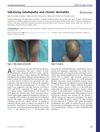
 This case study describes a 9-year-old girl with a homozygous EGFR gene mutation, presenting with tubulopathy and chronic dermatitis, whose ongoing symptoms and management offer insights into this rare genetic condition.
 January 2014 in “Progress of Digestive Endoscopy”
 This case report describes a 60-year-old woman with Cronkhite-Canada syndrome whose symptoms and polyposis improved following prednisolone therapy, but emphasizes the need for periodic digestive tract screening due to associated cancer risks.
 December 2025 in “GeroScience”
 This study found that both genetic and epigenetic factors significantly influence age-related facial skin aging, with lifestyle and environmental factors also playing a substantial role.
 July 1988 in “Journal of The American Academy of Dermatology”
 This article reviews therapeutic advances published between December 1986 and December 1987 but reports no new research findings; readers are advised to consult the original articles before considering new therapies.
 421 citations
,
January 2015 in “Chemical Society Reviews”
421 citations
,
January 2015 in “Chemical Society Reviews” This review discusses recent advances in surface modification and endothelialization of biomaterials for vascular grafts, highlighting promising methods like gene engineering and targeting ligand immobilization to improve clinical outcomes.
 180 citations
,
July 1973 in “The New England Journal of Medicine”
180 citations
,
July 1973 in “The New England Journal of Medicine” In this study, minoxidil effectively reduced blood pressure to near normal levels in patients with malignant or accelerated hypertension resistant to conventional treatments, offering a potential alternative to nephrectomy.
 176 citations
,
August 1981 in “JAMA”
176 citations
,
August 1981 in “JAMA” This study reported that toxic shock syndrome, originally noted in children, is now predominantly associated with menstruating women, with some experiencing recurrence and complications like vocal cord paralysis and impaired finger sensation.
 157 citations
,
May 2021 in “Endocrine Reviews”
157 citations
,
May 2021 in “Endocrine Reviews” This review discusses recent advancements in understanding and managing congenital adrenal hyperplasia, including improvements in screening, diagnostics, and potential genetic and cell-based treatments, but reports no new clinical findings.
 155 citations
,
August 1991 in “Journal of The American Academy of Dermatology”
155 citations
,
August 1991 in “Journal of The American Academy of Dermatology” This article reviews methotrexate's pharmacokinetics and toxicity, emphasizing the role of urinary excretion and leucovorin in avoiding most toxic reactions; it provides no new clinical results.