 January 2024 in “Frontiers in endocrinology”
 This study found that genetic variants linked to hypothyroidism significantly increased the risk of developing alopecia areata, suggesting a causative connection between the two conditions.
 September 2023 in “Gynäkologische Endokrinologie”
 This review discusses how the hormonal changes of menopause affect skin and hair, highlighting improvements in skin symptoms like dryness and reduced wound healing with estrogen supplementation, and advises healthcare providers to consider broader potential benefits of menopausal hormone therapy when consulting patients.
This article describes the significant emotional and psychological impact of female pattern hair loss on menopausal women, leading many to seek medical treatment to improve their quality of life and self-esteem.
This study found that a hair mask made from bitter gourd effectively reduced hair loss and dandruff among participants, though the authors note the need for clinical trials and durability tests for further validation.
 November 2022 in “Journal of Investigative Dermatology”
 This study found shared genetic pathways linking acne with multiple mental health disorders and observed a potential causal relationship between acne and increased depression risk.
 July 2022 in “L Endocrinologo”
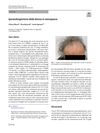
 This case report describes a 77-year-old woman with female pattern hair loss and elevated testosterone levels, who showed no improvement with minoxidil and lacked adrenal tumors on imaging.
 June 2022 in “Foodsci: Indian journal of research in foods and nutrition”
 This review discusses various perimenstrual and menstrual problems and suggests that lifestyle changes, improved diet, exercise, and hygiene can help reduce these issues, though it reports no new clinical findings.

In the Ovulation and Menstruation Health Pilot Study, multimodal recruitment strategies effectively increased racial diversity and survey completion rates for studying menstrual disorders like PCOS.
 July 2020 in “International Journal of Dermatology Venereology and Leprosy Sciences”
 In this study, dermatological changes were highly prevalent among postmenopausal women, with xerosis, pigmentary changes, and hair thinning being the most common findings, suggesting such changes are often overlooked in clinical practice.
This study explores autologous cell-based therapy using dermal sheath cup cells for pattern hair loss in a randomized, placebo-controlled clinical trial and reports no new clinical results.
 January 2020 in “International journal of current research and review”
 This study found that high exposure to plastics was associated with increased chances of irregular menstrual cycles and symptoms similar to polycystic ovary syndrome in adolescent girls.
October 2019 in “DOAJ (DOAJ: Directory of Open Access Journals)” This review focuses on the clinical presentation and management challenges of menopausal acne and reports no new experimental findings.
 August 2019 in “Journal of The American Academy of Dermatology”
 This study found that a bleach bath treatment with 0.005% HOCI reduced the expression of certain serine proteases in cultured keratinocytes and lowered skin pH in atopic dermatitis patients, potentially improving symptoms by modulating the NF-kB pathway.
 April 2019 in “Majalah Obat Tradisional”
 This study found that adding menthol to Phyllanthus niruri ethanol extract gel enhanced hair growth and thickness in rats.
 April 2018 in “Journal of Investigative Dermatology”
 This study found that Mentha suaveolens aqueous extract activated Nrf-2 and increased detoxifying enzyme expression in keratinocytes, providing protection against oxidative stress without cytotoxicity.
January 2017 in “CommonKnowledge Research Repository (Pacific University Oregon)” This review suggests spearmint tea may lower androgenic hormones in women with hirsutism and related symptoms, though longer treatment and follow-up may be needed for noticeable improvements.
 December 2014 in “Annals of psychophysiology”
 This study reported that chronic use of performance-enhancing drugs significantly altered users' personalities and physical attributes, raising concerns about whether the perceived benefits outweigh the costs.
This study found that in both rodents and humans, knee laxity increased at certain phases of the reproductive cycle due to sex-steroid influence, particularly under high levels of estrogen and progesterone.
 October 2011 in “InTech eBooks”
 This article reviews idiopathic hypogonadotropic hypogonadism (IHH), discussing its genetic and pathophysiological features, and it does not present new clinical results.
January 2000 in “Elsevier eBooks” Menopause can cause skin to become dry, less elastic, and more wrinkled due to lower estrogen levels.
January 1997 in “Pediatrics in review” This review discusses menstrual disorders in adolescent females, covering amenorrhea, abnormal bleeding, and the natural variability of menstrual cycles, but it reports no new clinical findings.
February 2023 in “Singapore Medical Journal” Men with androgenetic alopecia have unique metabolomic patterns that could help develop targeted treatments.
 May 2015 in “Scientific journal of Kurdistan University of Medical Sciences”
 Men with early-onset baldness may have a higher risk of heart disease.
November 2021 in “Frontiers in Genetics” This study found that a new FAW-FS algorithm improved recognition of depression in patients with androgenic alopecia, and comprehensive psychological interventions positively impacted their rehabilitation outcomes.
 115 citations
,
November 1999 in “Journal of The American Academy of Dermatology”
115 citations
,
November 1999 in “Journal of The American Academy of Dermatology” In this study, men using 2% and 5% minoxidil solutions experienced a significant increase in hair weight for 96 weeks compared to placebo, with effects diminishing after treatment cessation.
 71 citations
,
May 1991 in “Clinical and Experimental Dermatology”
71 citations
,
May 1991 in “Clinical and Experimental Dermatology” Young men with male pattern baldness lose hair density over time without treatment.
 66 citations
,
June 2006 in “Journal of The American Academy of Dermatology”
66 citations
,
June 2006 in “Journal of The American Academy of Dermatology” This study found that long-term finasteride treatment in men with androgenetic alopecia significantly increased hair weight and count compared to placebo over nearly four years.
 66 citations
,
April 2002 in “Journal of The American Academy of Dermatology”
66 citations
,
April 2002 in “Journal of The American Academy of Dermatology” In this study, finasteride, 1 mg daily, significantly increased hair weight more than hair count in men with androgenetic alopecia, indicating additional factors like hair growth rate and thickness may contribute to its effectiveness.
 59 citations
,
February 2021 in “BMJ”
59 citations
,
February 2021 in “BMJ” This study found a strong dose-related increase in the risk of intracranial meningiomas associated with high doses of cyproterone acetate, with some reduction in risk after stopping the treatment.
52 citations
,
March 1987 in “Journal of the American Academy of Dermatology” This study found that men with rapidly progressive male pattern baldness had elevated serum dehydroepiandrosterone sulfate levels, suggesting that adrenal hyperactivity may contribute to alopecia in genetically susceptible young men.