 6 citations
,
October 2024 in “npj Digital Medicine”
6 citations
,
October 2024 in “npj Digital Medicine” This study observed that patients with COVID-19 had many conditions and phenotypes that increased post-infection, varying by demographics and infection wave, which could enhance understanding and diagnostics of Long-COVID.
 5 citations
,
February 2024 in “Clinical Pharmacokinetics”
5 citations
,
February 2024 in “Clinical Pharmacokinetics” This study found that modeling and simulation effectively informed decision-making and dose selection for ritlecitinib in treating alopecia areata, supporting an accelerated drug development strategy.
 4 citations
,
May 2024 in “The Lancet”
4 citations
,
May 2024 in “The Lancet” This study aims to compare the safety and effectiveness of bariatric surgery versus medical care on ovulation rates in women with PCOS and obesity, as current observational data suggests surgery may improve fertility prospects, but no randomized trial has yet confirmed this effect.
2 citations
,
June 2025 in “Biomolecules” This review highlights that gut dysbiosis and bacterial extracellular vesicles are key factors in PCOS pathophysiology, and suggests AI-driven analysis of these profiles could enhance diagnostic accuracy and treatment personalization, though ethical concerns like data privacy and bias must be considered.
2 citations
,
December 2021 in “Dermatology and therapy” This review reports that clinical studies generally showed favorable results for microneedling as an adjunct therapy for androgenic alopecia and alopecia areata, despite the low quality of existing data.
 2 citations
,
January 2020 in “International Journal of Cosmetic Science”
2 citations
,
January 2020 in “International Journal of Cosmetic Science” In this in vitro study, niacinamide was found not to stimulate VEGF synthesis across a wide range of doses.
 1 citations
,
January 2026 in “Frontiers in Cell and Developmental Biology”
1 citations
,
January 2026 in “Frontiers in Cell and Developmental Biology” This study reviews the transformative role of artificial intelligence in biomaterial design, highlighting its ability to reduce costs through virtual screening, enhance material performance, and predict biological interactions to advance personalized and precision medicine.
 1 citations
,
May 2002 in “British Journal of Dermatology”
1 citations
,
May 2002 in “British Journal of Dermatology” This article provides an overview of hair density, hair diameter, and the prevalence of female pattern hair loss but reports no new clinical findings.
 March 2026 in “Applied Sciences”
 In this scoping review, researchers observed that while AI-assisted trichoscopy holds promise for standardized assessments of hair and scalp disorders, its clinical translation is limited by small proprietary datasets, inconsistent validation protocols, and a scarcity of real-world clinical studies.
 February 2026 in “International Journal of Molecular Sciences”
 This paper reviews advancements in 3D human skin models using bioprinting, organoid, and organ-on-a-chip technologies, noting improvements in physiological realism through vascularization and multi-omics data, but also highlighting challenges such as cost and lack of standardization that hinder clinical adoption.
 January 2026 in “Current Issues in Molecular Biology”
 This paper reviews the emerging role of FGF-7 signaling in hair regeneration, highlighting its potential as a target for new therapies despite limited clinical trial data.
In this study, a Monte Carlo-generated synthetic cohort analysis found that higher simulated cannabis exposure was linked to increased self-assessed hair loss severity and reduced follicular density, suggesting potential connections worth exploring in further clinical research.
January 2026 in “Zenodo (CERN European Organization for Nuclear Research)” This study reviews classical Ayurvedic texts and modern research on Amalaki, finding significant benefits for lipid profiles, blood glucose, and inflammation in clinical trials, while also suggesting potential benefits for liver, hair, skin, eyes, cognition, and respiratory health based on preclinical data and traditional claims.
 December 2025 in “MEDFARM Jurnal Farmasi dan Kesehatan”
 This review evaluates existing research on topical metformin for skin conditions, reporting promising outcomes such as improved wound healing, melasma, psoriasis, acne, and alopecia, with innovative formulations like hydrogels and lipid nanoparticles enhancing its cutaneous delivery while minimizing systemic exposure.
 October 2025 in “EMJ Dermatology”
 This study found that glucagon-like peptide-1 receptor agonist therapy was independently associated with an increased incidence of non-scarring hair loss, including telogen effluvium and androgenic alopecia, in adults but not alopecia areata.
 February 2025 in “Clinical Cosmetic and Investigational Dermatology”
 This study used Mendelian randomization analysis to find a significant causal relationship between high fasting insulin levels and androgenetic alopecia, while identifying potential core genes and metabolic pathways that could mediate this link.

This study reviewed contemporary literature and found that combining minoxidil with topical finasteride, biologic adjuvants, or delivery innovations might enhance treatment effectiveness for androgenetic alopecia compared to minoxidil alone, although diverse outcomes and incomplete data limit broader conclusions.
 July 2024 in “Dermatology and Therapy”
 This study found that individuals with black hair have a significantly higher risk of alopecia areata compared to those with dark brown hair, while lighter hair colors like red or blonde are associated with a lower risk.
 January 2024 in “Wiadomości Lekarskie”
 This review highlights that AI-based echocardiography in cardiology can enhance diagnostic precision, automation, and therapeutic strategy development, but also presents challenges like diagnostic errors and high costs, indicating a cautious yet promising progression in its adoption.
 September 2023 in “medRxiv (Cold Spring Harbor Laboratory)”
 This study found that many conditions in patients with COVID-19 were significantly increased compared to controls, with specific phenotypes identified across different demographic and diagnostic attributes.
 August 2016 in “The journal of investigative dermatology/Journal of investigative dermatology”
 This article discusses how activating the hexosamine pathway may enhance skin homeostasis by increasing hyaluronic acid secretion and supporting hair follicle stem cell self-renewal, but reports no new results.
 May 2002 in “British Journal of Dermatology”
 This brief article is a response from the authors about hair density, hair diameter, and female pattern hair loss, and it reports no new clinical findings.
 January 2026 in “Frontiers in Drug Discovery”
 This study highlights that while advances in dermatology, such as biologics and JAK inhibitors, have improved treatments for conditions like atopic dermatitis and psoriasis, challenges remain, including issues with lasting efficacy and the need for more personalized therapies.
 139 citations
,
December 2020 in “Cell Stem Cell”
139 citations
,
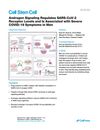
December 2020 in “Cell Stem Cell” Male hormones affect COVID-19 severity and certain drugs targeting these hormones could help reduce the risk.
 130 citations
,
August 2015 in “Experimental Dermatology”
130 citations
,
August 2015 in “Experimental Dermatology” This review provides a comprehensive guide to serum-free human hair follicle organ culture methods, highlighting research opportunities, standardization efforts, and potential applications without reporting new empirical findings.
 62 citations
,
October 2010 in “Journal of biomedical nanotechnology”
62 citations
,
October 2010 in “Journal of biomedical nanotechnology” This review discusses the challenges and contradictions in understanding nanoparticle penetration and toxicity in human skin, emphasizing the need for standardized testing and further research on particles smaller than 10 nm.
 42 citations
,
January 2018 in “Expert review of precision medicine and drug development”
42 citations
,
January 2018 in “Expert review of precision medicine and drug development” This review discusses the integration of drug repurposing with personalized medicine through off-label prescribing and reports no new results, highlighting the potential for systematic exploration using omics technologies.
 31 citations
,
January 2019 in “Journal of Cutaneous Medicine and Surgery”
31 citations
,
January 2019 in “Journal of Cutaneous Medicine and Surgery” This review found that three monthly PRP injections improved hair density in patients with androgenetic alopecia compared to placebo, but more rigorous studies are needed for broader dermatological applications.
 28 citations
,
August 2018 in “BMC genomics”
28 citations
,
August 2018 in “BMC genomics” This study found that the DNA methylation status of skin samples from cashmere goats was higher during the telogen stage compared to the anagen stage, identifying genes potentially important for hair follicle development and growth.
 15 citations
,
April 2022 in “Biointerface Research in Applied Chemistry”
15 citations
,
April 2022 in “Biointerface Research in Applied Chemistry” This review presents current evidence on medicinal plants and their phytoconstituents, such as phenolic compounds, used in acne treatment, highlighting their potential as alternatives to conventional therapies due to issues like antibiotic resistance and high cost.