33 citations
,
May 2017 in “Journal of Clinical Oncology” This phase I study reported that ETC-159, targeting Wnt signalling, showed tolerable safety profiles at doses that inhibit its pathway, though bone turnover markers increased, warranting early and regular monitoring. No tumor responses were observed, but two patients achieved stable disease for several cycles.
 June 2023 in “British Journal of Dermatology”
 This study reports a unique case of coinheritance of BRCA2 and CYLD pathogenic variants in a man with metastatic malignant cylindroma, suggesting that recognizing such genetic profiles in rare conditions can provide new treatment options, including the potential use of therapies targeting BRCA deficiency.
 11 citations
,
May 2023 in “Journal of Cancer Research and Clinical Oncology”
11 citations
,
May 2023 in “Journal of Cancer Research and Clinical Oncology” This review discusses various applications of CRISPR-based tools in cancer research, emphasizing their potential for investigating microRNA functions and developing microRNA-based therapies, despite challenges like off-target effects and delivery issues in using CRISPR/Cas9.
 7 citations
,
July 2017 in “Australasian Journal of Dermatology”
7 citations
,
July 2017 in “Australasian Journal of Dermatology” This article evaluates reflectance confocal microscopy features of scalp melanoma but reports no new clinical results, suggesting further investigation is needed.
June 2026 in “Journal of Orthopaedic Science and Research” In this case study, a 65-year-old man with a complete ACL rupture showed MRI-documented re-continuity and restoration of function after delayed conservative treatment with platelet-rich plasma, highlighting the potential for recovery in older patients and supporting further research into patient selection and treatment protocols.
64 citations
,
March 2004 in “The journal of investigative dermatology/Journal of investigative dermatology” This study describes GPRC5D's unique expression pattern in tissues that produce hard keratin, with retinoic acid inducing its expression in hair bulb cells and affecting keratin gene regulation.
 April 2024 in “Current Rheumatology Reviews”
 This case report describes an 8-year-old girl with Mixed Connective Tissue Disease who experienced remission after treatment with immunomodulator drugs, highlighting the diagnostic value of anti-U1 RNP antibody testing in children.
 April 2017 in “Journal of Investigative Dermatology”
 This study demonstrated that mitochondrial function in keratinocytes is crucial for maintaining skin homeostasis and hair follicle development, as its impairment led to disrupted hair morphogenesis and early death in mice.
 133 citations
,
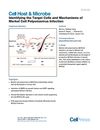
May 2016 in “Cell Host & Microbe”
133 citations
,
May 2016 in “Cell Host & Microbe” In this study, human dermal fibroblasts were identified as natural host cells that support productive Merkel cell polyomavirus infection, and the MEK antagonist trametinib was introduced as an effective inhibitor to control the virus.
30 citations
,
January 2024 in “Frontiers in Pharmacology” This study identified common and previously unlisted adverse events associated with four anti-CGRP monoclonal antibodies for migraine prevention, highlighting a varied safety profile post-marketing.
10 citations
,
February 2022 in “Cancers” This review discusses managing prostate cancer in patients with high-risk germline mutations and highlights the need for more research and consensus guidelines, reporting no new clinical results.

This study identified a genetic locus associated with rhabdomyosarcoma susceptibility in mice and found that specific differentiation markers are linked to the regression of basal cell carcinoma.
 April 2018 in “Journal of Investigative Dermatology”
 This study observed that β-catenin overexpression in human squamous cell carcinoma cells led to increased CREB expression, which significantly enhanced clonogenic activity, suggesting CREB as a β-catenin-regulated factor promoting cancer characteristics.
137 citations
,
January 2006 in “Frontiers in bioscience” This review discusses the role of corticotropin-releasing hormone in human skin, focusing on its regulation, receptors, and functions, and highlights parallels with the hypothalamo-pituitary-adrenal axis; it reports no new research findings.
 December 2018 in “Neuroradiology”
 MRI helps distinguish between pituitary adenomas and craniopharyngiomas, guides treatment for pediatric CNS tumors, and assesses rhinocerebral mucormycosis with a high mortality rate in transplanted patients.
3 citations
,
October 2019 in “EMBO molecular medicine” This study reports that the nuclear receptor co-repressor 1 (NCoR1) inhibits cardiac hypertrophy by stabilizing the MEF2 and class II HDACs complex, potentially offering a target for new therapies.
21 citations
,
February 1988 in “Toxicology” This study found that high doses of TCB caused severe toxicity in cotton top marmoset monkeys, with clinical and histological changes similar to those in humans and other primates exposed to PCBs.
 22 citations
,
January 2018 in “Experimental Dermatology”
22 citations
,
January 2018 in “Experimental Dermatology” This article reviews insights into the pathogenesis of primary cicatricial alopecias, such as lichen planopilaris, provided by emerging technologies, but it does not report new clinical results.
19 citations
,
May 2001 in “Endocrinology” This study suggests that Mrp3 may play a role in both wound healing and the hair follicle cycle as a growth factor and/or angiogenesis factor.
November 2025 in “Journal of Investigative Dermatology” A new genetic mutation causing Xeroderma Pigmentosum was found in an 8-year-old girl, affecting her DNA repair.
12 citations
,
January 2001 in “Der Hautarzt” This report on a 37-year-old patient found that trichorhinophalangeal syndrome type I is associated with hair abnormalities, including fine and brittle hair with altered biomechanical properties, but no treatment exists for the hair defects.
This study developed a legally valid, evidence-based informed consent document specifically for platelet-rich plasma injections, intended to enhance patient rights and communication, and support legal defense in malpractice cases.
March 2024 in “Preprints.org” In a study conducted on mice, researchers observed that exposure to ionizing radiation led to significant metabolic imbalances, including dyslipidemia and disruptions in amino acid metabolism, with activated protein C providing partial protection by normalizing certain plasma metabolites and lipids.
January 2026 in “JCEM Case Reports” This case report presents a rare instance of recurrent ACTH-independent Cushing’s syndrome due to PBMAH, coinciding with the development of a pheochromocytoma, highlighting the need for thorough reevaluation in similar recurring cases.
 April 2017 in “Journal of Investigative Dermatology”
 This study found that PRC1 plays crucial roles in skin epithelial stem cell regulation, with catalytic and non-catalytic functions impacting epidermal integrity, hair development, and Merkel cell dynamics in murine models.
3 citations
,
October 2024 in “Experimental Dermatology” This study found that patients with alopecia areata exhibited increased CRHR1 expression on circulating monocytes compared to controls, suggesting that stress-related factors like CRH and CRHR1 may contribute to the development and progression of the condition, particularly in chronic cases and those with larger lesions.
6 citations
,
December 2015 in “Medicine” This review discusses Cronkhite-Canada syndrome, highlighting a relatively mild case and suggesting that it may be a more benign and possibly reversible condition with treatment, but reports no new clinical results.
24 citations
,
January 2023 in “Cancer Research” This study suggests that activating AMPK to phosphorylate ZDHHC13 may enhance MC1R function and reduce melanoma risk in individuals with red hair.
1 citations
,
December 2014 in “Journal of the Society of Cosmetic Scientists of Korea” This study found that corticotropin-releasing factor influences cytokine expression related to hair growth in human dermal papilla cells and suggests CRF receptor antagonists could be potential treatments for stress-induced hair loss.
 5 citations
,
October 2018 in “Research in psychotherapy”
5 citations
,
October 2018 in “Research in psychotherapy” This study presents the Italian adaptation of the ECR-M16 to assess attachment dimensions in cancer outpatients and notes that its factor structure is partly similar to the original.