September 2025 in “Current Oncology” This review highlights the potential roles of long non-coding RNAs (lncRNAs) in malignant brain tumors, reporting that further research into their involvement in therapy resistance and cancer pathways could improve diagnosis and treatment outcomes.
 July 2023 in “Endocrinology, diabetes & metabolism case reports”
 This case report involved a premenopausal woman with rapidly progressing virilizing symptoms caused by a rare sertoliform endometrioid carcinoma of the ovary. Following surgical intervention, her symptoms improved, highlighting the importance of recognizing virilizing symptoms as potential indicators of low-grade ovarian malignancies in similar cases.
 2 citations
,
January 2011 in “Dental Medicine Research”
2 citations
,
January 2011 in “Dental Medicine Research” This study suggests that Keratin 6hf may be a potential marker of oral squamous cell carcinoma and could play a role in its progression, though further research is needed to understand its function.
7 citations
,
June 2020 in “Cells” In this study, mice lacking podoplanin in epidermal keratinocytes showed reduced tumor cell invasion and peritumoral lymphangiogenesis, suggesting that keratinocyte-expressed podoplanin contributes to advanced stages of skin tumor progression.
82 citations
,
July 2012 in “Brain pathology” This study found that LGR5 may play a significant role in maintaining brain cancer stem-like cells and is associated with glioma progression and poor outcomes.
January 2015 in “OpenBU/Boston University Institutional Repository (Boston University)” This study reported that NRP2 expression in melanocytes and melanocyte stem cells is linked to migration inhibition and potentially melanoma progression, suggesting its role as a target for understanding melanoma and hair follicle biology.
165 citations
,
January 2006 in “Molecular Medicine” This review highlights the role of matriptase in epithelial differentiation and cancer, noting that unregulated matriptase expression can enhance cancer progression in animal models, but reports no new experimental data.
4 citations
,
July 2025 in “International Journal of Molecular Sciences” This review discusses Amphiregulin (AREG) as a potential target for treating fibrotic disorders and cancer, highlighting its role in disease progression and promising results in preclinical studies and early trials.
2 citations
,
June 2025 in “Preprints.org” This review highlights the potential of amphiregulin as a therapeutic target, noting its role in both fibrotic and malignant diseases, and discusses promising early findings but reports no new clinical results.
1 citations
,
October 2023 in “Journal of Mind and Medical Sciences” This review discusses Barrett's esophagus, its risk factors, diagnostic methods, and treatment options, emphasizing its potential for malignant degeneration and the importance of personalized treatment based on patient factors.
August 2024 in “Case Reports in Ophthalmology” In this case report, researchers observed that local radiation therapy to the orbits may not be sufficient to halt progression of new retinal lesions in older patients, even when the disease initially appears confined to the intraocular space.
October 2024 in “GE Portuguese Journal of Gastroenterology” This case report describes a 78-year-old male with adenocarcinoma and Hypertrichosis lanuginosa acquisita, highlighting the need to consider malignancy in patients with unexplained excessive hair growth.
 June 2026 in “Frontiers in Oncology”
 In this study, researchers analyzed adverse event reports from the FAERS database to identify safety concerns associated with ipilimumab in elderly patients, noting common issues like gastrointestinal events and new signals such as orchitis and alopecia areata, with timing influenced by body weight.
 3 citations
,
July 2013 in “Journal of Cutaneous Pathology”
3 citations
,
July 2013 in “Journal of Cutaneous Pathology” This case report describes a 56-year-old woman whose nonscarring alopecia, consistent with alopecia areata with follicular mucinosis, resolved completely after treatment with oral prednisone.
 29 citations
,
July 2009 in “BJU international”
29 citations
,
July 2009 in “BJU international” This review examines the pharmacological properties and potential clinical benefits of 5α‐reductase inhibition in prostate cancer but reports no new research findings.
3 citations
,
January 2014 Collagen XVIII and Bmx tyrosine kinase are important for hair growth and skin cancer development.
1 citations
,
June 2008 in “中医杂志:英文版” This essay introduces Dr. Qiu's approach to treating consumptive syndromes with TCM after radio-chemotherapy, discussing how modern cancer treatments cause these symptoms and his unique perspective on their management.
467 citations
,
May 1999 in “Molecular Cell” In this study, activation of c-MycER in adult mouse epidermis rapidly induced proliferation and disrupted keratinocyte differentiation, causing changes similar to precancerous lesions, which regressed once c-MycER was deactivated.
70 citations
,
August 2006 in “Cancer Research” This study found that inhibiting AP-1 activity in mice modified tumor development, leading to transdifferentiation between squamous and sebaceous tumors, with molecular analysis suggesting AP-1's role in maintaining tumor cell identity.
 29 citations
,
July 2014 in “PloS one”
29 citations
,
July 2014 in “PloS one” In this study, Meis1 was found to regulate epidermal homeostasis and act as a proto-oncogenic factor in skin tissues, with differences in expression patterns between normal and tumor cells.
 72 citations
,
January 2003 in “American Journal of Pathology”
72 citations
,
January 2003 in “American Journal of Pathology” This study found that the co-activator CBP enhances the agonistic action of hydroxyflutamide on androgen receptors, suggesting a mechanism for therapy resistance in prostate cancer.
 67 citations
,
November 2019 in “Nature Communications”
67 citations
,
November 2019 in “Nature Communications” This study demonstrated that a c-Kit-CreER-driven mouse model confirms melanocyte stem cells as a genuine source of melanoma, paralleling human melanoma in heterogeneity and gene signatures.
 37 citations
,
September 2008 in “The American journal of surgical pathology”
37 citations
,
September 2008 in “The American journal of surgical pathology” This study concluded that hair follicle hyperplasia found in pseudolymphomatous folliculitis can also occur in genuine cutaneous lymphomas, potentially as a coincidental result of underlying pathological processes.
7 citations
,
October 2016 in “American Journal of Dermatopathology” This report discusses a 77-year-old man with primary onycholemmal carcinoma, a rare nail bed tumor, emphasizing its slow growth, diagnostic challenges, and treatment typically involving surgical removal.
 June 2023 in “JAAD Case Reports”
 This article reviews the epidemiology of desmoplastic melanoma and reports no new clinical findings, emphasizing higher risks in chronically sun-exposed older males.
June 2012 in “Expert Review of Dermatology” This review discusses the challenge of managing folliculitis decalvans, agreeing that treatment aims to stop inflammation and hair loss but noting that achieving results is difficult and may require long-term therapy.
January 1999 in “Praxis sociológica” This study demonstrates that melanocyte stem cells can be a source of melanoma in a mouse model, resembling human melanoma in both heterogeneity and gene signatures.
 3 citations
,
May 2020 in “Annals of the Academy of Medicine Singapore”
3 citations
,
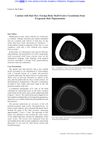
May 2020 in “Annals of the Academy of Medicine Singapore” Hair dye can cause serious scalp issues, including skull erosion.
 April 2024 in “Dermatovenerologiâ, kosmetologiâ”
 This material provides comprehensive information about actinic keratosis, highlighting its potential outcomes, risk factors, clinical features, diagnosis, and treatment considerations for medical specialists.
 April 2024 in “Dermatovenerologiâ, kosmetologiâ”
 This study provides a comprehensive overview of actinic keratosis, highlighting its potential to progress to squamous cell carcinoma and noting that routine treatment poses a significant burden on healthcare providers.