February 2026 in “Frontiers in Bioengineering and Biotechnology” This review discusses the current evidence on platelet-rich plasma therapy's biological mechanisms and clinical applications, highlighting its promise in regenerative medicine and the challenges to its integration in nursing practice.
49 citations
,
July 2007 in “Ophthalmic Plastic and Reconstructive Surgery” This report describes a case of granulomatous reaction to injectable poly-L-lactic acid in the periorbital area and suggests surgical excision as an effective treatment for persistent nodules.
 June 2011 in “CRC Press eBooks”
 Low-Level Laser Therapy can stimulate healing and cell function, potentially leading to wider medical use.
1 citations
,
December 2020 in “Medical lasers” The laser therapy device effectively increased hair growth in people with androgenetic alopecia.

This study found that CPA-loaded nanoparticles, particularly SLN formulations, increased CPA epidermal penetration compared to a conventional cream and may reduce side effects in treating androgen-dependent conditions.
This report presents a rare case of lichen spinulosus in a 52-year-old woman, featuring hyperkeratotic follicular papules and a dense lymphohistiocytic infiltrate in affected skin areas.
 26 citations
,
April 1999 in “Dermatologic Clinics”
26 citations
,
April 1999 in “Dermatologic Clinics” This article reviews the basics of hair follicle biology, laser/tissue interactions, and hirsutism and hypertrichosis causes, discussing the long-pulsed alexandrite laser's role in hair reduction without reporting new clinical results.
 April 2016 in “Journal of The American Academy of Dermatology”
 People with lichen planopilaris often have seborrheic dermatitis, which can delay the diagnosis of lichen planopilaris.
 May 2015 in “Journal of The American Academy of Dermatology”
 The Nd:YAG laser is a successful and safe way to treat ingrown and pincer nails.
 October 2022 in “International journal of medical science and clinical research studies”
 In this study, the combination of Poly-D,L-Lactic Acid and Platelet-Rich Plasma was reported to be effective for improving wrinkle severity and skin brightness in a 45-year-old woman.
November 2020 in “Acta Medica Bulgarica/Acta medica Bulgarica” This case report details two patients with Graham-Little-Piccardi-Lassueur syndrome who showed marked skin lesion improvement with corticosteroid treatment, though cicatricial scalp alopecia remained unresponsive.
 April 2018 in “International journal of nanotechnology and nanomedicine”
 In this double-blind, placebo-controlled study, researchers found that low-level laser therapy significantly improved the healing rate and reduced the area of pressure ulcers in patients compared to placebo, suggesting its effectiveness in managing ulcers resistant to conventional treatments.
7 citations
,
January 2025 in “Current Issues in Molecular Biology” This study found that PDRN derived from Lactobacillus rhamnosus showed superior antioxidant and wound-healing properties compared to salmon-derived PDRN, while also offering potential benefits in immune modulation and bioavailability.
 3 citations
,
March 2012 in “Actas Dermo-Sifiliográficas”
3 citations
,
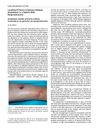
March 2012 in “Actas Dermo-Sifiliográficas” An elderly man with skin amyloidosis and abnormal blood proteins was monitored without finding widespread disease after 18 months.

In this case study, an 80-year-old woman developed lichen planus pigmentosus inversus after receiving multiple intra-articular injections of a homeopathic preparation, suggesting a possible link, though causality remains speculative.
 3 citations
,
February 2019 in “Animal biotechnology”
3 citations
,
February 2019 in “Animal biotechnology” In this study, the PLP2 gene was found to promote secondary hair follicle development in Liaoning cashmere goats, with its expression negatively regulated by melatonin and potentially affecting follicle development via the BMP pathway.
January 2022 in “Clinical Cases in Dermatology” This article discusses the causes and treatment options for lichen planopilaris, a scarring hair loss condition, but reports no new clinical findings.
 5 citations
,
January 2016 in “Skin appendage disorders”
5 citations
,
January 2016 in “Skin appendage disorders” This case report describes a rare occurrence of lichen planopilaris on the face in a 45-year-old man, contributing to the limited existing cases in the literature.
 November 2022 in “Nihon Nyuusankin Gakkaishi/Nihon Nyūsankin Gakkaishi”
 In a non-blinded study with 12 Japanese participants, applying a lotion containing Lactiplantibacillus plantarum N793 to the scalp for 24 weeks significantly increased hair density and reduced hair loss, with participants reporting improvements in hair thickness and volume, and the treatment deemed safe.
 15 citations
,
April 2020 in “Journal of The American Academy of Dermatology”
15 citations
,
April 2020 in “Journal of The American Academy of Dermatology” This article discusses the challenges of treating lichen planopilaris, reviews various therapeutic options including minoxidil, and reports no new clinical findings.
This case report details a patient with lichen planopilaris who maintained successful hair transplant results for seven years, suggesting chemotherapy may have played a role in preventing re-activation of the disease.
 January 2015 in “Hair transplant forum international”
 Up to 10% of hair loss patients might have early signs of a condition called Lichen Planopilaris.
19 citations
,
March 2011 in “The Journal of Dermatology” This case report in a child suggests that lichen planus pemphigoides may represent a heterogeneous group of disorders, potentially triggered by conditions like varicella.
1 citations
,
July 2024 in “Journal of lasers in medical sciences” This case study reports that treating a female patient with facial partial unilateral lentiginosis using a 532-nm Nd:YAG fractional picosecond laser resulted in significant improvement in pigmentation without notable side effects, indicating it may be an effective and well-tolerated treatment option.
1 citations
,
December 2017 in “Annals of Dermatological Research” This case report highlights that dermatoscopy and histopathological analysis were crucial for accurately diagnosing Lichen Planopilaris in two patients, leading to a correct diagnosis after initial misdiagnoses.
 3 citations
,
September 2015 in “Journal of Vascular Surgery”
3 citations
,
September 2015 in “Journal of Vascular Surgery” This study found that chemical lumbar sympathectomy with 5% phenol effectively treated idiopathic livedo reticularis in most patients, offering a potential long-lasting solution with repeatable efficacy upon recurrence.
 28 citations
,
December 2007 in “Archives of ophthalmology”
28 citations
,
December 2007 in “Archives of ophthalmology” This study found that lash ptosis was more common and severe in eyes with blepharoptosis, especially congenital, compared to normal eyes.
January 2026 in “Journal of Aesthetic Nursing” This review discusses the regenerative potential of polynucleotides and polydeoxyribonucleotides in aesthetic medicine, noting their benefits for skin texture, hydration, and patient satisfaction despite limited high-quality evidence.
 February 2013 in “Journal of the American Academy of Dermatology”
 This case report found that intense focused skin tightening ultrasound reduced excessive underarm sweating by nearly 80% in two patients and was associated with temporary side effects like tenderness and redness.