 88 citations
,
May 2011 in “British Journal of Clinical Pharmacology”
88 citations
,
May 2011 in “British Journal of Clinical Pharmacology” This study found that high doses of cyproterone acetate were associated with an increased risk of meningioma, especially with exposure longer than one year.
 17 citations
,
January 2022 in “Emerging infectious diseases”
17 citations
,
January 2022 in “Emerging infectious diseases” This study found that compared to influenza patients, COVID-19 patients had fewer complications overall, but exceptions with higher risks were seen in hair loss, heart failure, mood disorder, and dementia.
 15 citations
,
October 2015 in “PLOS ONE”
15 citations
,
October 2015 in “PLOS ONE” This study developed the Chi-PCOSQ, a culturally adapted Chinese assessment tool for measuring health-related quality of life in women with polycystic ovary syndrome, showing promising reliability and validity.
 10 citations
,
January 2019 in “Archives of Endocrinology and Metabolism”
10 citations
,
January 2019 in “Archives of Endocrinology and Metabolism” This source reports that testosterone therapy may mildly improve sexual desire in women with sexual dysfunction but lacks long-term safety data and cannot be widely recommended, as no formulations are approved for women in most countries.
 4 citations
,
May 2021 in “Journal of The American Academy of Dermatology”
4 citations
,
May 2021 in “Journal of The American Academy of Dermatology” This study found no significant genetic correlations between male pattern baldness and COVID-19 outcomes, suggesting that shared genetic factors may not explain the reported association.

This simulation study found that higher cannabis exposure in a virtual population was associated with increased hair shedding severity and reduced follicular density, but these results are based on modeled data and cannot establish causal relationships.
 November 2025 in “Communications Biology”
 The researchers reported creating a Human Hair Atlas that maps over 1200 molecular species in hair, revealing up to 50% variation in metabolite and lipid levels along the hair's length, and identified 122 exposome-related compounds from personal care products.
November 2025 in “Cancers” This study conducted a meta-analysis and found that men with both frontal and vertex male pattern baldness have a slightly increased risk of developing prostate cancer, though most data was from Caucasian populations and effect modification by genetic variations was not assessed.
June 2025 in “British Journal of Dermatology” This study reviewed clinical trials on JAK inhibitors for alopecia areata, finding them effective for short-term hair regrowth with a favorable safety profile, but noted limited data on long-term risks like malignancies or cardiovascular events beyond two years.
 January 2023 in “MEDS Clinical Medicine”
 This study found that the morbidity of urinary stones in Wuwei City, China, increased from 1995 to 2016 for both men and women, with distinct geographical clusters identified for monitoring and prevention efforts.
April 2021 in “Indian Journal of Animal Research” This study examined the age-related changes in the dermal structure of goat skin, providing baseline data on its histomorphology, histochemistry, and histoenzymology.
This study found that polycystic ovary syndrome was the most common cause of hirsutism among premenopausal Algerian women, affecting nearly 60% of participants.
34 citations
,
January 2016 in “Analytical Chemistry” This study reports that a new DART-HRMS method can effectively analyze intact hair for drug use timelines, with cocaine detection aligning with forensic standards and identifying multiple drugs from high-resolution data.
 1 citations
,
May 2015 in “Journal of The American Academy of Dermatology”
1 citations
,
May 2015 in “Journal of The American Academy of Dermatology” Finasteride for hair loss in young men may significantly increase the risk of sexual dysfunction.
 May 2015 in “Journal of The American Academy of Dermatology”
 Finasteride for hair loss in young men increases the risk of sexual dysfunction.
4 citations
,
March 2025 in “Pediatric Dermatology” This review examines the clinical presentation of alopecia areata in children and compares it to adult-onset cases, noting that data on pediatric cases is scarce and often varies, with reported onset typically between ages 6 and 12.
 3 citations
,
April 2025 in “Nature Communications”
3 citations
,
April 2025 in “Nature Communications” This study concluded that the GIANT brain atlas, which integrates genetic and neuroanatomical variations, provides a more accurate representation of brain structure than traditional neuroanatomical atlases, allowing for better exploration of genetic influences on the brain.
1 citations
,
August 2013 in “Journal of Clinical Epidemiology” This narrative review discusses various epidemiological study designs, the importance of reliable bias assessment tools, and the implications of database use for hypothesis testing in different research areas; it reports no new results.
 January 2026 in “Frontiers in Molecular Biosciences”
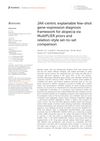
 This study identified a four-gene loop as a non-invasive biomarker that selectively activates in alopecia areata, providing a precise target for JAK inhibitor treatments.
 May 2026 in “Frontiers in Pharmacology”
 This study found that long-term use of 5α-reductase inhibitors is associated with improved overall survival in men with renal cell carcinoma, particularly those with low comorbidity not receiving surgery or systemic therapy, suggesting a potential role for androgen modulation in disease management.
 January 2026 in “Frontiers in Medicine”
 This review identified evidence gaps in NHIRD, emphasizing the lack of validated diagnostic criteria and the need for further research on ocular and systemic comorbidities associated with AA to enhance patient care and treatment strategies.
 284 citations
,
February 2008 in “Pediatrics”
284 citations
,
February 2008 in “Pediatrics” This review discusses the potential impact of endocrine-disrupting chemicals and body size on pubertal onset and progression, highlighting critical gaps and priorities for future research without presenting new clinical results.
 282 citations
,
October 2006 in “The Journal of Clinical Endocrinology and Metabolism”
282 citations
,
October 2006 in “The Journal of Clinical Endocrinology and Metabolism” This review discusses guidelines for androgen use in women and concludes that more research is needed before recommending testosterone due to insufficient evidence on safety and efficacy.
 251 citations
,
October 2014 in “The Journal of Clinical Endocrinology & Metabolism”
251 citations
,
October 2014 in “The Journal of Clinical Endocrinology & Metabolism” The guidelines advise against using testosterone and DHEA in women for most conditions due to safety and effectiveness concerns, but suggest considering testosterone for postmenopausal women with low sexual desire.
 105 citations
,
January 2009 in “Medicine”
105 citations
,
January 2009 in “Medicine” This study found that ethinylestradiol and high-dose cyproterone acetate significantly reduced hirsutism scores and were effective for treating acne and alopecia in women with hyperandrogenism.
 85 citations
,
August 2018 in “Psychological Medicine”
85 citations
,
August 2018 in “Psychological Medicine” This study reported that women with PCOS had higher levels of depression, anxiety, and perceived stress compared to those without PCOS, with stress potentially mediating these associations.
81 citations
,
February 2016 in “Veterinary pathology” This review discusses the commonly observed pathological findings in progeroid mouse models and highlights the importance of understanding mouse strain backgrounds and progeria-related phenotypes for accurate pathology data interpretation.
 70 citations
,
November 2013 in “The BMJ”
70 citations
,
November 2013 in “The BMJ” This study observed a temporal association between tamsulosin use for benign prostatic hyperplasia and an increased risk of severe hypotension requiring hospital admission during the first eight weeks of treatment initiation and restart.
 53 citations
,
August 2019 in “American journal of human genetics”
53 citations
,
August 2019 in “American journal of human genetics” This study found that FOXN1 haploinsufficiency is a significant genetic factor causing T cell lymphopenia at birth, linked to reduced thymic function in both humans and mice.
 43 citations
,
November 2018 in “Nature Communications”
43 citations
,
November 2018 in “Nature Communications” This genome-wide association study identified 20 genetic signals at 15 risk loci related to severe acne, revealing new insights into its genetic predisposition, particularly affecting skin structure and maintenance.