March 2025 in “International Journal of Trichology” This case study reported that a 15-year-old female developed acquired localized trichorrhexis nodosa, a hair shaft disorder, due to vigorous rubbing of an herbal powder on her scalp as part of local cultural practices.
This study found that Dex-loaded hyaluronic acid hydrogel microneedles significantly reduced pain in an acute inflammatory visceral pain model without sedation, suggesting a promising and patient-friendly alternative to intravenous delivery.
 April 2021 in “International Journal of Research in Dermatology”
 This case report describes a 7-year-old child with linear lupus panniculitis of the scalp, treated successfully with a combination of hydroxychloroquine, topical and intralesional steroids, and a topical calcineurin inhibitor.
44 citations
,
July 2013 in “Journal of the American Academy of Dermatology” This review discusses various genetic and acquired conditions associated with poliosis circumscripta and reports no new clinical results.
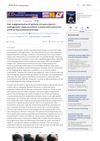 February 2024 in “Journal of Cosmetic Dermatology”
 White hair patch repigmented and hair regrew in a balding patient after treatment with exosomes and laser.
 69 citations
,
January 2020 in “Veterinary World”
69 citations
,
January 2020 in “Veterinary World” This review examines factors influencing dermatophyte infection in companion animals, focusing on prevalence, clinical signs, pathogenesis, immune response, and the impact of cortisol and cytokines, but reports no new clinical results.
47 citations
,
October 2015 in “Dermatologic surgery” This review discusses the applications of the 308-nm excimer laser in treating various dermatologic conditions and suggests treatment is generally well tolerated, but calls for larger long-term studies.
 39 citations
,
March 2009 in “Clinics in plastic surgery”
39 citations
,
March 2009 in “Clinics in plastic surgery” This review discusses the evolution and studies of injection lipolysis for fat reduction, highlighting the need for more research to ensure patient safety and treatment efficacy; it reports no new clinical results.
 17 citations
,
January 2015 in “International Journal of Trichology”
17 citations
,
January 2015 in “International Journal of Trichology” This case report suggests that frontal fibrosing alopecia with nail involvement may be associated with lichen planus and improved with oral dutasteride due to an inflammatory reaction related to androgenetic alopecia.
 2 citations
,
April 2024 in “Advanced Materials”
2 citations
,
April 2024 in “Advanced Materials” This study tested a hydrogel microneedle patch delivering T reg attractants in mice with alopecia, finding it boosted regulatory T cell numbers at the site, leading to hair regrowth without causing peripheral immunosuppression, suggesting a potential new approach for autoimmune skin disease treatment.
 57 citations
,
January 2003 in “Clinical and experimental dermatology”
57 citations
,
January 2003 in “Clinical and experimental dermatology” This study identified postmenopausal frontal fibrosing alopecia as a distinct form of scarring alopecia in postmenopausal women, noting a potential link with a history of bilateral oophorectomy.
 41 citations
,
July 2015 in “Clinical and Experimental Dermatology”
41 citations
,
July 2015 in “Clinical and Experimental Dermatology” This review explores the connection between psoriasis and hair loss, noting that both the disease and its treatments can contribute to alopecia, and reports no new clinical results.
22 citations
,
April 2012 in “Informa Healthcare eBooks” This study reports two cases of frontal fibrosing alopecia in postmenopausal women, suggesting it as a variant of lichen planopilaris due to similar histological findings yet distinct clinical presentation.
 April 2026 in “Biomedicines”
 This study introduces a novel holistic treatment approach for keloid that combines systemic therapies, including Traditional Chinese Medicine, with local interventions to target the inflammatory microenvironment and keloid predisposition for improved management and prevention of recurrence.
March 2026 in “Pharmaceutical Biology” This review discusses the potential of asiaticoside from Centella asiatica for enhancing wound healing after endoscopic submucosal dissection and highlights delivery strategies to improve its gastrointestinal application; it reports no new clinical results.

This case report highlights the successful treatment of a 37-year-old male with steroid-resistant beard alopecia areata using baricitinib, a JAK-1/2 inhibitor, over 9 months, resulting in reduced hair loss and improved hair density.
 1 citations
,
June 2022 in “The Egyptian Journal of Hospital Medicine”
1 citations
,
June 2022 in “The Egyptian Journal of Hospital Medicine” This review discusses the epidemiology, clinical characteristics, pathogenesis, and genetic factors of alopecia areata, while stressing the need for targeted and effective treatments, but reports no new clinical results.
 January 2026 in “International Journal of Veterinary Sciences and Animal Husbandry”
 This study reports that ivermectin-based therapy, combined with antibiotics, anti-inflammatory drugs, and supportive treatments, effectively led to clinical recovery within 10-21 days in six dogs with varying severity of demodicosis.
 29 citations
,
March 2001 in “Clinics in Dermatology”
29 citations
,
March 2001 in “Clinics in Dermatology” This article discusses various types of primary cicatricial alopecias and reports no new clinical results; it emphasizes the importance of accurate diagnosis for effective management.
 17 citations
,
August 2019 in “JAMA Facial Plastic Surgery”
17 citations
,
August 2019 in “JAMA Facial Plastic Surgery” This letter to the editor reports an observation of alopecia occurring after treatment with deoxycholic acid for reducing submental fat, but it presents no new clinical data or broader conclusions.
 4 citations
,
June 2002 in “Clinical and experimental dermatology”
4 citations
,
June 2002 in “Clinical and experimental dermatology” This review discusses current treatments and management strategies for hidradenitis suppurativa, noting the mixed effectiveness of various therapies, including surgery, antibiotics, and hormonal treatments, but reports no new clinical findings.
 July 2026 in “bioRxiv (Cold Spring Harbor Laboratory)”
 This study observed distinct sex differences in hair growth cycles and regeneration in C3H/He mice, noting that females regenerated hair faster after adhesive material application, whereas males were more reliant on macrophage activity for this process.
 January 2018 in “Springer eBooks”
 Congenital triangular alopecia is a harmless, non-spreading hair loss condition often seen in young children.
 March 2017 in “The American Journal of Cosmetic Surgery”
 This case report suggests that transplanted hair follicles may be more resistant to alopecia areata than native hair, potentially offering new insights into the condition's pathophysiology and treatment options.
 June 2008 in “Springer eBooks”
 The document concludes that permanent hair loss conditions are complex, require early specific treatments, and "secondary permanent alopecias" might be a more accurate term than "secondary cicatricial alopecia."
 2 citations
,
September 1980 in “Experientia”
2 citations
,
September 1980 in “Experientia” Polyethylene alanine caused hair loss in young lab animals but not in adults, with hair regrowth occurring within 20 days.

In this study, researchers found that adult tinea capitis in Korea shows unique epidemiological and clinical features compared to children, which may lead to misdiagnosis or delayed diagnosis.
 33 citations
,
November 2006 in “Survey of Ophthalmology”
33 citations
,
November 2006 in “Survey of Ophthalmology” This report discusses the various causes and clinical assessment of madarosis, emphasizing the importance of recognizing and diagnosing associated vision or life-threatening conditions, without presenting new findings.
December 2025 in “Zenodo (CERN European Organization for Nuclear Research)” This study describes alopecia areata as a long-term, immune-mediated disorder characterized by non-scarring hair loss, often occurring in genetically predisposed individuals and possibly triggered by T-cell-mediated inflammation, environmental stressors, and genetic factors.
December 2025 in “Zenodo (CERN European Organization for Nuclear Research)” This study explains that alopecia areata, a long-term immune-mediated disorder causing patchy baldness, results from an immunological attack on hair follicles, often in genetically predisposed individuals, with a complex mix of immunological, environmental, and genetic factors involved in its development.