 23 citations
,
February 2020 in “PLOS genetics”
23 citations
,
February 2020 in “PLOS genetics” This study found that biallelic LSS mutations lead to congenital hypotrichosis and cataracts, with each tissue-specific loss of function observed in mouse models.
13 citations
,
March 2012 in “The American Journal of Surgery” This study found that modified laparoscopic sleeve gastrectomy in patients with type 2 diabetes and obesity reduced ghrelin levels, improved glycemic and insulin levels, and resulted in significant weight loss.
6 citations
,
March 2005 in “The Journal of Dermatology” This letter to the editor discusses the potential exacerbation of discoid lupus erythematosus by radiation therapy and reports no new clinical findings.
22 citations
,
January 1999 in “Dermatology” This case report describes a rare instance of double-lined frontoparietal scleroderma en coup de sabre and suggests a genetic basis involving postzygotic mosaicism.
 4 citations
,
March 2002 in “International journal of toxicology”
4 citations
,
March 2002 in “International journal of toxicology” In this study on tolerant rats, maternal and developmental toxicity from levo-alpha-acetyhnethadol hydrochloride were observed at all doses, without specific fetal toxicity or teratogenic effects.
17 citations
,
September 2018 in “Matrix Biology” The researchers reported that mouse keratinocyte-specific deletion of laminin γ1 led to delayed coat pigmentation due to impaired melanocyte migration and differentiation, linked to altered laminin composition in the basement membrane.
 2 citations
,
November 2022 in “Biosensors”
2 citations
,
November 2022 in “Biosensors” This study introduced a new spectrofluorometric method using a synthesized organic fluorophore to effectively analyze darolutamide and thalidomide in pharmaceutical preparations and biofluids.
 12 citations
,
September 2018 in “Naturwissenschaften”
12 citations
,
September 2018 in “Naturwissenschaften” This study found that melatonin at 0.2 g/L for 72 hours most effectively enhances cashmere growth in Liaoning cashmere goats by upregulating the lncRNA MTC, which activates NF-kB signaling.
5 citations
,
July 2017 in “Molecular Medicine Reports” This study observed that ethanol extracts of Lygodium japonicum spores significantly reduced inflammatory responses in LPS-stimulated murine macrophages in vitro by negatively regulating p38 MAPK and NF-κB.
27 citations
,
December 2006 in “Environmental Science & Technology” This study found that laser ablation-inductively coupled plasma-mass spectrometry can effectively reconstruct time-resolved mercury exposure in micrometer segments of a single hair strand from fish-eaters.
 February 2023 in “Journal of dermatology”
 This letter reports the first known Japanese case of autosomal recessive woolly hair/hypotrichosis with compound heterozygous mutations in the LIPH gene.
 45 citations
,
January 2014 in “International Journal of Trichology”
45 citations
,
January 2014 in “International Journal of Trichology” This study found that low-level laser therapy may improve hair growth in patients with androgenetic alopecia, either as a standalone treatment or combined with minoxidil or finasteride, without reported adverse reactions.
2 citations
,
May 2021 in “Neuropathology & applied neurobiology/Neuropathology and applied neurobiology” This correspondence reports the case of a young woman with severe lipid storage myopathy due to a rare mutation, who showed significant temporary improvement with plasmapheresis and immunoglobulin treatment before stabilizing with riboflavin and coenzyme Q10 supplementation, challenging the initial assumption of an immune-mediated condition.
 April 2026 in “Scientific Reports”
 In this study, the proposed MSF-VMDNet, combining dual encoder networks with a multi-frequency domain mechanism, significantly outperformed existing methods in segmenting skin cancer tissues from histological slide images, achieving high accuracy with an MIoU of 95.37% and a Dice coefficient of 95.11%.
37 citations
,
December 2001 in “Journal of the American Academy of Dermatology” This case report details significant hair regrowth in a patient with lichen planopilaris after treatment with thalidomide, suggesting its potential as a treatment option for this condition.
June 2026 in “British Journal of Dermatology” This case study documented the first known instance of biopsy-confirmed lichen planopilaris occurring after hairline-lowering surgery in a patient without prior history, highlighting a potential complication where surgical trauma may trigger immune-mediated hair loss.
October 2022 in “Zenodo (CERN European Organization for Nuclear Research)” This study reported that combining Poly-D,L-Lactic Acid with Platelet-Rich Plasma for facial rejuvenation reduced wrinkle severity and improved skin tone and hyperpigmentation in a 45-year-old female patient.
 46 citations
,
September 2010 in “Southern Medical Journal”
46 citations
,
September 2010 in “Southern Medical Journal” This review discusses low-level light therapy for androgenetic alopecia and female pattern hair loss, noting minimal clinical evidence on its efficacy and the need for more controlled studies.
40 citations
,
October 2012 in “Journal of the American Academy of Dermatology” This study found that the Cutaneous Lupus Disease Area and Severity Index (CLASI) is correlated with both physician-assessed and patient-reported outcomes in cutaneous lupus erythematosus, particularly highlighting concerns about body image in visible areas.
 March 2024 in “EMBO molecular medicine”
 This study found that the antiviral drug daclatasvir significantly improved fibrosis and quality of life in a mouse model of recessive dystrophic epidermolysis bullosa, suggesting potential for treating this and other fibrotic diseases.
September 2026 in “Clinical Cosmetic and Investigational Dermatology” This case report highlights the diagnostic challenges in a patient with atypical lupus erythematosus tumidus due to long-term misdiagnosis and conflicting pathological findings, with effective treatment achieved using hydroxychloroquine and methylprednisolone.
1 citations
,
July 2023 in “Clinical Cosmetic and Investigational Dermatology” In this report, a 54-year-old woman with familial dyskeratotic comedones showed slight improvement in skin lesions after topical retinoids and urea cream. This source also describes the first dermoscopic findings for this condition and reviews 21 previous cases.
 March 2026 in “Preprints.org”
 This study found that the MIRA technique, which customizes needle length and injection angle guided by ultrasound, improved structural and esthetic outcomes for cellulite treatment compared to standard methods.
 52 citations
,
February 2006 in “Archives of Dermatology”
52 citations
,
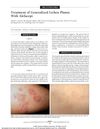
February 2006 in “Archives of Dermatology” This case report describes a 25-year-old woman with widespread lichen planus who did not respond to multiple systemic treatments, including antihistamines, hydroxychloroquine sulfate, and corticosteroids.
2 citations
,
September 2024 in “PLoS ONE” This study suggests that combining bendamustine with tucidinostat may improve survival in patients with relapsed or refractory adult T-cell leukemia/lymphoma, highlighting its potential for clinical investigation.
This chapter provides dermatology trainees with insights on managing lichen planopilaris, emphasizing treating active disease to prevent further hair loss and recommending a tapered course of oral steroids for disease stabilization.
53 citations
,
April 2016 in “Stem cell research & therapy” This study reports that LL-37 treatment enhances cell proliferation, migration, and secretion of regenerative factors in adipose-derived stem cells, potentially promoting hair growth in vivo.
 August 2016 in “Journal of Investigative Dermatology”
 This case report identifies a novel LIPH gene mutation linked to autosomal recessive woolly hair/hypotrichosis in a Japanese boy, expanding the spectrum of known mutations associated with this condition.
5 citations
,
April 2014 in “Journal of Lipid Research” This study demonstrates a method to noninvasively assess lipid classes in rodent sebum via high-field proton NMR, observing significant lipid reductions in rats treated with an SCD1 inhibitor.