20 citations
,
September 1995 in “PubMed” This review discusses the wide range of drugs potentially causing reversible or irreversible hair loss and emphasizes the difficulty of diagnosing drug-induced alopecia without withdrawal of the suspected medication; it reports no new clinical findings.
17 citations
,
January 2015 in “Dermatology online journal” This report describes a patient experiencing hair repigmentation linked to adalimumab therapy, a TNF inhibitor, a phenomenon not previously associated with this class of drugs.
4 citations
,
December 2010 in “Journal of the American Geriatrics Society” This case report observed that delirium can be the sole symptom of a stroke, as seen in an elderly patient with a thalamic hemorrhage, highlighting the need to consider stroke in the differential diagnosis when delirium is present without focal neurological signs.
3 citations
,
January 2022 in “Journal of The American Academy of Dermatology” This study found that 1 mg/day low-dose oral minoxidil significantly increased hair count compared to 0.25 mg/day over 24 weeks in women with female pattern hair loss, though no differences were observed in hair-shedding and quality-of-life scores between the two doses.
 April 2020 in “Journal of the Endocrine Society”
 This case report details an atypical presentation of Hodgkin's lymphoma in an 87-year-old man, where severe hypercalcemia and mental status changes prompted further investigation and diagnosis.
 23 citations
,
December 2004 in “Seminars in oncology”
23 citations
,
December 2004 in “Seminars in oncology” This study found that DVd therapy is at least as effective as VAD/VAd for treating multiple myeloma and causes fewer side effects and reduced hospital visits.
October 2013 in “International Journal of Pediatric Endocrinology/International journal of pediatric endocrinology” This case report describes a boy with hypothalamic hamartoma experiencing pubertas precox and gelastic seizures, where leuprorelin therapy's effect on pubertas precox was controversial, but valproic acid effectively managed gelastic seizures.
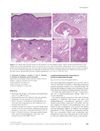 1 citations
,
February 2009 in “Clinical and Experimental Dermatology”
1 citations
,
February 2009 in “Clinical and Experimental Dermatology” This study reports an improvement in lymphomatoid papulosis type A in a 52-year-old patient who concurrently used hormone-replacement therapy.
July 1999 in “Journal of the American Academy of Dermatology” This review discusses valproic acid as a common antiseizure medication associated with alopecia and highlights the need for its inclusion in relevant medical guides, without presenting new clinical findings.
177 citations
,
November 2002 in “British journal of dermatology/British journal of dermatology, Supplement” In this study, stable types of leucoderma such as segmental vitiligo and piebaldism showed 100% repigmentation after melanocyte transplantation, suggesting surgery as the preferred method for these conditions.
21 citations
,
December 2022 in “Pharmaceutics” This review found that laser-assisted drug delivery in humans was associated with several adverse effects, but no life-threatening events were reported in the studies examined.
 81 citations
,
August 2011 in “Journal of The American Academy of Dermatology”
81 citations
,
August 2011 in “Journal of The American Academy of Dermatology” In this study, latanoprost significantly increased hair density in young men with mild androgenetic alopecia after 24 weeks, suggesting it may stimulate hair follicle activity and treat hair loss.
This article provides no abstract or new findings and focuses on a patient registry related to spasticity care.
64 citations
,
May 2000 in “International Journal of Dermatology” This study found that thalidomide increased peripheral lymphocyte counts and reduced inflammation in lupus erythematosus patients, but was associated with polyneuropathy, suggesting careful use in refractory cases.
 11 citations
,
January 2007 in “Veterinary dermatology”
11 citations
,
January 2007 in “Veterinary dermatology” This study found that administerating 10 mg/kg intramuscular fulvestrant did not stimulate hair regrowth in Pomeranian dogs with alopecia X, though higher doses may warrant further investigation.
 1 citations
,
June 2022 in “JCRPE”
1 citations
,
June 2022 in “JCRPE” This study reports that metreleptin treatment in a boy with congenital generalized lipodystrophy significantly improved metabolic complications and overall health outcomes during the first year of therapy.
 March 2024 in “Biochimica et biophysica acta. Molecular basis of disease”
 This study found that deferoxamine may protect against sensorineural hearing loss by reducing oxidative stress-induced hair cell death through iron chelation and activation of the Nrf2 signaling pathway in lab models.
5 citations
,
January 2017 in “Nevrologiâ, nejropsihiatriâ, psihosomatika” In this study, sustained-release sodium valproate showed high efficacy in achieving seizure remission for adults with focal and generalized epilepsy over one year, but side effects like weight gain and tremor were more frequent among heterozygous carriers of certain gene variants.
6 citations
,
October 1983 in “PubMed” This study found no significant protective effect of coenzyme Q10 on hair loss from anthracycline antibiotics, although liver enzyme elevations were less frequent with CoQ10.
March 2017 in “Zenodo (CERN European Organization for Nuclear Research)” This study found that probiotics, specifically the L. plantarum MTCC 1325 strain, may have protective effects against Alzheimer's-like symptoms induced by D-Galactose in animal models, suggesting potential therapeutic use for neurodegenerative disorders.
1 citations
,
May 2022 in “The FASEB journal” This article discusses the development of targeted prodrug conjugates aimed at selectively attacking cancer cells while avoiding healthy ones, but reports no experimental results yet.
21 citations
,
January 2007 in “Journal of the European Academy of Dermatology and Venereology” This study reports that periocular pigmentation may occur with the use of travoprost for treating alopecia areata of the eyelashes.
 9 citations
,
September 2009 in “The Prostate”
9 citations
,
September 2009 in “The Prostate” In this study, finasteride doubled the duration of the first off-cycle in intermittent androgen deprivation therapy for mice with LNCaP tumors but did not improve overall survival.
72 citations
,
February 1990 in “British Journal of Clinical Pharmacology” This study found that concentrations of haloperidol and its metabolite in human scalp hair significantly correlated with the daily dose and plasma trough levels in patients taking haloperidol.
1 citations
,
December 2024 in “Journal of Orthopaedic Research®” In this study, researchers developed a novel method combining in silico and in vitro techniques to discover Aromoline, a potential osteoarthritis treatment that increases type II collagen expression in chondrocytes by targeting the dopamine receptor D4.
July 2026 in “Free Radical Biology and Medicine” 4 citations
,
November 2001 in “Journal of Neuropsychiatry” This case report from the University of Alabama, Birmingham describes a rare paradoxical reaction of increased agitation and hyperactivity in a patient with schizoaffective disorder treated with divalproex sodium.
October 2025 in “Figshare” This meta-analysis found that deuruxolitinib significantly improved hair regrowth and patient satisfaction in those with moderate to severe alopecia areata compared to placebo, though it was associated with manageable side effects such as elevated creatinine kinase levels, headaches, and acne, especially at higher doses.
 October 2024 in “International Journal For Multidisciplinary Research”
 This review highlights that Wedelolactone, a compound in Eclipta prostrata, appears to be a potent antioxidant and selective modulator of proteins linked to chronic diseases, suggesting further research into its pharmacological effects is warranted according to the examined data.
 April 2023 in “Tikrit Journal of Pharmaceutical Sciences”
 In this study, researchers assessed the effects of deferasirox in 85 children with ß-thalassemia in Kirkuk and reported that while 55.3% experienced a reduction in serum ferritin, 9.4% had adverse effects, indicating that deferasirox is generally well-tolerated as an iron chelator with modifiable side effects.