 2 citations
,
January 2024 in “Pakistan Veterinary Journal”
2 citations
,
January 2024 in “Pakistan Veterinary Journal” This review highlights the potential of hydrogels in veterinary medicine, emphasizing their advantages over traditional wound dressings and their promising applications in drug delivery and tissue engineering, despite currently limited use in this field.

This study found that γδ T cells play a role in regulating stromal behavior, influencing the composition and vascularity of fibrotic tissues during the foreign body response.
 1 citations
,
April 2026 in “Cancer Nanotechnology”
1 citations
,
April 2026 in “Cancer Nanotechnology” This review examines nanozymes as promising tools for cancer diagnosis and therapy due to their enzyme-mimicking catalytic properties and highlights their challenges, including biosafety and clinical translation, alongside potential improvements through biomimetic designs, particularly utilizing exosome-based strategies for targeted delivery to tumors.
 1 citations
,
October 2025 in “International Journal of Nanomedicine”
1 citations
,
October 2025 in “International Journal of Nanomedicine” This review explores the potential for using exosomes in treating autoimmune skin diseases and promoting skin regeneration, highlighting current applications, delivery methods, and ongoing clinical trials while also identifying challenges and future research directions within dermatology.
 1 citations
,
July 2025 in “Science & Education”
1 citations
,
July 2025 in “Science & Education” This study introduces a framework to help laypeople evaluate scientific information based on its relevance to specific needs by categorizing causal information into two epistemic games, enhancing their ability to make informed decisions, with a focus on genetics education for practical application.
 1 citations
,
January 2025 in “Frontiers in Oncology”
1 citations
,
January 2025 in “Frontiers in Oncology” This review highlights REV7's crucial roles in maintaining genome stability, its implication in several cancers, and its association with poor prognoses and treatment resistance, while also noting that REV7 suppression may improve chemotherapy sensitivity.
 1 citations
,
February 2024 in “npj digital medicine”
1 citations
,
February 2024 in “npj digital medicine” This study developed a deep-learning model using unannotated dermatology images from online forums, achieving 49.64% accuracy in classifying 22 skin diseases and 61.76% accuracy in detecting monkeypox, highlighting the potential of these images for skin disease diagnostics in China.
 July 2026 in “Frontiers in Immunology”
 This review summarizes recent findings on the role of lactylation, a novel post-translational modification, in skin diseases, suggesting its potential as a therapeutic target by linking metabolism, epigenetic regulation, and inflammatory processes.
 July 2026 in “International Journal of Pharmaceutical Research and Development”
 This study developed a herbal hair serum using Bougainvillea glabra extract and found it to be a safe and stable formulation with potential for promoting hair growth, reducing hair fall, and nourishing the scalp, without causing skin irritation.
 June 2026 in “International Journal of Bioprinting”
 This review found that 3D bioprinting significantly advances skin tissue engineering by enabling the creation of complex, patient-specific skin structures, though technological and regulatory challenges persist, particularly in areas like scalability and physiological mimicry.
 June 2026 in “Nano Research”
 In this study, researchers developed a novel 3D bio-printed skin scaffold using exosomes from liver cells, which enhanced wound healing by promoting cell growth, angiogenesis, and reducing inflammation in large skin injuries, suggesting potential applications in treating chronic skin conditions.
 May 2026 in “Organoid Research”
 This review highlights recent advancements in the engineering of skin organoids using hydrogels, which improve their structural and functional fidelity by supporting the architecture and integration of vascular and neural components, promising to enhance regenerative medicine, drug discovery, and complex skin disorder studies.
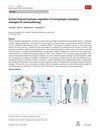
This review highlights that surface mechanical regulation can program macrophage behavior through specific mechanical cues on material surfaces, potentially advancing immunotherapies and regenerative medicine by enabling precise control over macrophage functions.
 April 2026 in “Nature Communications”
 This study found that dedifferentiated corneal epithelial cells can revert to a stem-cell-like state, aiding tissue homeostasis and repair, with this plasticity limited to the epithelial lineage and enhanced by niche-derived cytokines.
 April 2026 in “Communications Biology”
 In this study of Danioninae species, researchers reported that the presence of breeding tubercles on the pectoral fins is conserved in certain species and linked to local androgen conversion, with steroid 5-α-reductase playing a crucial role in their development.
 April 2026 in “Frontiers in Pharmacology”
 This review systematically evaluates Erzhi Pill's formulation, therapeutic potential, and challenges, exploring its traditional applications and modern prospects for developing integrated quality control and precise medical strategies.
 March 2026 in “Plastic and Aesthetic Research”
 This review highlights that exosomes from adipose-derived stem cells, particularly those enriched with circ-Ash1l, can inhibit ferroptosis and reduce UVB-induced skin aging by delivering GPX4-promoting signals to damaged cells, thus offering a potential regenerative therapy for photoaged skin.
 March 2026 in “Frontiers in Immunology”
 This review discusses the multifaceted roles of regulatory T cells in cutaneous wound healing and highlights potential therapeutic strategies targeting these cells to enhance wound repair in chronic and diabetic wounds, but reports no new clinical results.
 March 2026 in “ArXiv.org”
 This review presents a comprehensive evaluation of medical reasoning using large language models, highlighting a significant gap between exam-level performance and true clinical decision-making accuracy.
 February 2026 in “Frontiers in Medicine”
 This case series described five patients with chronic alopecia areata who successfully maintained long-term disease control using a combination of topical immunotherapy and other treatments over 9–15 years, highlighting the approach's continued value alongside novel therapies.

This study found that a mesenchymal stromal cell-derived regenerative extracellular matrix (rECM) significantly accelerated wound closure and improved healing in diabetic mice, also enhancing nerve and blood vessel formation compared to controls.
 February 2026 in “Frontiers in Materials”
 In this study, researchers developed iron-curcumin-coordinated nanoparticles to enhance curcumin's bioavailability and therapeutic effects, finding that these nanoparticles accelerate wound healing in diabetic mice by reducing inflammation and oxidative stress more effectively than free curcumin.
 February 2026 in “Frontiers in Immunology”
 In this review, researchers detail how immunosenescence and chronic neuroinflammation contribute to Parkinson's disease progression, exploring potential therapeutic strategies targeting this axis, such as senolytic agents and immune rejuvenation, while highlighting associated challenges and future research needs.
This study observed that exosomes derived from adipose-derived stem cells significantly enhanced bone marrow mesenchymal stem cell migration and osteogenesis, leading to improved bone regeneration in a rat model of calvarial defects.
 January 2026 in “Forum Dermatologicum”
 This study observed that 2.5% of patients with mycosis fungoides or Szary syndrome experienced alopecia, predominantly within skin lesions, with scalp metastases from other cancers also potentially causing hair loss, highlighting the diagnostic value of trichoscopy in differentiating alopecia types.
 November 2025 in “IECCMEXICO”
 This review reports that 3D skin bioprinting has made significant progress towards clinical application, particularly in wound healing and disease modeling, but further work on vascularization and bioink standardization remains crucial.
 October 2025 in “Dermatology and Therapy”
 This study evaluates the efficacy and safety of a higher dose (100-mg) of ritlecitinib for treating severe alopecia areata, comparing it to external and synthetic placebo control groups.
This study introduced ElixirSeeker2, a computational framework for designing anti-aging peptides, and found that some newly identified peptides significantly delayed cellular senescence and enhanced cellular and locomotor functions in aged Caenorhabditis elegans.
This review suggests that combining Platelet-Rich Plasma and microneedling may enhance hair restoration outcomes in patients with androgenetic alopecia compared to using either therapy alone.
In this study, researchers found that CD4 T cells from the skin draining lymph nodes of mice with alopecia areata can transfer the disease to recipient mice, highlighting the key role of these cells and their interaction with CD8 T cells in the disease's development.