 June 2023 in “British journal of dermatology/British journal of dermatology, Supplement”
 This study reports a rare case of two siblings with lipoedematous scalp, suggesting a possible genetic link that warrants further investigation.
 9 citations
,
May 2015 in “Cardiology Clinics”
9 citations
,
May 2015 in “Cardiology Clinics” This review discusses the timing and management of dyslipidemia screening around pregnancy and emphasizes dietary, exercise, and glycemic interventions during pregnancy without reporting new clinical outcomes.
 July 2022 in “International Journal of Health Sciences”
 This study assessed lipid parameters and serum DHT levels in type 2 diabetes patients, but the abstract does not specify the findings about their association.
16 citations
,
June 2015 in “The journal of investigative dermatology/Journal of investigative dermatology” This study found that DHHC13 is crucial for hair anchoring and skin barrier function, with its deficiency in Zdhhc13(skc4) mice leading to cyclic alopecia and skin abnormalities due to cornifelin deficiencies.
 17 citations
,
June 2016 in “Croatian Medical Journal”
17 citations
,
June 2016 in “Croatian Medical Journal” In this study, vitiligo and alopecia areata were more common among patients with chronic graft-vs-host disease than previously reported, linked to higher NIH skin scores and greater immunosuppressive treatment.
72 citations
,
February 1990 in “British Journal of Clinical Pharmacology” This study found that concentrations of haloperidol and its metabolite in human scalp hair significantly correlated with the daily dose and plasma trough levels in patients taking haloperidol.
 February 2026 in “International Journal of Molecular Sciences”
 This study found that PDLLA filler treatment may help combat age-related hair thinning by reducing oxidative stress and enhancing hair follicle function in both cell and animal models.
 27 citations
,
March 2008 in “Journal of The European Academy of Dermatology and Venereology”
27 citations
,
March 2008 in “Journal of The European Academy of Dermatology and Venereology” Men with a certain type of hair loss (AGA) have higher bad cholesterol and lower good cholesterol levels, making them more likely to get heart disease.
 May 2018 in “European Journal of Dermatology”
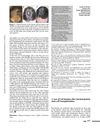
 Adjusting the medication tacrolimus resolved a boy's red nail beds after a stem cell transplant.
 28 citations
,
February 2011 in “Clinical Endocrinology”
28 citations
,
February 2011 in “Clinical Endocrinology” In this study, women with polycystic ovary syndrome showed adverse lipoprotein profile changes that increase cardiovascular risk, which were found to be more closely related to androgen levels than body weight.
 1 citations
,
April 2015 in “Journal of Dermatology and Dermatologic Surgery”
1 citations
,
April 2015 in “Journal of Dermatology and Dermatologic Surgery” This study found higher serum prolactin levels in patients with psoriasis, vitiligo, and alopecia areata compared to controls, and prolactin levels correlated with disease severity in psoriasis and alopecia areata but not vitiligo.
49 citations
,
October 1988 in “The Journal of Clinical Endocrinology & Metabolism” This study found that low doses of leuprolide effectively suppressed serum estradiol and LH response, while higher doses were needed to suppress testosterone and reduce hair growth in hirsute women.
 14 citations
,
January 1990 in “Fertility and Sterility”
14 citations
,
January 1990 in “Fertility and Sterility” In this study, five patients with moderate hyperprolactinemia lacked symptoms, signs, or underlying causes, leading researchers to conclude that no further investigation or therapy was needed.
 151 citations
,
December 2004 in “Annals of the New York Academy of Sciences”
151 citations
,
December 2004 in “Annals of the New York Academy of Sciences” This review discusses nonclassical 21-hydroxylase deficiency as the most common autosomal recessive disorder in humans and highlights the effectiveness of glucocorticoid treatment in reversing related symptoms.
1 citations
,
July 2021 in “Acta dermatovenerologica Croatica” This case report describes regression of hidradenitis suppurativa lesions in two patients after 16 weeks of adalimumab treatment.
March 2022 in “Journal of Investigative Dermatology” In this study, Wang et al. (2022) found that in patients with cutaneous lupus erythematosus, chronic lesions contained more senescent progenitor cells, marked by p16 and p21, than subacute lesions, suggesting a link between disease chronicity and cellular senescence.
1 citations
,
October 2023 in “Heliyon” In this study, the researchers reported a new case of Hutchinson-Gilford progeria syndrome with a novel LMNA mutation and successful surgical intervention for airway obstruction.
 January 2023 in “Endocrine Journal”
 This review discusses the challenges in optimizing glucocorticoid treatment for classic 21-hydroxylase deficiency, emphasizing individualized care and the need for comprehensive management, but presents no new findings.
37 citations
,
December 2001 in “Journal of the American Academy of Dermatology” This case report details significant hair regrowth in a patient with lichen planopilaris after treatment with thalidomide, suggesting its potential as a treatment option for this condition.
3 citations
,
January 2021 in “touchREVIEWS in Endocrinology” This case report describes how a 68-year-old woman's hyperandrogenic symptoms improved and testosterone levels normalized after the surgical removal of an occult Leydig cell tumour.
3 citations
,
May 2013 in “PubMed” This review discusses Hutchinson-Gilford progeria syndrome, highlighting its phenotype, pathogenesis, and its potential insights into natural aging and cardiovascular diseases, but it reports no new research findings.
2 citations
,
January 2021 in “American Journal of Case Reports” This case report details a 13-year-old Thai boy with Hutchinson-Gilford progeria syndrome, who presented with cardiovascular complications, including coronary artery calcification and non-ST-segment elevation myocardial infarction.

In this case study, a 46-year-old woman with localized discoid lupus erythematosus on her scalp showed significant improvement with a combination of oral hydroxychloroquine and topical pimecrolimus, despite limited success with previous treatments.
 April 2020 in “Journal of the Endocrine Society”
 This case report details a post-menopausal woman with hirsutism and virilization due to rare Leydig cell tumors in both ovaries, underscoring the challenge of detecting such tumors with standard imaging.
15 citations
,
July 2022 in “Nano Research” This study suggests that using cholesterol-free liposomes, specifically PPD-Lip, as a delivery system with dutasteride may enhance the treatment of androgenetic alopecia by promoting hair regrowth in mice models.
100 citations
,
August 2011 in “Journal of Investigative Dermatology” Lack of vitamin D receptor increases skin tumor risk by boosting hedgehog signaling.
September 2016 in “Journal of dermatological science” This study suggested that differences in hair follicle development, indicated by the frequency of underdeveloped hairs, significantly contribute to the variation in hair loss severity among Japanese individuals with the LIPH c.736T>A mutation.
 12 citations
,
July 2016 in “British journal of dermatology/British journal of dermatology, Supplement”
12 citations
,
July 2016 in “British journal of dermatology/British journal of dermatology, Supplement” This study observed phenotypic diversity in hair loss among Japanese individuals homozygous for the LIPH c.736T>A mutation and suggests that differences in hair thickness may contribute to varying severities.
11 citations
,
December 2013 in “Clinical and experimental dermatology” This study reports a case of a child with congenital skin fragility, alopecia, and cardiomyopathy due to compound heterozygous mutations in the DSP gene causing desmoplakin deficiency.

Among females with nonclassical 21-hydroxylase deficiency, this study found that low-dose glucocorticoid treatment improved fertility outcomes by increasing pregnancy and live birth rates while reducing miscarriage rates.