26 citations
,
September 1999 in “Canadian Journal of Botany” This study found that a recessive mutation in the RHD4 gene of Arabidopsis thaliana leads to slower and more variable tip growth in seedling root hairs, resulting in shorter and wider hairs than in wild-type plants.
3 citations
,
May 2024 in “Skin Appendage Disorders” This study observed that trichoscopy of long-lasting lesions in a chronic stage revealed specific features such as absence of follicular openings, cicatricial patches, and thick arborizing vessels.

This case report describes a 41-year-old man with preauricular and postauricular plaques unresponsive to topical treatments, with lab results indicating low-titer antibodies for Sjögren syndrome A and B.
22 citations
,
April 2010 in “Journal of Cellular Biochemistry” This study concluded that the hairless protein interacts with the vitamin D receptor to repress transcription crucial for hair cycling, employing multiple protein interfaces and modulating chromatin structure.
13 citations
,
August 2005 in “Journal of Investigative Dermatology Symposium Proceedings” This study describes a genetic mutation in the desmoglein 4 gene linked to localized autosomal recessive hypotrichosis in Pakistani families, showing similarities to animal models with similar hair loss conditions.
January 1982 in “Clinical Cosmetic and Investigational Dermatology” This case report describes a 54-year-old woman with familial dyskeratotic comedones who experienced slight improvement in her skin lesions after three months of treatment with topical retinoids and urea cream.
100 citations
,
November 1997 in “Human Genetics” In this study, researchers found that the prevalent Glu 410 Lys mutation in hHb6 and a new Glu 403 Lys mutation in hHb1 are linked to monilethrix, suggesting a mutational hotspot in type II hair keratins.
10 citations
,
January 2003 in “Dermatology” This study describes a Japanese family with monilethrix and found no clear genotype/phenotype correlation in cases with the E413K mutation in hHb6.
 5 citations
,
April 2011 in “The Lancet”
5 citations
,
April 2011 in “The Lancet” This case report describes a 60-year-old man with a rare 46, XX karyotype who presented with cerebellar infarct and polycythaemia, leading to further endocrine investigations after adrenal gland enlargement was found.
 September 2023 in “DergiPark (Istanbul University)”
 This study evaluated the quality of life among Turkish women with hirsutism using the Dermatology Life Quality Index and found that these women reported impaired quality of life compared to a control group without hirsutism.
194 citations
,
November 2006 in “Science” This study identified a gene mutation in the LIPH gene associated with inherited hair loss and hair growth defects in certain populations, suggesting lipase H plays a role in hair development.
 August 2016 in “Journal of Investigative Dermatology”
 This case report identifies a novel LIPH gene mutation linked to autosomal recessive woolly hair/hypotrichosis in a Japanese boy, expanding the spectrum of known mutations associated with this condition.
50 citations
,
February 2004 in “Genomics” This study identified a missense mutation in the rat Desmoglein 4 gene, causing abnormal hair shaft development in lanceolate hair mutant rats by disrupting a critical calcium binding site.
 81 citations
,
January 2006 in “Journal of cellular physiology”
81 citations
,
January 2006 in “Journal of cellular physiology” This study found that the absence of the vitamin D receptor disrupts hair follicle structure during the first catagen in mice, linked to increased expression of the hairless gene.

In this study, female patients with Female Pattern Hair Loss were found to have significantly lower serum levels of vitamin D and ferritin, as well as lower total cholesterol and triglyceride levels, compared to healthy controls, suggesting these factors may contribute to the condition's pathogenesis.
2 citations
,
August 2024 in “Molecular Genetics & Genomic Medicine” In this case study, an 8-day-old neonate with holocarboxylase synthetase deficiency showed dramatic improvement in lactic acidosis and overall clinical condition following biotin mega-dose therapy, highlighting the importance of early genetic testing and timely treatment in such metabolic disorders.
 28 citations
,
August 2003 in “Steroids”
28 citations
,
August 2003 in “Steroids” This study found that untreated hirsute patients have lower expression of type 2 17β-HSD mRNA in scalp hairs, indicating potential disturbances in androgen metabolism, compared to treated hirsute patients.
59 citations
,
November 2002 in “Pediatric Dermatology” This article describes a case of dyschromatosis universalis in a young Saudi Arabian girl, discussing similar cases reported outside the Far East where the condition was initially identified, but provides no new research findings.
 October 2011 in “Iranian Journal of Dermatology”
 This study found that men with androgenic alopecia had significantly higher levels of lipoprotein (a), a risk factor for coronary artery disease, compared to men with normal hair.
17 citations
,
March 2012 in “Journal of biological chemistry/The Journal of biological chemistry” In this study, researchers found that overexpression of the hairless protein in Hr mutant mice disrupts inner root sheath formation by downregulating Dlx3 and associated keratins in hair follicle development.
September 2024 in “Dokumentenrepositorium der RUB (Ruhr University Bochum)” This study found that patients with higher baseline monocyte counts (\(\geq\) 925/\(\mu\)l) were significantly more likely to see treatment failure with adalimumab for hidradenitis suppurativa.
64 citations
,
May 2000 in “International Journal of Dermatology” This study found that thalidomide increased peripheral lymphocyte counts and reduced inflammation in lupus erythematosus patients, but was associated with polyneuropathy, suggesting careful use in refractory cases.
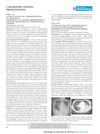 May 2025 in “The Journal of Rheumatology”
 This case report highlights a rare instance of diffuse alveolar hemorrhage in a patient with catastrophic antiphospholipid syndrome, emphasizing the importance of early recognition and multidisciplinary management.

This study explores the expression and function of 11β-HSD1 in human hair follicles and its potential regulation of glucocorticoid effects on dermal papilla cells, but reports no definitive findings on 11β-HSD1's role.
April 2023 in “Journal of Investigative Dermatology” 3D ultrasound can detect hair follicle changes and disease phases in alopecia areata.
16 citations
,
July 2021 in “American Journal of Medical Genetics Part A” This study identified novel LSS mutations implicated in hypotrichosis simplex with or without neurodevelopmental abnormalities, highlighting the need for careful evaluation of synonymous mutations' potential pathogenic effects.
2 citations
,
February 2022 in “bioRxiv (Cold Spring Harbor Laboratory)” In this study, researchers found that correcting the HGPS mutation with Adenine base editing partially rescued accelerated skin cell differentiation and reduced cell death in patient-derived stem cells.
 15 citations
,
January 2013 in “European Journal of Pediatrics”
15 citations
,
January 2013 in “European Journal of Pediatrics” Patients with Shwachman-Diamond syndrome often get misdiagnosed due to a wide range of symptoms, including immune system problems and bone abnormalities.
 37 citations
,
January 2010 in “Acta dermato-venereologica”
37 citations
,
January 2010 in “Acta dermato-venereologica” This study found that both men and women with androgenic alopecia had significantly higher triglycerides, total cholesterol, and LDL-C and lower HDL-C levels than controls, suggesting increased dyslipidemia prevalence.
 1 citations
,
March 2019 in “KnE life sciences”
1 citations
,
March 2019 in “KnE life sciences” This case report suggests that human dermal papillae conditioned media may accelerate wound healing in congenital aplasia cutis due to varicella infection.