35 citations
,
December 2017 in “Journal of Experimental Botany” In this study, CSLD3 overexpression in Arabidopsis enhanced root and hypocotyl growth by increasing cell elongation, with root growth highly sensitive to ethylene and phosphate starvation conditions.
3 citations
,
December 2020 in “Pharmaceutical Sciences and Research” This study found that using 70% ethanol as a solvent for extracting unsoaked Leucaena leucocephala seeds produces a high extract yield while managing mimosine levels, indicating potential for nutraceutical use.
 1 citations
,
May 2017 in “Journal of The American Academy of Dermatology”
1 citations
,
May 2017 in “Journal of The American Academy of Dermatology” The moisturizer with phytol improved skin texture and reduced fine wrinkles better than the moisturizer without it.
Linalool in personal care products may worsen frontal fibrosing alopecia by damaging hair follicle stem cells and triggering harmful immune responses.
7 citations
,
January 2022 in “Bioengineering” This study found that a lipid-based nanoparticle formulation with oleic acid for delivering dutasteride showed lower skin permeation compared to a formulation without oleic acid, indicating its potential for targeted dermal delivery.
36 citations
,
July 1996 in “The journal of investigative dermatology/Journal of investigative dermatology” This research reports a new autosomal recessive mutation in mice, 'lanceolate hair', causing generalized alopecia and hair shaft abnormalities, which may serve as a model for Netherton's syndrome in humans.
 1 citations
,
January 2013
1 citations
,
January 2013 This review examines the design and evaluation parameters of depilatory formulations but reports no new empirical findings.
 November 2022 in “The journal of investigative dermatology/Journal of investigative dermatology”
 This study suggests that allergens like linalool found in personal care products may contribute to the pathobiology of frontal fibrosing alopecia by affecting immune responses and stem cell function in hair follicles.
2 citations
,
June 1985 in “PubMed” This study observed that ethylenthiourea's lethality increases with dose accumulation and ethanol co-administration, while impaired liver function and various adverse effects were noted in long-term treated rats.
 January 2024 in “Middle East Journal of Applied Science & Technology”
 This study formulated and evaluated a polyherbal body lotion using neem, tulsi, and aloe vera extracts, finding it met satisfactory physicochemical standards and was well received by users for skin smoothness and hydration without causing allergies.
14 citations
,
September 1983 in “Acta Dermato Venereologica” This study found that daily topical application of citral increased sebaceous gland lobules and cell hyperplasia in male rats after three months.
This study found that ingesting seeds from the Lecythis ollaria tree may cause hair loss and other toxic effects in animals.
July 2023 in “Nature Reviews Chemistry” A new method strengthens hair without using harmful chemicals.
 June 2026 in “Zenodo (CERN European Organization for Nuclear Research)”
 In this study, researchers formulated and evaluated a herbal hair serum using natural ingredients, with formulation H3 showing superior viscosity, homogeneity, and stability. The authors suggest it may be a safe and effective natural option for enhancing hair nourishment and health.
1 citations
,
April 2021 in “Journal of Cosmetic Dermatology” In this placebo-controlled clinical study, a cream containing 4% capryloyl glycine and 1% glycine soy‐fermented extract effectively inhibited ODC1 activity and improved hypertrichosis in 91.7% of Caucasian female patients on the forearms, whereas no improvement was observed with the placebo.
 2 citations
,
October 2023 in “Philosophical transactions - Royal Society. Biological sciences”
2 citations
,
October 2023 in “Philosophical transactions - Royal Society. Biological sciences” This article reports that mutations in the PADI3 gene, affecting its activity or localization, cause uncombable hair syndrome and are linked to central centrifugal cicatricial alopecia, particularly among women of African ancestry.
 46 citations
,
August 2003 in “The journal of investigative dermatology/Journal of investigative dermatology”
46 citations
,
August 2003 in “The journal of investigative dermatology/Journal of investigative dermatology” This study found that phosphatidic acid promotes hair growth by stimulating cell proliferation and protecting against apoptosis in murine hair epithelial cells, unlike lysophosphatidic acid, which showed limited effects.
 10 citations
,
March 2015 in “American journal of primatology”
10 citations
,
March 2015 in “American journal of primatology” This study found that ringtailed lemurs consuming leucaena in Berenty absorb mimosine, which causes alopecia without affecting body condition or organ toxicity; this may increase infant mortality due to alopecic mothers.
February 2025 in “Universidade Nova de Lisboa's Repository (Universidade Nova de Lisboa)” This research discusses various collaborative and funding efforts across multiple institutions but does not present new experimental findings.
10 citations
,
January 1994 in “Cosmetics and toiletries” This study reports on the vulnerability of hair's structural lipids to physical and chemical damage and describes properties of hair treated with a synthesized ceramide derivative.
26 citations
,
May 1991 in “Clinical and experimental dermatology” In this study, oral etretinate resulted in increased hair length and loss of beading in a childhood monilethrix case, while the scalp's keratosis pilaris persisted.
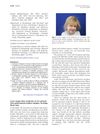 2 citations
,
August 2012 in “Journal of the American Academy of Dermatology”
2 citations
,
August 2012 in “Journal of the American Academy of Dermatology” This correspondence describes two patients with both epidermolysis bullosa simplex, Dowling-Meara type, and loose anagen hair syndrome, an association not previously reported in the literature.
June 2022 in “Zenodo (CERN European Organization for Nuclear Research)” This promotional content discusses Locerin as a hair growth supplement but reports no research findings; readers are encouraged to explore their own conclusions.
 April 2023 in “The journal of investigative dermatology/Journal of investigative dermatology”
 In this study, the ablation of Tet2/Tet3 genes in mouse skin epithelial cells led to altered hair shape and length, highlighting their role in regulating hair follicle gene expression and chromatin structure.
 4 citations
,
March 2002 in “International journal of toxicology”
4 citations
,
March 2002 in “International journal of toxicology” In this study on tolerant rats, maternal and developmental toxicity from levo-alpha-acetyhnethadol hydrochloride were observed at all doses, without specific fetal toxicity or teratogenic effects.
14 citations
,
August 2021 in “Journal of Pharmaceutical Sciences” This study found that cholesterol- and phospholipid-free multilamellar niosomes improved skin deposition and targeted deeper hair follicles better than hydrophobic PLGA nanoparticles for transdermal drug delivery.
11 citations
,
January 2016 in “Biointerphases” This study suggests that the outermost hair cuticle surface is rich in 18-methyleicosanic acid (18-MEA), supporting previous findings of its multilayer lipid and protein structure.
September 2010 in “International Journal of Cosmetic Science” This study describes a microfluorometric method to quantify lipid removal and reattachment on human hair during light exposure and chemical treatments, altering hair surface properties from hydrophobic to hydrophilic.
49 citations
,
November 2021 in “Annual review of pathology” This review discusses the regulatory roles of lysophospholipids like LPA and S1P in diseases such as fibrosis, neuropathic pain, and cancer, but reports no new clinical results.
October 2018 in “Focus on surfactants”