91 citations
,
June 2011 in “The EMBO Journal” This study demonstrates that hair follicle bulge stem cells can transition into other stem cell compartments, indicating their role in maintaining both hair follicles and sebaceous glands.
6 citations
,
February 2020 in “Journal of Cutaneous Pathology” This case report describes the histopathological features of nevus psiloliparus in an 11-year-old girl, noting "shadow" follicular units with loosely arranged collagen and reduced elastic fibers.
18 citations
,
April 2016 in “American Journal of Dermatopathology” This case series highlights that nail clipping can aid in early detection and surgical planning of onychomatrical tumors by distinguishing between benign and potentially malignant growths based on the cavities' average dimensions.
 September 2016 in “Journal of Dermatological Science”
 This study identified that in Japanese patients with autosomal recessive woolly hair/hypotrichosis, the c.736T > A LIPH mutation is associated with a mild phenotype, while the c.742C > A mutation may lead to severe baldness.
35 citations
,
August 2006 in “Molecular genetics and metabolism” This study found significant variation in tissue mutant load in individuals with the T8993G mutation, which complicates genetic counseling and may inform genotype-phenotype correlations, especially using hair bulb mtDNA analysis.
 5 citations
,
January 2018 in “Indian Dermatology Online Journal”
5 citations
,
January 2018 in “Indian Dermatology Online Journal” This case report describes a strong dermoscopic and histopathological correlation in lichen nitidus, helping differentiate it from other similar conditions.
 31 citations
,
December 2010 in “Journal of the American Academy of Dermatology”
31 citations
,
December 2010 in “Journal of the American Academy of Dermatology” This study reports that structural abnormalities in the inner root sheath of hair follicles may cause the hair shaft to be loosely attached in patients with loose anagen hair syndrome.
11 citations
,
January 2015 in “JOURNAL OF HEALTH SCIENCE” This case report details a 12-year-old boy with Lichen Spinulosus and plantar keratoderma, who responded well to topical treatments including lactic acid, urea, and betamethasone valerate.
 25 citations
,
January 2011 in “Pharmacognosy magazine”
25 citations
,
January 2011 in “Pharmacognosy magazine” This study found that Nardostachys jatamansi DC rhizome extracts and specific isolated terpenoids promoted hair growth.
 February 2024 in “Acta dermato-venereologica”
 This study reports that folliculitis decalvans and lichen planopilaris phenotypic spectrum is an underdiagnosed form of cicatricial alopecia, potentially treatable with anti-inflammatory drugs used for lichen planopilaris.
October 2025 in “Journal of the Endocrine Society” This case report documented the management of a 46-year-old female with Marine-Lenhart syndrome, combining antithyroids with minimally invasive sclerotherapy to achieve euthyroidism and reduce thyroid nodule size by 58%.
 39 citations
,
July 2015 in “British Journal of Dermatology”
39 citations
,
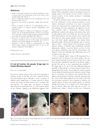
July 2015 in “British Journal of Dermatology” This article discusses the pseudo 'fringe sign' in frontal fibrosing alopecia, highlighting that it is not solely related to traction, and it reports no new clinical results.
 April 2026 in “Communications Biology”
 In this study of Danioninae species, researchers reported that the presence of breeding tubercles on the pectoral fins is conserved in certain species and linked to local androgen conversion, with steroid 5-α-reductase playing a crucial role in their development.
14 citations
,
January 1998 in “Dermatology” This study found evidence that polythelia pilosa, previously excluded from classification, should be reintroduced as it marks true aberrant mammary structures in men and hirsute women.
January 2021 in “Indian dermatology online journal” This article summarizes various anatomical structures and dermatological conditions sharing the name "corona" but reports no clinical findings; the authors suggest these terms due to their crown-like appearance.
3 citations
,
January 2017 in “Acta Dermato Venereologica” This study found that a specific T-cell receptor motif associated with lipid-antigen stimulation may play a role in the pathogenesis of folliculotropic mycosis fungoides.
1 citations
,
April 1998 in “PubMed”  February 2025 in “Indian Dermatology Online Journal”
 This case report describes a rare occurrence of pincer nail deformity in a patient with systemic lupus erythematosus, potentially linked to Raynaud's phenomena as a contributing factor.
May 2024 in “JAAD Case Reports” This case report describes a 29-year-old man with a year-long non-itchy skin eruption and hair loss, with distinct papules and plaques across his scalp, beard, body, and suprapubic regions, but no systemic symptoms or family history of autoimmune disease.
 August 2025 in “Journal of Investigative Dermatology”
 Elevated luteinizing hormone contributes to female-pattern hair loss, and blocking certain channels may help prevent it.
 9 citations
,
January 2017 in “Virchows Archiv”
9 citations
,
January 2017 in “Virchows Archiv” This study documented distinct expression patterns of stem cell markers LGR5 and LGR6 in various human skin tumors, highlighting differences in their potential roles and contributions to tumor development.
May 2021 in “Indian journal of forensic medicine and toxicology” This study reports that teflonpledget-reinforced suturing of coronary fistula, combined with coronary artery bypass grafting, improved symptoms in patients with LAD-to-MPA fistula and triple vessel disease, though larger studies are needed for confirmation.
317 citations
,
August 1997 in “The Plant Journal” This study observed that while calcium influx does not initiate root hairs in Arabidopsis thaliana, it may be crucial for sustaining their elongation through elevated calcium levels at the root hair tip.
5 citations
,
July 1999 in “Journal of Anatomy” This study found that methylene blue staining may reveal anatomical details of intraepidermal nerve fibre endings in the rat mystacial pad with greater clarity than the zinc iodide-osmium tetroxide technique.
 April 2023 in “The journal of investigative dermatology/Journal of investigative dermatology”
 This study suggests that the expression and localization of toll-like receptors and caveolin-1 in lichen planopilaris may influence cicatricial alopecia pathobiology and that downregulating caveolae could offer a novel management strategy.
December 2025 in “Agriculture” In this research, sequencing the chloroplast genomes of 10 Sansevieria trifasciata cultivars allowed the identification of a trnT-psbD deletion marker capable of distinguishing closely related species, and highlighted evolutionary links with Dracaena, contributing molecular tools for taxonomy and phylogenetic studies in Asparagaceae.
 April 2023 in “Journal of Investigative Dermatology”
 This case study reports an unusual presentation of primary cutaneous diffuse large B-cell lymphoma–leg type occurring on the upper lip of an 81-year-old woman, highlighting the need for timely recognition of atypical manifestations.
March 2024 in “Clinical Case Reports” In this study, the authors emphasize the importance of not ignoring the partial presence of comma or harpin hairs and black spots when identifying early lesions of tinea capitis, which may initially be overlooked due to their small size.
23 citations
,
February 2003 in “British Journal of Dermatology” This case study describes a 40-year-old man diagnosed with pilotropic mycosis fungoides, a form of folliculotropic cutaneous T-cell lymphoma, characterized by lymphocytic infiltration of hair follicles and eccrine glands.

This study found that the FER/MLO signaling module plays a crucial role in calcium oscillations and ROS production in root hair tip growth, with the MLO15 protein regulating these processes and restoring disrupted growth and signaling in fer mutant root hairs.