 19 citations
,
May 1984 in “Digestive diseases and sciences”
19 citations
,
May 1984 in “Digestive diseases and sciences” A young woman's Cronkhite-Canada syndrome improved on its own after she gave birth.
 July 2023 in “British journal of dermatology/British journal of dermatology, Supplement”
 In this study, researchers analyzed skin tumors from patients with CYLD cutaneous syndrome and found that loss of CYLD function is linked to changes in cellular signaling pathways, particularly NF-κB signaling, and leads to increased secretion of specific extracellular matrix proteins.
1 citations
,
January 2004 in “Adelaide Research & Scholarship (AR&S) (University of Adelaide)” This study concludes that SPARC is likely a secondary response during the hair cycle's transitional phases, indicating tissue-remodeling processes similar to those in wound repair, rather than initiating these transitions.
 1 citations
,
October 2012 in “The Journal of Dermatology”
1 citations
,
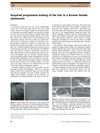
October 2012 in “The Journal of Dermatology” This letter to the editor describes a case of acquired progressive kinking of the hair in a Korean female adolescent, but no new research findings are reported.
57 citations
,
January 1987 in “Journal of Biological Chemistry” This study identified and sequenced several keratin cDNA clones showing distinct expression patterns in mouse epithelia, with in situ hybridization highlighting differences in keratin distribution between normal and hyperproliferative tissues.
 14 citations
,
March 2016 in “Cutaneous and Ocular Toxicology”
14 citations
,
March 2016 in “Cutaneous and Ocular Toxicology” This study observed that SC users commonly exhibited dermatological findings like periorbital darkening and blade scars, highlighting the importance for dermatologists to recognize these markers for early diagnosis and intervention.
 October 2024 in “Medicine”
 In this case report, a 72-year-old female with Cronkhite-Canada syndrome showed significant improvement in symptoms and gastrointestinal polyps after hormone therapy and additional treatment.
28 citations
,
June 2007 in “Journal of Cutaneous Pathology” This study found that premature desquamation of the inner root sheath is a non-specific histologic feature in scarring alopecia and cannot be used alone to define central centrifugal cicatricial alopecia.
2 citations
,
October 2023 in “JURNAL ILMU KEFARMASIAN INDONESIA” In this study, researchers formulated a nanosuspension of kenikir leaf extract that meets physical criteria and exhibits cytotoxic activity against MCF-7 breast cancer cells.
 January 2022 in “bioRxiv (Cold Spring Harbor Laboratory)”
 This study suggests that typical skin lesions in Carney complex may originate from the pro-melanogenic activity of a specific dermal fibroblast population influenced by PKA signaling.
This study found that super-enhancers play a crucial role in driving malignant progression in squamous cell carcinoma stem cells through a regulatory network involving ETS2 transcription factors, highlighting the potential link between high ETS2 levels and poor patient outcomes in head and neck cancers.
 December 2025 in “Cureus”
 This study found that post-COVID syndrome symptoms persisted and were more common in individuals who had recovered from COVID-19 compared to uninfected controls in Kerala, though both groups showed significant symptom burdens.
 April 2017 in “Journal of Investigative Dermatology”
 This study suggests that PKCß plays a critical role in modulating the dermal inflammatory microenvironment in response to dietary lipids in mice.
September 2025 in “OPAL (Open@LaTrobe) (La Trobe University)” This study developed a biobased copolymer called SELP::KP, showing improved hair strength, elasticity, and conditioning properties while being a safer alternative to conventional chemical treatments, based on application to human hair in a laboratory setting.
51 citations
,
February 2004 in “Journal of Investigative Dermatology” MCSP may help identify and regulate skin stem cells, affecting hair growth and regeneration.
October 2025 in “Journal of the Endocrine Society” This report highlights that Klinefelter syndrome is often underdiagnosed due to phenotypic variability and emphasizes the importance of thorough physical examinations to improve diagnostic timing.
226 citations
,
January 2006 in “International review of cytology” Keratin-associated proteins are crucial for hair strength and structure.
 3 citations
,
November 2017 in “The American Journal of Cosmetic Surgery”
3 citations
,
November 2017 in “The American Journal of Cosmetic Surgery” This study evaluated donor area scars in hair restoration using a new assessment scale and found that most patients had good quality scars, with average scores of 15 or less out of 40.
 42 citations
,
February 2014 in “Stem Cells and Development”
42 citations
,
February 2014 in “Stem Cells and Development” This study found that vitamin C increased the survival, proliferation, and hair-regenerative potential of adipose-derived stem cells through the MAPK pathway and enhanced hair growth in mice.
November 2025 in “Biocell” This article explores how the integrated stress response and senescence-associated secretory phenotype influence stem cell fate decisions, highlighting their dual roles in both protecting and disrupting stem cell integrity.
November 2006 in “評価・診断に関するシンポジウム講演論文集” This study found that KSR1 is essential for v-Ha-ras-mediated skin tumor formation in mice but not for MT-driven mammary tumor genesis, suggesting its potential as a therapeutic target in Ras/MAPK signaling.
 2 citations
,
March 2015 in “Toxicology and Environmental Health Sciences”
2 citations
,
March 2015 in “Toxicology and Environmental Health Sciences” This study found that rice bran supercritical CO₂ extract was classified as a non-irritant for ocular use but a moderate irritant for dermal use in rabbits and guinea pigs.
9 citations
,
February 2023 in “Medicine” This review discusses the potential of traditional Chinese medicine to relieve clinical symptoms in cases of CCS and emphasizes the need for further large-scale, long-term studies to verify these effects.
 April 2024 in “Cell death and differentiation”
 This study discusses how different modes of regulated cell death in keratinocytes affect skin stem cell niches, and their role in skin inflammation, injury repair, and cancer, based on findings from human dermatological conditions and experimental mouse models.
 124 citations
,
February 2018 in “Nature Reviews Genetics”
124 citations
,
February 2018 in “Nature Reviews Genetics” This review covers recent findings on stem cell plasticity under normal and cancerous conditions but presents no new experimental results, highlighting implications for regenerative medicine and cancer treatments.
December 2024 in “European journal of medical research” This study suggests that the NCSTN knockout mouse could serve as an HS animal model, with tamoxifen potentially used for gene deletion in mice.
 January 2024 in “Journal of Applied Pharmaceutical Science”
 This study identified procyanidin B2 and leucopelargonidin from Saraca asoca as potential inhibitors in PCOS by showing high binding energy scores against key enzymes involved in estrogen and testosterone biosynthesis.
January 1990 in “The Nishinihon Journal of Dermatology” This study suggests that keratoacanthomas may be distinguished from squamous cell carcinoma by identifying hair follicle structures, based on keratin expression and histological features observed in tumor samples.
 1 citations
,
January 2022 in “Research Square (Research Square)”
1 citations
,
January 2022 in “Research Square (Research Square)” This study found that CRISPR/Cas9 efficiently edited two cellulose synthase-like genes in spinach, significantly altering root hair growth patterns and suggesting potential for large-scale genome editing in this crop.
53 citations
,
October 2003 in “Genetics” This study identified a mutation hotspot in the caracul (Ca) locus of mice, implicating the mK6irs1/Krt2-6g gene in hair formation and potentially human hair and skin diseases.