 May 2022 in “Голова и шея.”
 This research reports that essential oils may enhance athletic performance by improving cerebral hemodynamics and promoting muscle and psycho-emotional relaxation through activation of the limbic system.
 May 2022 in “Голова и шея.”
 This article reviews current literature on eating behavior disorders and analyzes survey data to differentiate between healthy eating and pathological "orthorexia nervosa.
 May 2022 in “Голова и шея.”
 This study concluded that Glycolon is the preferred suture material for tooth extraction surgery due to its superior mechanical properties and capillarity compared to other materials.
 May 2022 in “Голова и шея.”
 This study evaluated the effectiveness of functional tests and manual muscle testing in qualitatively assessing muscle performance in children with health abnormalities.
 May 2022 in “Голова и шея.”
 This study analyzed how modern music genres affect the psychophysiological state of individuals, highlighting differences between those with and without musical education.
 May 2022 in “Gastroenterology”
 This study investigated the possible role of neutrophil extracellular traps in contributing to fibrosis in stenotic Crohn's disease.

This chapter reviews various skin disorders classified as Mendelian disorders of cornification and reports no new clinical findings, highlighting the complexity of genetics involved in inherited ichthyoses.
 November 2009 in “Medical & surgical dermatology”
 This study found that haploinsufficiency of SPINK5 can lead to Netherton syndrome when a single null mutation combines with homozygous G1258A polymorphisms, suggesting it acts as a genuine mutation affecting LEKTI function.
58 citations
,
November 2004 in “The journal of investigative dermatology/Journal of investigative dermatology” This study found that mutations in the Foxn1 gene in nude mice affect not only hair but also nail structure and differentiation, offering insights into nail hypergranulosis pathogenesis relevant to human nail diseases.
68 citations
,
December 2010 in “The journal of investigative dermatology/Journal of investigative dermatology” This study suggests a regulatory model where HOXC13 activates Foxn1, affecting hair and nail differentiation, supported by similarities in Hoxc13(tm1Mrc) and Foxn1(nu) mice phenotypes and gene expression patterns.
September 2023 in “UCrea (University of Cantabria)” In this study, researchers found that mouse digits without nails could not regenerate after amputation, highlighting the necessity of nails for fingertip regeneration and suggesting a potential role for the Lmx1b gene in this process.
 February 2025 in “Indian Dermatology Online Journal”
 This case report describes a rare occurrence of pincer nail deformity in a patient with systemic lupus erythematosus, potentially linked to Raynaud's phenomena as a contributing factor.
55 citations
,
February 2013 in “The Anatomical Record” This study found that the mouse nail unit structurally resembles the human nail unit, indicating it could be useful for researching nail diseases and biology.
 4 citations
,
June 2014 in “The Journal of Dermatology”
4 citations
,
June 2014 in “The Journal of Dermatology” Elkonyxis, a rare nail condition, improved when patients stopped their nail-picking habits.
46 citations
,
September 2007 in “Journal of Investigative Dermatology” June 2025 in “British Journal of Dermatology” This case series highlighted three pediatric patients with congenital nail anomalies, revealing underlying developmental or genetic issues such as symbrachydactyly and potential Adams–Oliver syndrome, underscoring the critical role of dermatologists in early detection and diagnosis of these conditions.
119 citations
,
January 2000 in “British Journal of Dermatology” This study found that keratin expression patterns vary within nail unit structures, with the nail matrix uniquely expressing the acidic hair-type keratin Ha1.
49 citations
,
January 2006 in “Developmental Dynamics” This research observed that the skeletal abnormalities in Noggin null mice varied based on genetic background, and identified haploinsufficiency leading to joint fusions, similar to human conditions associated with NOGGIN deficiency.
 September 1998 in “Journal of The European Academy of Dermatology and Venereology”
 Old people's nails often have problems due to body changes, more diseases, and self-care difficulties, affecting their movement and hand use.
 June 2020 in “bioRxiv (Cold Spring Harbor Laboratory)”
 This study found that the HoxC gene cluster is crucial for the development of hair and nails in mice, with key regulation by two mammalian-specific enhancers.
 21 citations
,
April 1982 in “Genetics Research”
21 citations
,
April 1982 in “Genetics Research” In this study, researchers observed that mice with the naked gene showed frequent absence of hair cuticle and cortical cells during follicle growth, with abnormal keratin deposition also noted.
January 2021 in “Skin Appendage Disorders” 6 citations
,
October 2009 in “Veterinary Dermatology” This study identified various cell types in the canine claw, showing complex mechanisms of cellular differentiation similar to mammalian hair and human nails.
 September 2022 in “JAAD case reports”
 This case study of a 45-year-old man from Tonga describes the identification of pachyonychia congenita through genetic testing, revealing a mutation in the keratin gene KRT16, associated with chronic painful skin and nail conditions.
25 citations
,
January 2003 in “Plastic & Reconstructive Surgery” This study indicates that nail-matrical fibroblasts can induce hard keratin expression in non-nail-matrical keratinocytes, suggesting potential for using non-nail-matrical epidermal grafts to treat nail injuries.
 41 citations
,
October 2008 in “The American journal of pathology”
41 citations
,
October 2008 in “The American journal of pathology” This study found that reducing BMP signaling in mouse nipple epithelia, achieved through Noggin overexpression, can convert them into hairy skin with pilosebaceous units.
31 citations
,
April 2004 in “Journal of Investigative Dermatology” This study found that a newly identified gene, mK17n, may explain the lack of nail issues in mK17 null mice by compensating for mK17's function in the nail bed.
 11 citations
,
November 2005 in “The Journal of Dermatology”
11 citations
,
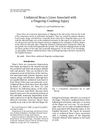
November 2005 in “The Journal of Dermatology” This report presents a unique case where a man developed Beau's lines on all fingers of one hand after a thumb injury, with the lines eventually disappearing as the nails grew.
25 citations
,
November 2020 in “Proceedings of the National Academy of Sciences” This study found that the HoxC gene cluster plays a critical role in the development of ectodermal organs, including hair and nails, with mammalian-specific enhancers increasing transcription levels during development.
4 citations
,
April 2012 in “The journal of investigative dermatology/Journal of investigative dermatology” This study developed a mouse model lacking keratin 16 to replicate palmoplantar lesions, which may help uncover the molecular mechanisms driving these lesions in pachyonychia congenita and focal non-epidermolytic palmoplantar keratoderma.