20 citations
,
December 2010 in “Journal of Morphology” In this study, researchers found that alpha-keratin homologs similar to those in mammalian hair are present in the claws of the lizard Anolis carolinensis, suggesting a structural role during claw formation.
4 citations
,
August 2013 in “Pediatric dermatology” This report describes an 11-year-old girl with peripilar keratin casts, a condition often underdiagnosed and mistaken for nits, highlighting the usefulness of keratolytic treatments in management.
23 citations
,
February 1993 in “Journal of Investigative Dermatology” 14 citations
,
April 1976 in “Journal of Cutaneous Pathology” This case report observed a subepidermal calcified nodule on the face of a 15-year-old boy, thought to originate from hair follicles, with calcium being eliminated through the skin.
May 2017 in “The journal of immunology/The Journal of immunology” This study reported that patients with specific Foxn1 mutations exhibited severe T-cell lymphopenia without the hair and nail abnormalities usually associated with these mutations.
109 citations
,
November 2011 in “Nature Neuroscience” 17 citations
,
January 2013 in “Journal of Cutaneous Pathology” This study reported that the concept of the onychodermis, defined by CD10 expression, is present in the developing nail organ and may play a role in nail plate formation.
 10 citations
,
October 2016 in “Experimental Dermatology”
10 citations
,
October 2016 in “Experimental Dermatology” This essay discusses the role of the nail in mammalian digit tip regeneration and explores whether nail stem cells are solely responsible for this regenerative ability, with no new results presented.
 December 2025 in “Nature Communications”
 This study in male rats identified a unique type of mechanoreceptor, the club-like ending, which responds only to touch and not to self-motion during whisking, contrasting with other receptors that show mixed selectivity.
 65 citations
,
June 2003 in “EMBO journal”
65 citations
,
June 2003 in “EMBO journal” This study reports that overexpressing the BMP antagonist noggin in mice inhibits eyelid opening by reducing apoptosis and delaying cell differentiation in the eyelid epithelium.
This study found that the nail immune system is similar to the hair follicle immune system, with both showing a relative "immune privilege" that may protect against autoimmunity.
 245 citations
,
January 1998 in “Genes & Development”
245 citations
,
January 1998 in “Genes & Development” This study found that Hoxc13 mutations in mice cause defects in hair, nail, and tongue structures, with the most noticeable issue being brittle hair leading to alopecia.
37 citations
,
June 2000 in “Experimental dermatology” This study investigated a spontaneous mutation in mice resulting in hair abnormalities and elevated IgE levels, which resembles human Netherton's syndrome and monilethrix.
 November 2022 in “The journal of investigative dermatology/Journal of investigative dermatology”
 This study found that conditional deletion of CD271 in mouse epidermis led to significant disorganization and increased thickness, suggesting CD271's crucial role in regulating skin differentiation and structure.
 December 2023 in “Royal Society of Chemistry eBooks”
 Nails are a useful alternative to hair for analyzing long-term substance exposure.
19 citations
,
July 1994 in “International Journal of Dermatology” This case report describes a 9-year-old Korean boy with a calcified nodule on his earlobe, confirmed by histopathologic examination and Von Kossa staining.
13 citations
,
August 1985 in “The Journal of Dermatology” This study identified a monoclonal antibody, HKN-2, that recognizes specific cells in human skin and may indicate a common antigenic determinant between hair and other skin epithelial tissues.
 62 citations
,
January 2000 in “Developmental dynamics”
62 citations
,
January 2000 in “Developmental dynamics” This study found that Notch-related genes, including Notch1 and Notch2, and their ligands and regulators, have distinct patterns of expression during mouse hair vibrissa follicle development and the adult hair cycle.
1 citations
,
April 2008 in “Pigment Cell & Melanoma Research” This study suggests that Foxn1 expression in keratinocytes influences pigmentation in mice, highlighting differences in the molecular mechanisms between mouse and human pigmentation processes.
31 citations
,
May 2009 in “Bijdragen tot de Dierkunde” This study suggests that reptilian claws grow differently from mammalian claws, with continuous epidermal growth rather than a proximal matrix zone for cell proliferation.
10 citations
,
May 1994 in “Journal of Investigative Dermatology” August 2019 in “Journal of the American Academy of Dermatology” Older adults may experience painful finger pitting due to nerve changes in aging skin, and treatments can help reduce symptoms.
 September 2023 in “Nature communications”
 This study found that VE-cadherin and Alk1, traditionally linked to vascular functions, also play crucial roles in maintaining nerve homeostasis in mice during hair growth cycles by modulating certain cell populations.
22 citations
,
October 2007 in “Journal of Investigative Dermatology” Stem cells in mouse nails are found in the nail matrix and may control nail growth.
This study found that activating BMP signaling in rodent and primate models significantly promotes nail and digit regeneration after amputation by enhancing the role of specific nail stem cells, though extreme proximal amputation only permitted partial regeneration without bone reconstruction.
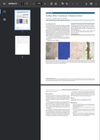
In this case study, a 15-year-old obese boy was diagnosed with acanthosis nigricans and hair casts in the axillae, with Wood's lamp and dermoscopic examination revealing specific features, yet fungal infection was ruled out through a negative KOH test.
 10 citations
,
July 2022 in “The journal of investigative dermatology/Journal of investigative dermatology”
10 citations
,
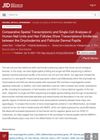
July 2022 in “The journal of investigative dermatology/Journal of investigative dermatology” This study revealed that BMP5 in onychofibroblasts may play a key role in the differentiation of nail matrix keratinocytes, highlighting transcriptional similarities between nail and hair structures.
January 2000 in “The Mouseion at the JAXlibrary (Jackson Laboratory)” This study identified a new mouse mutation associated with noninflammatory proliferative skin disease and hair abnormalities, drawing parallels to human conditions like Netherton's syndrome and monilethrix.
28 citations
,
June 1995 in “The Journal of Dermatology” This study reports that flaky skin mice exhibit skin and nail features that closely resemble human psoriasis vulgaris, suggesting they may serve as a natural model for this condition.
10 citations
,
August 2016 in “Dermatology Online Journal” This article describes cutaneous reactions including keratosis pilaris-like eruptions in a patient on nilotinib for chronic myelogenous leukemia, emphasizing the importance of accurately classifying such eruptions.