90 citations
,
July 1993 in “Journal of Investigative Dermatology” This article reviews the molecular characteristics of human hair keratins, noting their distinct classification from epidermal keratins and the variability in expression that may occur without noticeable hair changes, but reports no new study results.
126 citations
,
January 1987 in “Current topics in developmental biology/Current Topics in Developmental Biology” Different keratin proteins are expressed in various epithelial cells at different stages, affecting cell structure and function.
21 citations
,
June 2003 in “Journal of Morphology” This study suggests that the epidermis of monotremes and marsupials exhibits a more primitive pattern of protein distribution compared to eutherian mammals, with differences in loricrin distribution and keratinocyte maturation.
28 citations
,
November 1987 in “Journal of the American Academy of Dermatology” This study developed an in vitro model using human follicular keratinocytes to observe selective cell growth and differentiation, potentially aiding future research on hair biology and growth processes.
1 citations
,
January 1989 in “Springer eBooks” April 2009 in “The FASEB Journal” This study demonstrated that a keratin gel promotes nerve regeneration across critical defects in rabbit models, showing improved nerve conduction and muscle action potential compared to control treatments.
53 citations
,
September 1999 in “Journal of Synchrotron Radiation” This study shows that microdiffraction experiments reveal structural layers in keratinous tissues, each with different keratin types, potentially explaining their dual role as mechanical support and chemical barriers.
50 citations
,
April 2019 in “Journal of Biosciences” 62 citations
,
August 2006 in “Journal of Chromatography B” This article reviews the challenges in studying keratin proteins and emphasizes the potential of modern proteomic techniques to advance their research, but it reports no new findings.
43 citations
,
July 1994 in “Journal of Cell Science” This study found that the extraction-resistant structures in hair, feathers, and hagfish teeth are due to ε-(γ-glutamyl)lysine cross-linked proteins, emphasizing their role in maintaining the integrity of these materials.
23 citations
,
February 2004 in “British Journal of Dermatology” Keratin in mouse hair follicles is complex and plays specific roles.
27 citations
,
May 2004 in “Journal of Investigative Dermatology” 21 citations
,
June 2002 in “International Journal of Cosmetic Science” Advancements in hair keratin research could lead to better hair health treatments.
This article discusses the structure and protective function of pangolin scales, emphasizing their composition of α-keratins and β-keratins, and highlights evolutionary keratin diversification in tetrapods; it reports no new empirical findings.
 54 citations
,
November 2015 in “Methods in enzymology on CD-ROM/Methods in enzymology”
54 citations
,
November 2015 in “Methods in enzymology on CD-ROM/Methods in enzymology” This chapter reviews keratins in skin epithelia, including their roles in cellular function and disease, and reports no new experimental results.
11 citations
,
January 1981 in “Cells Tissues Organs” This article describes the structure and components of hair cuticle cells and their intercellular junctions but reports no new clinical results.
122 citations
,
January 2006 in “Molecular & Cellular Proteomics” This study found that keratin and other hair proteins in humans are extensively modified posttranslationally, which helps explain the structural characteristics of mature hair.
 7 citations
,
April 2012 in “Biomolecular concepts”
7 citations
,
April 2012 in “Biomolecular concepts” This article reviews the role of keratins in epithelial function and structure, discussing their involvement in growth control, organelle functions, and pathomechanisms of disorders, but reports no new clinical results.
70 citations
,
January 2014 in “International review of cell and molecular biology” This review discusses the role of keratins in maintaining epidermal structure and function and reports no new results; the authors emphasize the lack of rational therapies for skin disorders linked to keratin mutations.
180 citations
,
April 2002 in “Cell Death and Differentiation” 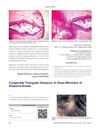 13 citations
,
January 2011 in “International Journal of Trichology”
13 citations
,
January 2011 in “International Journal of Trichology” CTA is often mistaken for AA but doesn't respond to steroids and may require hair transplantation.
17 citations
,
February 2015 in “Experimental Dermatology” This report expands the known genetic mutations linked to monilethrix by identifying new patients with KRT83 mutations, confirming its role as a causative gene for this hair disorder.
33 citations
,
August 2014 in “Veterinary Dermatology” This review discusses advances in understanding epidermal biology and pathology over the past two decades and highlights the significant progress yet acknowledges that much remains to be discovered; no new clinical results are reported.
186 citations
,
December 2012 in “Current opinion in cell biology” This review discusses the recent advancements in understanding how keratins influence cytoarchitecture, cell dynamics, and disease processes but reports no new clinical results; the authors highlight its roles in development and diseases like cancer.
2 citations
,
November 1992 in “Journal of dermatology” This study found that cells isolated from human scalp hair follicles proliferated well in a specific culture medium and possessed keratins characteristic of hair-forming cells.
27 citations
,
August 2016 This article discusses the importance of understanding the skin's structure and function for comprehending both healthy skin biology and skin disease pathophysiology, but reports no new findings.
13 citations
,
January 2002 in “Biological chemistry” This study found that hair follicle-specific keratins can form different structural assemblies depending on ionic conditions, with hair cortex keratins requiring physiological salt conditions to form intermediate filaments.
July 1995 in “Journal of Dermatological Science” March 2009 in “Encyclopedia of Life Sciences” This article reviews keratin disorders and highlights recent progress in therapeutic approaches, including a clinical trial for pachyonychia congenita using siRNA, but reports no new clinical findings.