 September 2022 in “Canadian journal of animal science”
 This study found that polymorphisms in KRTAP13.1, KRTAP27-1, and KRTAP24-1 were significantly associated with fiber diameter in Jiangnan cashmere goats, which may aid future breeding and conservation efforts.
226 citations
,
January 2006 in “International review of cytology” Keratin-associated proteins are crucial for hair strength and structure.
 42 citations
,
January 2017 in “Genes”
42 citations
,
January 2017 in “Genes” This study observed that genetic variation in the ovine KRTAP22-1 gene is linked to increased wool yield and decreased fiber curvature in sheep, indicating its potential use in breeding programs.
 March 2026 in “The Indian Journal of Animal Sciences”
 This study on Indian dromedary camel breeds investigated the KRTAP7 protein, finding all four breeds shared an identical gene sequence, with 13 phosphorylation and glycosylation sites influencing hair characteristics, alongside predicted interactions with other biosynthesis-related proteins.
 62 citations
,
January 2004 in “The journal of investigative dermatology/Journal of investigative dermatology”
62 citations
,
January 2004 in “The journal of investigative dermatology/Journal of investigative dermatology” This study identified 16 novel high sulfur KAP genes and two KAP pseudogenes on chromosome 21q23, showing expression in a specific region of the hair fiber cuticle.
5 citations
,
February 2025 in “Journal of Clinical Medicine” This study introduced a non-invasive, three-step diagnostic algorithm for alopecia that combines clinical and trichoscopic features to accurately identify alopecia subtypes, potentially reducing reliance on invasive histopathology.
 February 2023 in “International Journal of Multimedia Computing”
 In this study, improved hidden Markov algorithms based on Bayesian methods enhanced the resolution and segmentation accuracy of low-dose CT images significantly more than naive Bayesian methods.
98 citations
,
May 2016 in “Genes” This review explains the genetic diversity of sheep wool keratin-associated protein genes and explores how this variation might be leveraged for selective breeding to enhance wool fiber traits.
September 2009 in “Encyclopedia of Life Sciences” This paper discusses the role of the KRTAP gene family in the evolution of mammalian hair and its potential link to hair-related disorders, but reports no new research findings.
76 citations
,
February 1993 in “Journal of Biological Chemistry” This research observed that sheep and rabbit KAP6 genes, expressed in hair follicle cells, have high sequence similarity and indicate conservation due to evolutionary selection pressures.
1 citations
,
April 2021 in “IntechOpen eBooks” This review examines genetic variation in the ovine KRTAP1.1 gene and its potential impact on wool quality, reporting no new findings but suggesting opportunities for developing gene markers for wool and pelt traits.
 3 citations
,
February 2020 in “The journal of gene medicine”
3 citations
,
February 2020 in “The journal of gene medicine” This study found a recurrent nonsense mutation in the HR gene linked to atrichia with papular lesions in two Kashmiri families, suggesting whole exome sequencing as an efficient method for diagnosis and genetic counseling.
9 citations
,
December 2018 in “Journal of Natural Fibers” This study found that K33A was significantly upregulated in lustrous Magra wool follicles, while other keratin and KAP genes showed downregulation, impacting wool's physical properties like luster.
 20 citations
,
September 2020 in “International journal of computer applications”
20 citations
,
September 2020 in “International journal of computer applications” This study found that the Random Forest machine learning algorithm achieved the highest accuracy, 96%, in diagnosing Polycystic Ovarian Syndrome using patients' clinical data.
51 citations
,
January 2007 in “The journal of investigative dermatology/Journal of investigative dermatology” This study identified a novel keratin-associated protein, KAP24.1, which is specifically expressed in the human scalp and located in the hair cuticle.
January 2025 in “Kuwait Journal of Science” In this study, researchers sequenced the KRT71 gene in 102 dromedary camels to find genetic polymorphisms linked to hair shape, identifying 17 variants but none that fully explained hair shape variations, suggesting other genes may also play a role.
27 citations
,
April 2004 in “Biochemical and Biophysical Research Communications” In this study, two novel clusters of keratin-associated protein genes on human chromosome 11 were analyzed, suggesting their products are crucial for hair formation due to preferential expression in hair roots.
1 citations
,
May 2004 in “Biochemical and Biophysical Research Communications” This study identified nine novel KRTAP5 family genes associated with human hair formation, demonstrating preferential expression in hair roots and suggesting their role in hair development.
 1 citations
,
October 2012 in “The Journal of Dermatology”
1 citations
,
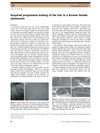
October 2012 in “The Journal of Dermatology” This letter to the editor describes a case of acquired progressive kinking of the hair in a Korean female adolescent, but no new research findings are reported.
32 citations
,
May 2022 in “Frontiers in Pharmacology” This study proposes an AI-based method, DRGCC, using GraphSAGE and clustering constraints to predict associations between drugs and diseases, demonstrating reliable predictive performance that may aid drug repositioning efforts, including exploring drugs for COVID-19 treatment.
24 citations
,
February 2002 in “The journal of investigative dermatology/Journal of investigative dermatology” In this study, researchers identified two new keratin-associated proteins, hKAP1.6 and hKAP1.7, in human hair follicles, contributing to understanding hair fiber differentiation.
30 citations
,
January 1963 in “PubMed” 26 citations
,
July 1995 in “Small ruminant research” This study found that melatonin implants at specific times of the year may increase cashmere production in young Australian cashmere goats by altering their growth cycles.
25 citations
,
June 2015 in “Acta dermato-venereologica” Methotrexate can help some kids with severe hair loss regrow hair.
1 citations
,
July 2012 in “ACM transactions on graphics” This study presented a new algorithm and camera-based system that successfully reconstruct high-quality, 3D representations of facial hair and underlying skin surfaces even in dense regions like eyebrows.
 16 citations
,
January 2017 in “Physical chemistry chemical physics/PCCP. Physical chemistry chemical physics”
16 citations
,
January 2017 in “Physical chemistry chemical physics/PCCP. Physical chemistry chemical physics” This study presents computational modeling and experimental analysis of the HGT protein KAP8.1, identifying key structural features that may influence hair's response to environmental conditions.
 6 citations
,
July 2022 in “Biomedical Signal Processing and Control”
6 citations
,
July 2022 in “Biomedical Signal Processing and Control” This study presents a new hair removal algorithm for dermatoscopic images of skin lesions that improves hair detection accuracy by 2–7% and hair repair accuracy by 2–5% on average, using advanced techniques like maximum variance fuzzy clustering, Criminisi priorities, and the ant colony algorithm.
9 citations
,
June 2014 in “Molecular biology reports” KAP9.2 and Hoxc13 genes are important for cashmere growth and vary in activity during different stages.
52 citations
,
April 2012 in “Journal of Investigative Dermatology” This study found that KRTAP2 proteins predominantly express in the hair shaft cortex of humans, interact with hair keratins, and play crucial roles in hair shaft keratinization.