11 citations
,
January 2021 in “British Journal of Dermatology” This report describes a new case of syndromic ichthyosis caused by compound heterozygous mutations in AP1B1, detailing the associated clinical features and molecular consequences in the patient.
1 citations
,
August 2024 in “Animals” This study suggests that variations in α-keratin proteins influence the structure and characteristics of wool fibers, indicating that keratin genes could serve as useful markers for identifying different wool traits.
 1 citations
,
December 2022 in “JAMA Dermatology”
1 citations
,
December 2022 in “JAMA Dermatology” This study found that the HairComb algorithm achieved high accuracy in quantifying percentage hair loss across various types of alopecia, suggesting its potential for standardized automated assessments.
 161 citations
,
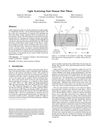
July 2003 in “ACM Transactions on Graphics”
161 citations
,
July 2003 in “ACM Transactions on Graphics” In this study, a new shading model for hair was developed that better matches real-life light scattering, thanks to detailed new measurements of hair fiber scattering not predicted by existing models.
 109 citations
,
January 2011 in “Frontiers in Systems Neuroscience”
109 citations
,
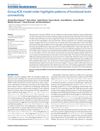
January 2011 in “Frontiers in Systems Neuroscience” The researchers reported that differences in brain functional connectivity between unmedicated seasonal affective disorder patients and healthy controls vary with ICA model order, peaking in volume at model order 70.
This study utilized the Random Forest Algorithm to create a machine learning model aimed at accurately predicting hair loss by considering complex datasets involving genetic, hormonal, lifestyle, and environmental factors, but specific outcomes were not reported.
March 2026 in “Zenodo (CERN European Organization for Nuclear Research)” This document compiles a bibliography of 345 publications over 13 months, presenting the N-K Model's claimed unification of sciences, but it reports no new experimental results.
 10 citations
,
September 2020 in “Computational and Mathematical Methods in Medicine”
10 citations
,
September 2020 in “Computational and Mathematical Methods in Medicine” This paper introduces an algorithm for using smart device-mounted microscopes to analyze scalp images and diagnose hair loss by extracting specific hair loss features.
24 citations
,
October 2019 in “Genes” In this study, the identification of a novel KAP gene in sheep, named KRTAP36-1, was associated with increased prickle factor in wool, suggesting its potential as a genetic marker for breeding purposes.
March 2026 in “International Journal of Cosmetic Science” This research reports that KCV and its palmitoylated derivatives show strong effectiveness in strengthening hair proteins, indicating their potential for use in advanced hair care products.
October 2024 in “Zeitschrift für angewandte Mathematik und Physik” 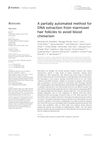 September 2025 in “Frontiers in Genetics”
 This study developed a non-invasive, partially automated protocol for extracting high-quality DNA from hair follicles of marmosets, significantly reducing chimerism rates compared to blood, and proving reliable for whole genome sequencing in low-input DNA scenarios.
46 citations
,
June 2013 in “Journal of structural biology” This study suggests that the mechanical robustness of hair may be enhanced by the binding interactions of keratin-associated proteins, particularly KAP8.1, with intermediate filament proteins.
 78 citations
,
April 1994 in “Archives of dermatology”
78 citations
,
April 1994 in “Archives of dermatology” This study suggests genetic and clinical heterogeneity in keratosis pilaris atrophicans, with variations in inheritance patterns, severity, and response to treatment among 21 individuals observed.
18 citations
,
September 2018 in “The Journal of Agricultural Science” In this study, the presence of certain KAP15-1 gene variants in sheep was associated with differences in wool yield and fiber characteristics.
December 2020 in “Faculty Opinions – Post-Publication Peer Review of the Biomedical Literature” The KDM1 gene helps Venus flytraps close by managing potassium ions.
February 2026 in “Journal of Chittagong Medical College Teachers Association” This case report highlights a 17-year-old female with Kartagener's syndrome and ectodermal anomalies, such as alopecia and dental issues, suggesting a possible novel syndromic variant, with genetic testing recommended to distinguish it from a dual diagnosis.
1 citations
,
January 2021 in “SISTEMASI” This study found that the multi-thresholding method was the most effective for segmenting hair during laser removal, as it clearly distinguished hair patterns with minimal noise.
 19 citations
,
October 2024 in “BMC Medical Informatics and Decision Making”
19 citations
,
October 2024 in “BMC Medical Informatics and Decision Making” This study used machine learning models to analyze PCOS symptoms for early diagnosis, finding Support Vector Machine and VGG16 algorithms achieved high accuracy rates of 94.44% and 98.29% respectively.
January 2002 in “Europe PMC (PubMed Central)” This study presents a follicular automaton model that simulates human hair cycle dynamics and can reproduce hair patterns similar to diffuse or androgenetic alopecia by incorporating spatially heterogeneous parameters and follicle miniaturization.
2 citations
,
May 2024 in “BMC Genomics” This study analyzed the genetics of the patchiness phenotype in New Zealand rabbits and found that the gene KRT82, with identified SNPs in its promoter, may serve as a potential biomarker for breeding these rabbits.
10 citations
,
January 1989 in “Archives of Dermatological Research” The method effectively analyzes human hair proteins, especially nonfilamentous ones.
 32 citations
,
April 2014 in “The journal of investigative dermatology/Journal of investigative dermatology”
32 citations
,
April 2014 in “The journal of investigative dermatology/Journal of investigative dermatology” This study demonstrates that keratin K2 is crucial for proper keratinocyte structure and function in specific mouse skin areas, and its deficiency leads to cellular aggregates and skin abnormalities.
51 citations
,
September 2020 in “Nucleic Acids Research” This article introduces signatureSearch, a software package designed for gene expression signature searching and functional enrichment analysis, but reports no new clinical results.
April 1977 in “Pediatric Research” July 2025 in “International Journal of Molecular Sciences” This genetic study identified four new keratin-associated protein genes in sheep, revealing significant sequence variation and suggesting complex evolutionary dynamics, with unique variants in some sheep breeds linking them to Romanov sheep ancestry.
79 citations
,
October 1998 in “Genomics” This study found that the mK6alpha and mK6beta genes in mice are regulated differently at the mRNA level, with implications for understanding K6 gene evolution and function in mammals.
 March 2026 in “Zenodo (CERN European Organization for Nuclear Research)”
 In this study, a novel geometric medicine approach, utilizing the N-K Universal Computer, was reported to eliminate aflatoxin contamination and significantly reduce cancer rates across the "Aflatoxin Belt" through precision targeting of harmful fungi while preserving ecological balance, without observed toxicity or resistance.
The authors of this study developed a novel CNN architecture aimed at improving detection of Alopecia Areata through image-based datasets, achieving a top accuracy of 98% compared to four other machine learning models.
 2 citations
,
January 2024 in “Journal of Emerging Investigators”
2 citations
,
January 2024 in “Journal of Emerging Investigators” In this study, researchers evaluated deep learning methods for diagnosing Alopecia Areata and found that a modified Inception-Resnet-v2 model achieved a high validation accuracy of 97.94% and loss of 10.4%, suggesting it as an effective tool for classifying alopecia-affected hair.