January 2025 in “Journal of Bioresource Management” This study found that inhibiting the ATR kinase with VE-822 impairs DNA repair capability in quiescent human keratinocytes exposed to solar-simulated UV radiation, suggesting ATR's critical role in facilitating effective DNA damage repair and cellular recovery under UV stress conditions.
24 citations
,
October 2019 in “Genes” In this study, the identification of a novel KAP gene in sheep, named KRTAP36-1, was associated with increased prickle factor in wool, suggesting its potential as a genetic marker for breeding purposes.
76 citations
,
February 1993 in “Journal of Biological Chemistry” This research observed that sheep and rabbit KAP6 genes, expressed in hair follicle cells, have high sequence similarity and indicate conservation due to evolutionary selection pressures.
53 citations
,
May 1988 in “Journal of Molecular Evolution”  3 citations
,
June 2022 in “European journal of human genetics”
3 citations
,
June 2022 in “European journal of human genetics” This study reports the first cases of recessive KRT17-related pachyonychia congenita involving all ectodermal derivatives in seven members of two consanguineous Pakistani families.
61 citations
,
June 2019 in “BMC Genomics” This study explored the expression and potential functions of long non-coding RNAs in the skin pigmentation of Koi carp, revealing their involvement in pigmentation and differentiation mechanisms.
1 citations
,
September 2023 in “Animals” This study found that genetic variants in the goat KRTAP22-2 gene are associated with the mean fiber diameter of cashmere in Longdong Cashmere goats, suggesting these variants could serve as molecular markers for improving cashmere traits.
April 2026 in “Research Square”  July 2022 in “New Zealand journal of agricultural research”
 This study found that variation in the ovine KRTAP27-1 gene may influence wool growth, with certain genotypes associated with higher mean staple length and greasy fleece weight in sheep.
40 citations
,
December 2010 in “Human Genetics” 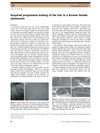 1 citations
,
October 2012 in “The Journal of Dermatology”
1 citations
,
October 2012 in “The Journal of Dermatology” This letter to the editor describes a case of acquired progressive kinking of the hair in a Korean female adolescent, but no new research findings are reported.
September 2024 in “Journal of the American Academy of Dermatology” This paper offers detailed tables of genotypic and phenotypic data on horses, including markers, variants, and haplotypes, but reports no new research results.
46 citations
,
November 1998 in “Experimental Cell Research” This study found that K15 is variably expressed in sheep and mouse hair follicles, with specific patterns suggesting a role in the early stages of keratinocyte differentiation.
 4 citations
,
January 2004 in “Biological and Pharmaceutical Bulletin”
4 citations
,
January 2004 in “Biological and Pharmaceutical Bulletin” In this study, AgK114 was found to be transiently induced in hamster epidermal keratinocytes following skin damage, suggesting its role in the recovery process after injury.
1 citations
,
February 2021 in “Animal biotechnology” This study found that specific variants of the KAP6-1 gene in cashmere-producing goats were associated with changes in fiber diameter and length, suggesting potential as genetic markers for fiber improvement.
27 citations
,
November 2007 in “Genomics” This study found that mutations in type I IRS keratin genes disrupt keratin protein complexes in mice, suggesting crucial roles for these genes in proper hair coat formation.
 January 2024 in “Journal of camel practice and research/Journal of Camel Practice and Research”
 This study analyzed the KRTAP7 gene in four Indian camel breeds and found that the gene sequences were identical across breeds, with no observed SNPs in coding or non-coding regions.
November 2013 in “Faculty Opinions – Post-Publication Peer Review of the Biomedical Literature” Keratin 79 cells help form and regenerate hair canals.
138 citations
,
March 2007 in “Experimental cell research” This review discusses hair keratins and hair follicle-specific epithelial keratins and their association with inherited hair disorders, reporting no new clinical results.
87 citations
,
September 2012 in “Journal of Cell Science” This review discusses the role of keratins in providing mechanical resilience to epithelial tissues and highlights recent therapeutic approaches for keratin diseases, but reports no new experimental findings.
6 citations
,
November 1984 in “Acta Dermato Venereologica” This study investigated the immunohistochemical characteristics of keratin proteins in epidermal appendages, finding variable staining patterns in different skin structures and tumor cells, which suggests differences in keratinization.
26 citations
,
January 2011 in “Open Journal of Genetics” In this study, researchers identified five unique sequences of the ovine KAP13-3 gene, with potential implications for wool traits due to observed amino acid changes.
27 citations
,
April 2004 in “Biochemical and Biophysical Research Communications” In this study, two novel clusters of keratin-associated protein genes on human chromosome 11 were analyzed, suggesting their products are crucial for hair formation due to preferential expression in hair roots.
76 citations
,
January 1998 in “Mammalian Genome” 13 citations
,
August 2018 in “Life sciences” This meta-analysis suggests that combining Kang-ai injection with platinum-based chemotherapy may improve tumor response, performance status, immune functions, and reduce adverse reactions in patients with advanced non-small cell lung cancer.
October 2012 in “Sax's Dangerous Properties of Industrial Materials” 2 citations
,
July 2025 in “Acta Pharmacologica Sinica” Isoginkgetin reduces inflammation in cells by blocking NF-κB activation.

This study in Gansu alpine fine-wool sheep identified two SNPs in the KRT71 gene that significantly affect wool length, with distinct expression patterns observed in hair follicles, suggesting KRT71 as a candidate gene for enhancing wool production traits.