July 2021 in “Zurich Open Repository and Archive (University of Zurich)” This study provided new insights into the complex and heterogeneous architecture of keratin filaments, revealing their dynamic and flexible structure through cryo-electron microscopy analysis.
2 citations
,
August 2022 in “Animals” In this study, a specific genetic variant of KRTAP6-2 in Longdong cashmere goats was associated with finer cashmere fiber diameter, suggesting its potential as a molecular marker for breeding improvements.
 15 citations
,
May 2003 in “American Journal of Kidney Diseases”
15 citations
,
May 2003 in “American Journal of Kidney Diseases” This case report describes a hemodialysis patient whose hair loss reversed after switching from tinzaparin to enoxaparin, suggesting tinzaparin-induced alopecia.
 December 2023 in “The journal of physical chemistry. B (1997 : Online)”
 This study explored the potential of human hair keratin as a filtration material, finding that it may effectively absorb the pollutants diclofenac and perfluorobutanesulfonate. The researchers reported significant binding affinities through molecular simulations, supporting further investigation into keratin's use for water purification.
18 citations
,
July 2023 in “International Journal of Molecular Sciences” This study found that KY19382, a small molecule activating the Wnt/β-catenin pathway, significantly improved wound healing by enhancing cell migration, increasing collagen and stem cell markers, and accelerating re-epithelialization and neo-epidermis formation in a murine model without causing significant cytotoxicity.
December 2012 in “http://isrctn.org/>”  July 2024 in “PLANT PHYSIOLOGY”
 In this study on Arabidopsis, the researchers identified CIPK13 and CIPK18 as crucial genes for root hair growth, finding that deficiencies in these genes resulted in shorter root hairs and reduced growth rates due to altered calcium oscillations.
 4 citations
,
May 2007 in “Journal of Dispersion Science and Technology”
4 citations
,
May 2007 in “Journal of Dispersion Science and Technology” This study found that hinokitiol in cationic vesicles promoted hair growth in mice, potentially due to its high substantivity on the skin.
 3 citations
,
November 2017 in “International Journal of Pharmacy and Pharmaceutical Sciences”
3 citations
,
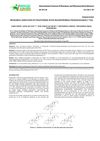
November 2017 in “International Journal of Pharmacy and Pharmaceutical Sciences” This study identified new oxidative derivatives of finasteride, including a newly discovered metabolite, by using the fungus Macrophomina phaseolina.
June 1996 in “Journal of Dermatological Science” 40 citations
,
March 1991 in “Journal of Investigative Dermatology” 38 citations
,
February 1988 in “Molecular and Cellular Biology” This study found that among the two highly homologous K16 genes on chromosome 17, only one produced a functional protein due to stronger promoter activity.
6 citations
,
February 1997 in “International Journal of Dermatology” In this study, the lack of cathepsin expression in Kaposi's sarcoma lesions suggests a benign hyperplastic origin for these lesions.
25 citations
,
September 1995 in “Biochemistry and Cell Biology” This study found that high levels of human cytokeratin 16 expression in transgenic mice lead to skin lesions and altered keratinocyte structure, suggesting potential implications for human skin disorders and wound healing.
28 citations
,
August 1992 in “Differentiation” This study identified a new 65 kD and 48 kD keratin pair expressed in specific mouse epithelial sites, suggesting a unique evolutionary branch of hair-related keratins.
47 citations
,
September 2011 in “Acta biomaterialia” This study observed that increasing the γ-kerateine content in meta-kerateine materials led to reduced elasticity, solidity, and hydrolytic stability, and decreased hepatocyte attachment support.
 6 citations
,
September 2015 in “Journal of Investigative Dermatology”
6 citations
,
September 2015 in “Journal of Investigative Dermatology” This study demonstrated that RNA interference targeting mutant keratin genes can effectively correct hair shaft structural defects in a mouse model by reducing mutant gene expression.
74 citations
,
January 2014 in “Journal of Investigative Dermatology” High kallistatin levels in diabetics worsen wound healing by blocking important cell signals.
 November 2023 in “Journal of the Taiwan Institute of Chemical Engineers”
 Scientists made nanoparticles from human hair proteins to improve drug delivery.
 4 citations
,
April 2024 in “Complex & Intelligent Systems”
4 citations
,
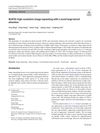
April 2024 in “Complex & Intelligent Systems” This study introduced a single-stage network using large kernel attention that effectively restores high-resolution images by capturing both global and local details, reducing parameters and improving processing speed.
24 citations
,
February 2011 in “The American journal of pathology” This study found that AIRE, a usually nuclear protein, is expressed in the cytoplasm of human epidermal and follicular keratinocytes and associates with the intermediate filament protein cytokeratin 17, potentially impacting ectodermal abnormalities in APECED syndrome.
1 citations
,
June 2015 in “Journal of anatomy” This study reported that novel kainate derivatives, especially ZCZ90, maintained potency in affecting proprioceptive sensory organ firing, aiding future receptor studies for potential treatment innovations.
 January 2012 in “Durham e-Theses (Durham University)”
 This study found that knock-down of keratin 15 in various cell lines affected cell spreading, morphology, migration, differentiation, and proliferation, suggesting its role in maintaining the stem cell nature of keratinocytes.
 6 citations
,
July 2018 in “Advances in Clinical and Experimental Medicine”
6 citations
,
July 2018 in “Advances in Clinical and Experimental Medicine” This study found that scalp hair follicles had higher expression of cytokeratin 15 and distinct hair layers compared to other body regions, highlighting differences in hair follicle characteristics.
 October 2021 in “Journal of Investigative Dermatology”
 This study reported that Dkk4-knockout mice showed disrupted hair follicle patterning, suggesting a WNT-DKK axis may influence regional specificities in hair follicle induction related to androgenetic alopecia.
92 citations
,
April 1999 in “The journal of investigative dermatology/Journal of investigative dermatology” This study suggests that keratin 9 expression in nonpalmoplantar keratinocytes can be induced by signals from palmoplantar fibroblasts, potentially enabling the use of nonpalmoplantar epidermis to treat palmoplantar wounds.
15 citations
,
September 2002 in “Journal of Biological Chemistry” This study observed that transgenic mice expressing keratin K10 under bovine K6beta control developed severe oral abnormalities, suggesting keratin composition changes can affect the physiology of epithelial cells, especially in the oral mucosa.
 3 citations
,
January 2015 in “Sen i Gakkaishi”
3 citations
,
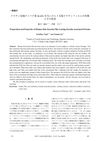
January 2015 in “Sen i Gakkaishi” This study reported that keratin films lacking keratin-associated proteins showed different appearance, structure, and color deposit properties compared to conventional keratin films, suggesting potential for evaluating hair damage.
April 2021 in “Journal of Investigative Dermatology” Krox20 is crucial for hair growth and maintaining skin stem cells.
2 citations
,
July 2021 in “Genes” This study identified a new genetic variant in the KRT71 gene responsible for a breed-specific form of hypotrichosis in Hereford cattle, potentially serving as a model for similar human conditions.