 2 citations
,
January 2020 in “Einstein (São Paulo)”
2 citations
,
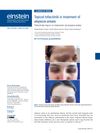
January 2020 in “Einstein (São Paulo)” This review discusses the potential of Janus kinase inhibitors as a promising new treatment for alopecia areata, suggesting they could become a first-line therapy in the future, but reports no new clinical results.
2 citations
,
February 2025 in “Journal of the European Academy of Dermatology and Venereology” This study suggests that Janus kinase inhibitors may offer a potential treatment option for refractory lichen planopilaris and frontal fibrosing alopecia, showing positive response rates between 42% and 100%, though evidence quality is low.
 April 2018 in “The journal of investigative dermatology/Journal of investigative dermatology”
 This study observed that Ginseng and Albizia extracts, when used together, protected human dermal papilla cells from oxidative stress-induced senescence, and inhibited genes that suppress hair growth, indicating their potential in preventing age-related hair density reduction.
March 2023 in “Reactions Weekly” January 2023 in “Reactions Weekly” January 2023 in “Reactions Weekly” September 2025 in “Journal of Skin and Stem Cell” This narrative review reports that baricitinib, a first-generation JAK inhibitor, has shown effectiveness in treating alopecia areata and atopic dermatitis and holds promise for other chronic dermatoses, marking a significant advancement in dermatological immunotherapy according to the summarized findings.
January 2023 in “Reactions Weekly” 
I cannot provide a summary without content from the document.
1 citations
,
January 2019 This study found that a hair tonic combining fragrant pandan and celery extracts increased hair length in guinea pigs, with the 1:5 concentration showing the best growth activity.
In this case report, interferon-alpha treatment for a man with hemophilia and hepatitis C was associated with unexpected diffuse hair growth, likely caused by the medication.
In this study, applying a 5% concentration of pomegranate peel extract significantly enhanced hair growth on male rabbits, showing results comparable to the positive control using 2% Minoxidil, but higher concentrations or lower concentrations did not perform as well.
 4 citations
,
April 2020 in “JAAD case reports”
4 citations
,
April 2020 in “JAAD case reports” This article discusses the autoimmune causes of alopecia areata and reports no new clinical results.
 10 citations
,
May 2019 in “BMC Complementary and Alternative Medicine”
10 citations
,
May 2019 in “BMC Complementary and Alternative Medicine” This study found that Bacillus/Trapa japonica fruit ferment filtrate extracts enhanced human hair follicle dermal papilla cell proliferation through the Akt/ERK/GSK-3β signaling pathway, suggesting potential benefits for alopecia treatment.
 March 2026 in “Tropical Journal of Natural Product Research”
 In this study, the bark extract of Albizia saponaria was analyzed for its metabolites and potential anti-alopecia effects, identifying several compounds with predicted affinities for proteins involved in hair loss pathways.
 January 2025 in “Geneesmiddelenbulletin”
 This 104-week follow-up trial found that baricitinib is effective and safe for treating severe alopecia areata but requires continuous use to sustain hair regrowth. The drug is included in the NVDV guidelines and reimbursed by Dutch insurers for this purpose.
January 2019 in “프로그램북(구 초록집)” This study reported that oral JAK inhibitors, tofacitinib and ruxolitinib, may effectively promote hair regrowth in alopecia areata patients, though ruxolitinib had fewer adverse events compared to tofacitinib.
16 citations
,
January 2020 in “Annals of the rheumatic diseases” In this study, baricitinib improved the resolution of arthritis or rash in patients with systemic lupus erythematosus, but outcomes for skin involvement like alopecia were not reported.
 1 citations
,
January 2023 in “Cutis”
1 citations
,
January 2023 in “Cutis” This article highlights disparities in the prevalence of alopecia areata among people with skin of color and suggests this information could help dermatologic providers address challenges in treating this population.
This study concluded that patients with alopecia areata receiving Janus kinase inhibitors are not maintaining the recommended frequency of lab monitoring every three months, indicating a need for new strategies to improve adherence.
This review provides an overview of the ethno-medical uses, chemical components, and pharmaceutical profile of the plant Myrtus, but reports no new research findings.
 11 citations
,
November 2019 in “Clinical Case Reports”
11 citations
,
November 2019 in “Clinical Case Reports” This study highlights that while there are no FDA- or ANVISA-approved treatments for children with alopecia areata, JAK inhibitors are emerging as a promising therapeutic option for this population.
 April 2024 in “Expert opinion on investigational drugs”
 In this study, JAK inhibitors were reported as safe and effective treatments for moderate-to-severe chronic alopecia areata, although the appropriate duration of treatment remains uncertain, as stopping these medications often results in relapse.
 3 citations
,
August 2025 in “Frontiers in Pharmacology”
3 citations
,
August 2025 in “Frontiers in Pharmacology” Oral JAK inhibitors are safe for alopecia areata, but baricitinib may cause more acne and infections.
 November 2024 in “Open Repository of the University of Porto (University of Porto)”
 This report details a six-month internship experience, split between hospital and community pharmacy settings, which enhanced practical skills and theoretical knowledge in pharmaceutical care and highlighted the pharmacist's role in ensuring safe medication use.
 August 2021 in “Revista Colombiana de Reumatología/Revista Colombiana de Reumatologia”
 This case study reported that a 24-year-old patient with severe, treatment-resistant alopecia areata experienced excellent clinical improvement after one month of treatment with tofacitinib, a JAK inhibitor.
This study found that ethanolic extract and fractions of Ceiba leaf tonic may enhance rabbit hair growth similarly to 2% minoxidil.
 May 2026 in “Zenodo (CERN European Organization for Nuclear Research)”
 This review highlights the therapeutic potential of Ziziphus mauritiana and Black Seed Oil in herbal hair care products, reporting their antioxidant, antimicrobial, and anti-inflammatory properties, which may help address issues like hair fall and scalp irritation while serving as promising natural alternatives to synthetic solutions.
5 citations
,
October 2022 in “British Journal of Dermatology” This study reports that two phase III trials demonstrated the effectiveness of the oral Janus kinase inhibitor baricitinib at 2 mg or 4 mg daily for treating severe alopecia areata in adults, marking a potential advance in managing this condition.
40 citations
,
November 2021 in “Archives of Pharmacal Research”