 April 2017 in “Journal of Investigative Dermatology”
 In this study, deep phenotyping of 68 patients with XPD gene defects successfully separated individuals by clinical diagnosis and survival status, potentially improving diagnosis and prognosis for xeroderma pigmentosum and trichothiodystrophy.

This study reports that a combination of upadacitinib and oral minoxidil resulted in complete hair regrowth in a 20-year-old with alopecia universalis, Crohn's disease, and atopic dermatitis.
 May 2022 in “Journal of The American Academy of Dermatology”
 This systematic review reported objective clinical improvement with low-dose oral minoxidil in up to 100% of patients with androgenetic alopecia and up to 82.4% with alopecia areata.
6 citations
,
November 2020 in “JAAD Case Reports” This study identified overlapping genetic susceptibility loci in both alopecia areata and inflammatory bowel disease, specifically with Crohn's disease and ulcerative colitis.
 April 2017 in “Journal of Investigative Dermatology”
 This study found that knocking out STAT5 expression in specific mouse hair follicles after tamoxifen treatment initiated uniform hair growth, highlighting STAT5's role in regulating the hair growth cycle.
 2 citations
,
April 2019 in “Dermatologic Therapy”
2 citations
,
April 2019 in “Dermatologic Therapy” A patient with alopecia had hair regrowth with tofacitinib but developed a skin reaction, choosing to continue the treatment despite the side effect.
May 2026 in “Mendeley Data” This document contains supplementary materials for a study on the efficacy and safety of a topical siRNA-based formulation targeting DKK-1 in androgenetic alopecia, but it reports no new findings.
 June 2026 in “GSC Advanced Research and Reviews”
 This abstract highlights that jojoba is a versatile plant recognized for its drought resistance and utility in desert regions, with its oil offering various pharmacological benefits like antioxidant and anti-inflammatory effects, though commercial cultivation challenges exist due to seedling variability.
March 2023 in “Zenodo (CERN European Organization for Nuclear Research)”  May 2024 in “The journal of investigative dermatology/Journal of investigative dermatology”
 In this study, it was observed that topical application of N,N-Dimethylglycine Sodium Salt significantly increased skin microcirculation and blood flow in human subjects, suggesting potential benefits for skin health and conditions like dermatitis.
September 2021 in “Pediatrics in review” This case study describes a 7-month-old boy diagnosed with keratitis-ichthyosis-deafness syndrome due to a de novo GJB2 gene mutation, highlighting the challenges in treatment and eventual fatal outcome due to severe complications.
 May 2024 in “Archives of dermatological research”
 This study found that Enz_MoriL, a compound derived from Morus alba L., promotes hair follicle cell proliferation by affecting the Wnt/β-catenin pathway and can counteract an alopecia areata-like condition by suppressing the JAK-STAT signaling in human hair follicle dermal papilla cells.
 3 citations
,
January 2016 in “Biotechnology and Bioprocess Engineering”
3 citations
,
January 2016 in “Biotechnology and Bioprocess Engineering” This animal study found that Laminaria japonica mixed with insulin-like growth factor-1 significantly promoted hair growth in mice, suggesting its potential use for treating alopecia pending further clinical trials.
 124 citations
,
October 2019 in “Frontiers in Immunology”
124 citations
,
October 2019 in “Frontiers in Immunology” This review discusses the role of the JAK-STAT pathway in autoimmune skin diseases and suggests potential therapeutic benefits of JAK inhibitors, but reports no new experimental results.
August 2025 in “Australasian Journal of Dermatology” This source presents an expert consensus framework for determining which Australian patients with alopecia areata should receive subsidized JAK inhibitor therapy, emphasizing the need for future research including patient perspectives to enhance criteria, ensure fair treatment access, and evaluate real-world outcomes.
3 citations
,
April 2011 in “JDDG Journal der Deutschen Dermatologischen Gesellschaft” This article provides a guideline for physicians on managing hair disorders, including recent developments and clinical practice guidelines, but it reports no new research findings.
 6 citations
,
May 2022 in “Aging”
6 citations
,
May 2022 in “Aging” This study found that Si Jun Zi Tang may have anti-aging effects in mice, linked to inhibition of the PI3K-AKT and P38 MAPK signaling pathways.
57 citations
,
July 2000 in “Toxicology Letters” This study found that the K6/ODC transgenic mouse model is highly sensitive to identifying genotoxic carcinogens, showing 100% concordance with traditional rodent bioassays.
November 2025 in “Journal of the European Academy of Dermatology and Venereology” This study found that JAK inhibitor treatment in patients with alopecia areata was associated with a lower incidence of major depressive disorder and decreased antidepressant usage.
June 2025 in “Journal of the American Academy of Dermatology” 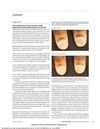 41 citations
,
December 2015 in “JAMA Dermatology”
41 citations
,
December 2015 in “JAMA Dermatology” Tofacitinib citrate improved nail dystrophy and pain in patients with alopecia universalis without causing side effects.
1 citations
,
August 2025 in “Clinica Chimica Acta” November 2020 in “Zenodo (CERN European Organization for Nuclear Research)” 6 citations
,
April 2016 in “Australasian journal of dermatology” Renal transplant patients on tacrolimus and sirolimus may develop acne keloidalis nuchae.
1 citations
,
December 2022 in “Plants” This study suggests that CSLD1 is key to nitrogen-dependent root hair elongation and regulation of AMT1;2 expression in rice roots.
 5 citations
,
January 2021 in “Journal of The American Academy of Dermatology”
5 citations
,
January 2021 in “Journal of The American Academy of Dermatology” This article reflects on the history and significance of the FDA's approval of topical minoxidil for treating androgenetic alopecia in men and women, dating back to 1988 and 1991 respectively.
 40 citations
,
January 2017 in “Intestinal Research”
40 citations
,
January 2017 in “Intestinal Research” This study found that among Japanese IBD patients, the NUDT15 p.Arg139Cys variant was significantly associated with thiopurine-induced leukopenia and severe hair loss, suggesting its genotyping is important for predicting these adverse events.
2 citations
,
June 2022 in “Phytomedicine” This study found that Shi-Bi-Man, a hair health supplement, significantly promoted hair growth in mice, likely through activation of the FGF signaling pathway.
30 citations
,
August 2016 in “Skin research and technology” This study used 3D imaging to reveal age-related reductions in the volumes and connectivity of dermal papillae and rete ridges at the dermal-epidermal junction, which are not fully apparent in 2D examinations.
3 citations
,
June 2018 in “Internal Medicine” In this study, a patient with Cronkhite-Canada syndrome complicated by severe sepsis and disseminated intravascular coagulation was successfully treated using combined therapies, including recombinant human soluble thrombomodulin, despite the absence of a standard treatment regimen for CCS.