 March 2025 in “Experimental Dermatology”
 This study found that transgenic mice overexpressing IKZF1 developed lesions similar to alopecia areata, suggesting that Ikaros may play a role in the disease's pathogenesis. Ikaros expression was also higher in human alopecia areata patients compared to controls.
This review discusses advances in understanding tickling sensations and proposes that knismesis hypersensitivity in autism spectrum disorder may be due to impaired sensory integration.
 January 2019 in “Durham e-Theses (Durham University)”
 This study utilized advanced imaging techniques to quantify hair damage and dye uptake dynamics, revealing that compound penetration in hair is influenced by molecule size and lipophilicity.
17 citations
,
January 2016 in “Journal of Drug Delivery” In this study, PEG and keratin scaffolds selectively influenced protein release rates based on charge and size, suggesting their potential for targeted delivery of protein therapeutics.
17 citations
,
February 2015 in “Experimental Dermatology” This report expands the known genetic mutations linked to monilethrix by identifying new patients with KRT83 mutations, confirming its role as a causative gene for this hair disorder.
August 1994 in “Journal of Dermatological Science”  21 citations
,
August 2014 in “Journal of Cell Communication and Signaling”
21 citations
,
August 2014 in “Journal of Cell Communication and Signaling” This study found that Tsukushi facilitates wound healing in mice by regulating macrophage function and myofibroblast differentiation.
May 2019 in “CINECA IRIS Institutial Research Information System (University of Genoa)” This study found that patients with the MITF p.E318K variant are more likely to develop multiple primary melanomas and dysplastic nevi with uncommon dermoscopic patterns compared to non-carriers.
4 citations
,
June 2024 in “British Journal of Dermatology” This study found that treatment with EGFR inhibitors or mitogen-activated kinase inhibitors may compromise the immune privilege of human scalp hair follicles, suggesting new directions for managing drug-induced folliculitis.
 7 citations
,
September 2019 in “Journal of Cellular Physiology”
7 citations
,
September 2019 in “Journal of Cellular Physiology” In this study, Akt2 and the oncogenic protein Tcl1 were found to be essential for early blastomere proliferation and embryo development in preimplantation mouse embryos.
13 citations
,
May 2001 in “Current problems in dermatology” Keratin proteins in epithelial cells are dynamic and crucial for cell processes and disease understanding.
 April 2017 in “Journal of Investigative Dermatology”
 This study found that a single dose of TRP significantly reduced the number of UV-B-induced actinic keratosis lesions in a mouse model and was associated with improved skin histology and minimal side effects.
91 citations
,
December 2000 in “The journal of cell biology/The Journal of cell biology” This study reports that expressed mouse type Ia and type IIa trichocyte keratins were successfully assembled into intermediate filaments in vitro, while also suggesting that disulfide bond cross linking enhances their stability.
 September 2025 in “The health sciences AUS.”
 This review discusses the efficacy and safety of intralesional triamcinolone acetonide for treating acne keloidalis nuchae, highlighting its significant effectiveness with rare side effects when used properly.
 April 2017 in “Journal of Investigative Dermatology”
 The researchers reported that iPSCs derived from Sendai virus reprogrammed blood cells can mature into functional keratinocytes for up to 60 days, potentially offering new approaches for DEB treatment.
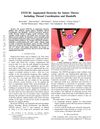 April 2024 in “arXiv (Cornell University)”
 In this study, the researchers developed an advanced robotic system called STITCH for performing suture tasks, which completed an average of 2.93 sutures autonomously and 4.47 sutures with human intervention in physical trials.
 6 citations
,
September 2020 in “Advanced Biology”
6 citations
,
September 2020 in “Advanced Biology” This study found that using the OptoTrkA system to control TrkA activity with blue light enhanced proliferation, migration, and differentiation of hair-follicle-derived stem cells into neuronal and glial cells.
April 2025 in “Indian Journal of Paediatric Dermatology” This case report describes an 8-year-old male with tinea capitis and Trichorrhexis invaginata, who showed significant improvement after treatment with oral micronized griseofulvin.
 July 2025 in “Frontiers in Medicine”
 In this case study, an 8-year-old boy with alopecia totalis experienced significant hair regrowth after baricitinib treatment, suggesting KRT74 variants may influence immune dysregulation in this condition.
September 2023 in “Journal of the American Academy of Dermatology” CTP-543 significantly improved eyebrow and eyelash regrowth and patient satisfaction in adults with alopecia areata.
19 citations
,
April 2024 in “Nature Cell Biology” 37 citations
,
November 2007 in “Journal of Biological Chemistry” This study found that increased intracellular expression of thymosin β4 is necessary and sufficient to induce PAI-1 gene expression in endothelial cells, potentially mediated through Ku80 as a novel receptor.

This review discusses the dynamic behavior of immune cells in skin immune responses using intravital imaging in mice and reports no new clinical results.
 2 citations
,
November 2021 in “Frontiers in Medicine”
2 citations
,
November 2021 in “Frontiers in Medicine” This article describes current advancements and future possibilities in skin imaging technology, teledermatology, and AI in dermatology, without reporting new research results.
6 citations
,
January 2022 in “Gene” This study identified 53 keratins in the yak genome, predicting diverse phosphorylation sites and subcellular localizations, and highlighted strong gene expression correlations during the yak hair follicle development cycle.
July 2022 in “Journal of Investigative Dermatology” 86 citations
,
May 2002 in “Journal of Investigative Dermatology” This study characterized a new human keratin, hK6irs1, specifically found in the inner root sheath of hair follicles, which suggests its role in the structural integrity and guidance of growing hair shafts.
22 citations
,
September 2014 in “JAMA dermatology” This study identified major criteria including ectodermal malformations for diagnosing ichthyosis with confetti, and revealed significant genetic variation in the disease locus within the general population.
1 citations
,
February 2013 in “InTech eBooks” This article discusses research about Netherton syndrome, highlighting its contributions to understanding epidermal structure, immune responses, and processes like atopic dermatitis, but it reports no new clinical findings.
16 citations
,
July 2001 in “Dermatologic Clinics” This article reviews the dermabrasion resurfacing technique and details consultation, medication, management practices, and expected outcomes, but it does not present any new clinical data.