April 2020 in “The FASEB journal” In in-vitro experiments, this study found that poncirin showed higher inhibitory activity against JAK3 than tofacitinib, suggesting potential for alopecia areata treatment.
13 citations
,
October 2019 in “Journal of Integrative Agriculture” This study found that certain FZD3 gene variants were significantly associated with wool traits in Chinese Merino sheep, suggesting potential as genetic markers for breeding.
7 citations
,
September 2024 in “PLANT PHYSIOLOGY” This study in Arabidopsis thaliana found that exposure to volatile compounds from Penicillium aurantiogriseum promotes root hair growth through signaling involving RALF22, ethylene, auxin, and photosynthesis, and that RALF22 plays a crucial role in the plants' response to these compounds.
8 citations
,
November 2024 in “Phytomedicine” Isoquercitrin helps hair grow by activating certain cell processes.
July 2026 in “Research Square” 4 citations
,
May 2022 in “Genes & Diseases” 3 citations
,
January 2017 in “Acta Dermato Venereologica” This study found that a specific T-cell receptor motif associated with lipid-antigen stimulation may play a role in the pathogenesis of folliculotropic mycosis fungoides.
April 2018 in “The journal of investigative dermatology/Journal of investigative dermatology” This commentary discusses the crucial role of the alternative splicing factor Esrp1 in maintaining skin barrier function and its association with skin diseases like atopic dermatitis and psoriasis, but reports no new clinical results.

This study found that inhibiting the Mitochondrial Pyruvate Carrier in human scalp hair follicles caused metabolic stress that halted cell proliferation and disrupted key signaling pathways, with these effects partially reversed by an integrated stress response inhibitor.
 September 2023 in “Plant journal”
 This study showed that the zinc finger protein GIS3 is important for root hair growth in Arabidopsis by regulating RHD2 and RHD4 genes, with application of ethylene and cytokinin helping restore root hair presence in mutated variants.
In this study, researchers observed that IRES/Cap translation initiation increased during caloric stress across cell differentiation states and also unexpectedly rose during normal differentiation processes in mice, with lower IRES/Cap being linked to higher stem cell potential, mediated by PTBP1, a RNA processing protein.
This study found that IL18 signaling plays a crucial role in the homing and retention of mature regulatory T cells in the mouse thymus, primarily by upregulating the chemokine receptor CCR6.
September 2025 in “Development” In this study, deleting the transcriptional pause factor Nelfb in mouse preadipocyte lineages led to defective dermal fat formation and lethal outcomes, while interventions targeting Pparg could rescue adipocyte differentiation and promote dermal white adipose tissue formation, underscoring Nelfb's critical role in adipogenesis.
37 citations
,
April 2018 in “Journal of Allergy and Clinical Immunology” This study found that a novel IKZF1 mutation, p.L188V, is linked to juvenile-onset systemic lupus erythematosus and alters B-cell activation by disrupting normal DNA binding.
 24 citations
,
July 2017 in “Structure”
24 citations
,
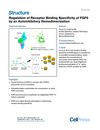
July 2017 in “Structure” In this study, researchers found that ligand homodimerization controls the receptor binding specificity of the FGF9 subfamily, preventing off-target activation of FGFR "b" isoforms.
December 2024 in “CONICET Digital (CONICET)” This study found that the small signaling peptide RALF22 plays a key role in root hair growth response to volatile compounds emitted by Penicillium aurantiogriseum through ethylene, auxin, and photosynthesis signaling in Arabidopsis.
21 citations
,
April 2008 in “Toxicologic Pathology” This study found that CI-1033 caused skin lesions in rats that resemble effects seen in humans receiving EGF receptor inhibitors, suggesting this animal model can help explore the mechanisms behind this cutaneous toxicity.
32 citations
,
July 2017 in “Oncotarget” This study found that intermittent treatment with FTI lonafarnib and sulforaphane may be a promising therapeutic approach for children with Hutchinson-Gilford progeria syndrome, as it improved the cellular phenotype.
 13 citations
,
October 2017 in “Bioorganic & Medicinal Chemistry”
13 citations
,
October 2017 in “Bioorganic & Medicinal Chemistry” This study found that compound 3, a tetrahydropyridoindole carboxymethylated at position 5, significantly inhibited sorbitol accumulation in both rat eye lenses and tissues affected by diabetes, indicating its potential as a lead compound for ALR2 inhibition.
 1 citations
,
November 2023 in “Rice”
1 citations
,
November 2023 in “Rice” This study found that PRX102, a peroxidase with a unique polar localization pattern, plays a role in root hair growth by aiding the transport of materials to the tips of growing root hairs.
September 2024 in “Annals of Dermatology” This study established an IRGDS model with diagnostic capability for alopecia areata, which may serve as an auxiliary marker for the condition.
 6 citations
,
January 2020 in “International journal of biological sciences”
6 citations
,
January 2020 in “International journal of biological sciences” In this study, deletion of ROBO4 in mice ameliorated hair loss caused by elevated PAF levels, suggesting potential interplay with VLDLR-related pathways.
January 2015 in “DukeSpace (Duke University)” This study found that deleting transferrin receptor 1 in specific mouse tissues led to varied lethal outcomes, demonstrating its diverse roles beyond iron uptake.
July 2022 in “British Journal of Dermatology” This study found that epidermal growth factor receptor inhibitors used in cancer treatment induce a distinct inflammatory response in hair follicles, marked by immune privilege collapse and upregulation of inflammatory pathways.
 September 2025 in “Digital Commons - RU (Rockefeller University)”
 This study found that when NFIB was removed in adult mouse hair follicle stem cells, it did not affect their maintenance but unexpectedly led to increased proliferation and differentiation of nearby melanocyte stem cells.
 January 2024 in “Frontiers in plant science”
 The zinc finger protein 3 in Arabidopsis thaliana reduces plant growth and root hair development.
109 citations
,
February 2018 in “CB/Current biology” This study concluded that the receptor-like kinase ERULUS, regulated by auxin, is crucial for modulating cell wall composition and pectin dynamics during root hair growth in Arabidopsis.
 July 2026 in “Zenodo (CERN European Organization for Nuclear Research)”
 This study found that women with female pattern hair loss had significantly lower serum IGF-1 levels compared to controls, but no significant association between IGFBP-3 levels and hair loss severity was observed.
15 citations
,
November 2024 in “Journal of Advanced Research” In this study, researchers found that miR-3606-3p is significantly downregulated in skin fibrosis and correlates with disease severity, with its ability to inhibit key signaling pathways suggesting potential therapeutic applications for conditions like systemic sclerosis and keloids.
December 2015 in “OPAL (Open@LaTrobe) (La Trobe University)” In human hair follicle keratinocytes, this study found that treatment with the pharmacological inhibitor QLT0267 led to a strong inhibition of proliferation and migration and induced nearly 100% apoptosis.