 152 citations
,
December 2007 in “Gender Medicine”
152 citations
,
December 2007 in “Gender Medicine” This review discusses recent advances in understanding gender differences in skin and their implications for dermatologic diseases, but it reports no new experimental results; ongoing research is necessary for translating these insights into clinical practice.
 141 citations
,
November 2005 in “International journal of pharmaceutics”
141 citations
,
November 2005 in “International journal of pharmaceutics” This review examines the role of hair follicles and sebaceous glands in percutaneous drug delivery but does not report new clinical results; it calls for further exploration of follicle-targeting therapies.
 81 citations
,
May 2007 in “Fertility and Sterility”
81 citations
,
May 2007 in “Fertility and Sterility” This review discusses the safety of testosterone therapy for postmenopausal women and concludes that, aside from hirsutism and acne, it appears safe at physiological doses for several years, though more long-term studies are needed.
 47 citations
,
September 2023 in “Pharmacological Reports”
47 citations
,
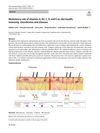
September 2023 in “Pharmacological Reports” In this review, researchers explored the roles of vitamins A, B3, C, D, and E in skin immunity, highlighting their potential as therapeutics for skin diseases due to their antioxidant, anti-inflammatory, and antimicrobial properties.
 40 citations
,
January 2010 in “Indian Journal of Dermatology, Venereology and Leprology”
40 citations
,
January 2010 in “Indian Journal of Dermatology, Venereology and Leprology” This article reviews the role of diet in various skin disorders and suggests that dietary changes may aid in managing certain conditions, though it reports no new clinical findings.
 30 citations
,
May 2014 in “American Journal of Clinical Dermatology”
30 citations
,
May 2014 in “American Journal of Clinical Dermatology” This review discusses follicular and scarring disorders in skin of color and highlights the need for patient education and tailored therapeutic strategies, but does not report new clinical findings.
 27 citations
,
January 2013 in “Indian Journal of Dermatology, Venereology and Leprology”
27 citations
,
January 2013 in “Indian Journal of Dermatology, Venereology and Leprology” This article explores the endocrine functions involved in the pathogenesis of polycystic ovarian syndrome and discusses approaches for diagnosing and managing the condition, with no new clinical results reported.
 27 citations
,
May 2010 in “Dermatologic Clinics”
27 citations
,
May 2010 in “Dermatologic Clinics” This review discusses the use of zinc in treating dermatological conditions and concludes that, aside from systemic zinc deficiency, its efficacy as a primary treatment is unproven, though it may be useful as a supplementary therapy.
 22 citations
,
October 2020 in “Anais Brasileiros de Dermatologia”
22 citations
,
October 2020 in “Anais Brasileiros de Dermatologia” This consensus concluded that oral isotretinoin is highly effective for treating acne and some off-label conditions, with common adverse events being manageable and rare serious risks not contraindicating use.
 22 citations
,
January 2002 in “Treatments in endocrinology”
22 citations
,
January 2002 in “Treatments in endocrinology” This review examines the role of androgens in cutaneous disorders and the potential therapeutic effects of different oral contraceptives, noting variations in individual responses and the influence of genetic and local factors but reports no new clinical results.
 19 citations
,
July 2013 in “The obstetrician & gynaecologist”
19 citations
,
July 2013 in “The obstetrician & gynaecologist” This review discusses diagnostic criteria for polycystic ovary syndrome and highlights the challenges and risks of misdiagnosing women with other hyperandrogenism causes; it reports no clinical results.
 9 citations
,
April 2023 in “Frontiers in immunology”
9 citations
,
April 2023 in “Frontiers in immunology” This review discusses the current and emerging methods for profiling skin microbes to advance our understanding of the microbiome in skin disease, but it reports no new clinical findings.
 2 citations
,
July 2020 in “Journal of Applied Pharmaceutical Science”
2 citations
,
July 2020 in “Journal of Applied Pharmaceutical Science” This study examined the preservative and antimicrobial susceptibility of non-fermenting bacilli collected from beauty salon waste in Brazil.
 1 citations
,
June 2010 in “Expert Review of Dermatology”
1 citations
,
June 2010 in “Expert Review of Dermatology” Covers common skin issues in kids, their diagnosis, treatment, and need for specialist care.
 1 citations
,
April 2006 in “Seminars in Reproductive Medicine”
1 citations
,
April 2006 in “Seminars in Reproductive Medicine” This review discusses the multifactorial causes of female sexual dysfunction and reports no clinical results; it emphasizes the need for thorough evaluation before considering androgen therapy.
 1 citations
,
January 2006
1 citations
,
January 2006 This article reviews the pathophysiology and causes of androgen-mediated hair growth in hirsutism but does not report any clinical outcomes; treatment aspects are discussed separately.
 June 2024 in “Biological and Clinical Sciences Research Journal”
 In this study, researchers found that women with PCOS and thyroid dysfunction had significantly altered T3 and T4 hormone levels and more frequent symptoms like weight gain and irregular menstrual cycles, suggesting the importance of thyroid screenings for personalized treatment strategies.
 September 2022 in “Acta Medica”
 This study reported that new-onset skin conditions such as acne vulgaris emerged in children during the Covid-19 pandemic, potentially linked to mask use and the psychosocial stress of the pandemic.
 January 2017 in “Springer eBooks”
 The document explains various skin conditions and their treatments.
 January 2017 in “Acta dermato-venereologica”
 The congress showed that psychological therapy can help skin condition patients, social media affects acne stigma, education improves atopic dermatitis, and patient satisfaction in dermatology is high, especially with good doctor engagement.

This chapter provides an overview of terminology for various skin lesions, including primary and secondary types, but does not report new findings or results.
 January 2016 in “Kafkas Journal of Medical Sciences”
 This study observed that dermatologists predominantly prescribed topical treatments for skin disorders in pregnant women, with pruritus and urticaria being the most common conditions.
 November 2013 in “John Wiley & Sons, Ltd eBooks”
 This chapter reviews various mucocutaneous manifestations of endocrine disorders and provides illustrative images of these clinical features, but reports no new research findings.
 November 2004 in “Medical Journal of Indonesia”
 This review discusses the impact of hormonal changes on female skin and hair loss and suggests that antiandrogenic treatments may help mitigate these effects, but reports no new clinical results.
 18 citations
,
June 2019 in “Clinical research in dermatology”
18 citations
,
June 2019 in “Clinical research in dermatology” This review discusses psychological impacts associated with facial acne, noting that high levels of anxiety and depression among these patients are not linked to oxidative stress, and reports no new clinical results.
1 citations
,
May 2013 in “Hair transplant forum international” Non-classical 21 hydroxylase deficiency is an underdiagnosed cause of female hair loss and polycystic ovarian syndrome.
September 2021 in “Journal of the Dermatology Nurses' Association” This abstract discusses the 2021 virtual Dermatology Nurses' Association Convention, outlining key dermatological insights shared, but it presents no new research findings or clinical results.
100 citations
,
August 2022 in “Microbial Cell Factories” This review discusses the interactions between skin microbiota and human skin health, examining how imbalances may contribute to skin diseases, and reports no new clinical results.
1 citations
,
September 2023 in “International Journal of Women’s Dermatology” This article discusses the teratogenic risks of skin condition treatments for individuals with DSD and notes that testosterone replacement, often used in this population, may cause acne.
February 2026 in “International Journal of Clinical Dermatology” This review found that microbiota-targeted interventions, particularly certain strains of probiotics, are associated with improvements in skin conditions, most notably in pediatric atopic dermatitis, but their efficacy varies across other dermatological diseases.