January 2026 in “Medicina” This review found that oral JAK inhibitors, used off-label in various inflammatory skin disorders, often resulted in rapid and sustained clinical improvements with acceptable safety over several months, although the evidence is drawn from case-based reports.
December 2025 in “Cosmetics” This research identified unique gut microbiota patterns in alopecia areata patients, with potential as diagnostic biomarkers and suggesting avenues for microbiota-focused therapies.
October 2025 in “Cosmetics” This study examines the genetic underpinnings of chronic dermatological conditions like acne, androgenetic alopecia, and alopecia areata, concluding that a deep understanding of these mechanisms can advance patient-specific treatments and inform cosmetic practices related to skin and hair health.
September 2025 in “Diseases” This study found that patients with patchy alopecia areata had significantly higher serum levels of pro-inflammatory cytokines IL-6, TNF-α, IL-17A, and IL-21 compared to healthy controls, with these levels correlating positively with disease severity, age, and disease duration.
July 2025 in “Malaria Journal” This study suggests that while Nanostring profiling identifies important processes in resolving MA-ARDS, solely targeting late-stage resolution by altering SPM production is not enough. The researchers conclude that combining multi-targeted adjunctive therapies with antimalarial drugs may be necessary to enhance survival and recovery.
 June 2025 in “Dermatopathology”
 This study reports that SARS-CoV-2 infection, COVID-19 vaccination, and off-label dupilumab treatment may exacerbate psoriasis, with overlapping inflammatory pathways involving cytokines like IL-17 and TNF-α. Histopathological similarities between psoriasis flares and COVID-19 skin manifestations were noted, suggesting a potential connection requiring further research.
 March 2025 in “Frontiers in Cell and Developmental Biology”
 This study reviewed how neuropeptides and cutaneous innervation play crucial roles in the process of wound healing, suggesting they significantly influence inflammation and tissue repair phases.
March 2025 in “Clinical Reviews in Allergy & Immunology”  January 2025 in “Ciência Rural”
 This case study reports a cutaneous adverse drug reaction in a dog caused by prolonged topical exposure to benzyl benzoate, leading to irritant contact dermatitis, but healing occurred within three weeks after changing treatment.
 July 2024 in “Biomolecular and Health Science Journal”
 This case report describes a 33-year-old woman with both subacute cutaneous lupus erythematosus and onychomycosis, highlighting the importance of excluding infections and considering the spectrum of alopecia causes in lupus patients.
 March 2024 in “International Journal of Cosmetic Science”
 This study observed that dandruff-affected scalp skin has increased T-cell infiltration in the epidermis and a reduction in the hair follicle's physiological immune privilege, particularly in the suprabulbar outer root sheath area, indicating a distinct immune microenvironment compared to healthy scalp.
 June 2023 in “Frontiers in Medicine”
 This study identified core genes and pathways involved in androgenetic alopecia, finding that genes related to hair follicle development are down-regulated, while those linked to immune responses are up-regulated, highlighting potential therapeutic targets.
 February 2023 in “Vaccines”
 This review discusses the potential impact of COVID-19 on the male reproductive system and highlights unanswered questions regarding its mechanisms and implications for men's health and fertility, reporting no new clinical results.
November 2022 in “Annals of Translational Medicine” This study identified four hub genes that are closely linked to the causative factors of androgenetic alopecia, suggesting potential diagnostic and therapeutic targets.
50 citations
,
August 2019 in “Cell Communication and Signaling” This study identifies NFAT5 as a crucial transcription factor necessary for triggering innate immune responses in the blood vessel lining that lead to atherosclerosis under hypertonic stress conditions.
 18 citations
,
June 2019 in “Clinical research in dermatology”
18 citations
,
June 2019 in “Clinical research in dermatology” This review discusses psychological impacts associated with facial acne, noting that high levels of anxiety and depression among these patients are not linked to oxidative stress, and reports no new clinical results.
 5 citations
,
September 2017 in “Plastic and Aesthetic Research”
5 citations
,
September 2017 in “Plastic and Aesthetic Research” This study aimed to assess whether using minoxidil alongside nutritional cyclical supplements could boost hair regrowth without antiandrogens or enzyme blockers, focusing on hair root strengthening. Results are not reported.
2 citations
,
May 2023 in “Journal of Indian Society of Periodontology” This review suggests a potential link between alopecia areata and periodontitis, emphasizing the importance of interdisciplinary approaches, including dental assessments and treatments, to potentially improve outcomes for patients with unexplained alopecia.
February 2024 in “International journal of molecular sciences” This study reviews current evidence on the role of ILC3s in the skin, highlighting their potential involvement in responding to microbiome changes such as those associated with acne and suggesting gaps in understanding their mechanisms.
 15 citations
,
July 1999 in “Dermatologic Clinics”
15 citations
,
July 1999 in “Dermatologic Clinics” This article discusses the potential for targeted therapies in hair loss by exploring inflammatory and cytokine-mediated processes, but it presents no new clinical results.
 10 citations
,
August 1991 in “PubMed”
10 citations
,
August 1991 in “PubMed” This study supports the idea that inflammation may play a role in the development of androgenetic alopecia, as indicated by certain immune deposits and porphyrins found more frequently in bald scalp biopsies compared to controls.
31 citations
,
July 2023 in “Nutrients” This article reviews evidence suggesting that vitamin D may help manage Hashimoto’s thyroiditis by affecting immune pathways and improving thyroid function, though more research is needed to fully understand its therapeutic potential.
3 citations
,
September 2025 in “Frontiers in Immunology” This review discusses the complex role of immune disturbances and the JAK-STAT pathway in alopecia areata, noting the success of JAK inhibitors in treatment, while highlighting ongoing debates and challenges in targeting other pathways like IL-17 and TNF-α.
January 2026 in “IECCMEXICO” This review highlights how chronic inflammatory skin disorders like psoriasis and atopic dermatitis may be better understood as manifestations of systemic immune dysregulation rather than just skin issues, suggesting that recognizing these conditions as markers of broader immune imbalance can improve diagnosis and medical education.
23 citations
,
December 1990 in “PubMed” This case study suggests that systemic lupus erythematosus should be considered as a potential diagnosis for immune-mediated skin disease in horses, based on multisystemic signs and specific histopathologic and immunopathologic findings.
 8 citations
,
October 2016 in “Experimental dermatology”
8 citations
,
October 2016 in “Experimental dermatology” This paper proposes that the induction of HF-specific neo-antigens by peripheral CD8+ T cells may maintain self-tolerance but could also lead to immunopathology in conditions like alopecia areata.

In this case report, a 68-year-old Caucasian woman with Brunsting-Perry pemphigoid experienced scarring alopecia, which was effectively managed using intralesional betamethasone and topical mometasone furoate, suggesting this rare condition may be underdiagnosed in scarring alopecia cases.
1 citations
,
April 2016 in “Journal of Investigative Dermatology” This study suggests that NKG2D+ Vδ1 T cells may contribute to hair follicle pathology in alopecia areata by recognizing stressed keratinocytes and inducing immune privilege collapse.
 11 citations
,
October 2011 in “Allergologia et immunopathologia”
11 citations
,
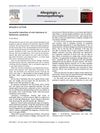
October 2011 in “Allergologia et immunopathologia” A girl with Netherton syndrome was able to eat wheat without allergies after a special treatment.
November 2025 in “Allergologia et Immunopathologia” This case report documents a rare incident where total alopecia developed within ten days of a bee sting, in the absence of hypersensitivity reactions, suggesting that bee venom may have an immunomodulatory or exacerbating effect on the immune system.