27 citations
,
February 2003 in “Cell and Tissue Research” This study found that FM dyes are effective markers for tracing live Merkel cells in in vitro experiments, as they remain visible for at least seven days and highlight cell shape better than quinacrine.
40 citations
,
November 2005 in “The journal of investigative dermatology/Journal of investigative dermatology” This study suggests that different melanocyte subpopulations in hair follicles have varying patterns of apoptosis and survival during the catagen phase, which may inform models for modulating melanocyte behavior in vivo.

This review discusses the cornification process of epidermal keratinocytes in forming the skin barrier and reports no new results; it emphasizes the importance for diagnosis and treatment of skin disorders.
 March 2026 in “Voprosy dermatologii i venerologii/Dermatologiâ ža̋ne veneralogiâ ma̋selelerì”
 This study discusses how polynucleotide-based cosmetic products can improve aging skin in patients with particular morphotypes by restoring cellular metabolism, enhancing microcirculation, and promoting intracellular matrix remodeling, offering potential benefits for reversing chrono- and photo-aging and aiding tissue recovery after cosmetic or surgical procedures.

This review discusses the mechanisms of cell death in skin-associated processes and highlights potential therapeutic opportunities for targeting cell death to treat inflammatory skin diseases, but reports no new clinical results.
 8 citations
,
January 2007 in “Hair transplant forum international”
8 citations
,
January 2007 in “Hair transplant forum international” This abstract reviews recent findings on the biology of isolated micrografts in hair restoration, emphasizing factors that enhance micrograft viability, but it does not report new experimental results.
April 2016 in “Studies in Conservation” This paper discusses the fabrication, exhibition, and treatment history of Robert Gober's beeswax leg sculptures, reporting no new results but detailing the artworks' preservation challenges like discoloration and hair loss.
 1 citations
,
January 2018 in “Stem cell biology and regenerative medicine”
1 citations
,
January 2018 in “Stem cell biology and regenerative medicine” This review discusses the roles of DNA methylation in skin development and regeneration, highlighting its impact on embryonic skin lineage, homeostasis, and potential therapeutic targets, but reports no new clinical results.
13 citations
,
January 1993 in “Archives of dermatological research” In this study, human hair follicles were maintained in a serum-free medium for up to 12 days, revealing detailed histological and ultrastructural changes that suggest possible catagen-like involution mechanisms.
3 citations
,
September 2023 in “Stem Cell Research & Therapy” In this study, researchers successfully generated functional and long-lived melanocytes from human embryonic stem cells, demonstrating their biocompatibility and high engraftability in mice, which may aid in developing treatments for pigmentary skin disorders.
August 2026 in “Frontiers in Immunology” This study introduces Immunoguided Cutaneous Regeneration as a potential framework for understanding skin allotransplantation, suggesting that regeneration may depend on the preserved extracellular matrix and a regulated immune response.
The researchers reported that human foreskin fibroblasts isolated by enzyme digestion method proliferated faster and were purified more quickly than those isolated by the inverted tissue culture method; additionally, post-psoralen photoactivation therapy moderately repaired UVB-induced damage in these fibroblasts, suggesting potential clinical applications.
October 2024 in “Acta Biomaterialia” This study introduced a novel method that uses upright structured illumination microscopy and atomic force microscopy to map the mechanical properties of thick living tissue slices, revealing the intricate mechanical heterogeneity of mouse skin and effects of preservation techniques on tissue stiffness.
April 2019 in “Institutional Repositories DataBase (IRDB)” This study demonstrated that human iPSC-derived melanocytes, when transplanted into mice, can reconstitute pigmented hair follicles and integrate into normal tissue, suggesting their potential as a cellular therapy for depigmentation.
 January 2018 in “Archives of general internal medicine”
 The document concludes that automatic biofiber hair implant is a new method for improving hair growth.
12 citations
,
February 2018 in “Brazilian Oral Research” In this study, it was found that dental pulp cells from extracted teeth can be preserved at room temperature for up to five hours without affecting their viability or proliferative potential.
 37 citations
,
July 2016 in “Current Opinion in Cell Biology”
37 citations
,
July 2016 in “Current Opinion in Cell Biology” This review summarizes recent discoveries about how tissue-resident stem cells interact with their environments during normal conditions and after injury, without reporting new results.
This study found that inhibiting apoptosis during hair follicle regression in mice disrupted hair regeneration, causing delays and alterations in stem cell niche architecture and associated tissue remodeling processes.
24 citations
,
March 2024 in “Small Science” This review discusses the potential applications and advantages of encapsulating single cells for use in therapeutics and diagnostics, while also evaluating various methods for effectively creating and sorting single-cell units despite challenges in production and cost.
3 citations
,
March 2024 in “iScience” This study found that long-lived proteins in mice, identified across various tissues, may be linked to neurodegenerative and cardiovascular diseases due to their low renewal rate and increased risk of damage.
28 citations
,
June 2003 in “Applied immunohistochemistry & molecular morphology” This study demonstrated that combining cell conditioning with mild protease digestion enhanced the visualization of versican mRNA in formalin-fixed mouse skin tissue sections compared to using either technique alone.
 7 citations
,
August 2013 in “Experimental and Therapeutic Medicine”
7 citations
,
August 2013 in “Experimental and Therapeutic Medicine” In this study, the researchers optimized a method for culturing melanocyte precursors from hair follicles and found that 1,25-dihydroxyvitamin D3 significantly promotes their differentiation and melanin synthesis.
 5 citations
,
January 2017 in “Dermatologic Surgery”
5 citations
,
January 2017 in “Dermatologic Surgery” This study observed that storing hair follicle micrografts significantly decreased the expression of certain key genes in the dermal papilla, potentially affecting hair follicle cycling during preparation and storage.
 2 citations
,
January 2018
2 citations
,
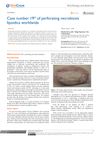
January 2018 This article reports the first case of perforating necrobiosis lipoidica in Colombia and the 19th case worldwide in diabetic patients.
20 citations
,
July 2006 in “Annals of Anatomy - Anatomischer Anzeiger” The 15th-century Korean mummy's hair was well-preserved due to a protective lime-soil coating.
40 citations
,
July 1989 in “Journal of Cell Science” This study found that while hair follicles can be viably maintained in vitro for 7 days, their morphology suggests a shift to the resting phase, likely due to isolation.
June 2022 in “Narrative Inquiry in Bioethics” This narrative symposium and research article explore both the transformative benefits and significant challenges of organ transplantation, highlighting patient stories and advocating for better communication about suffering through figurative language.
 October 2021 in “Journal of Investigative Dermatology”
 This study found that reconstructed human epidermis from infant skin is more susceptible to UV damage than that from older children, with notable changes in skin cell characteristics during the early years of life.
27 citations
,
December 1999 in “American Journal of Dermatopathology” This case report presents a patient with necrobiosis lipoidica exhibiting transepithelial elimination of cholesterol crystals through hair follicles, a finding previously associated with necrobiotic xanthogranuloma.
This study found that fibroblasts from highly regenerative mammals, such as spiny mice and rabbits, exhibit unique metabolic characteristics, including a preference for glycolysis and specific mitochondrial features, which may contribute to their resistance to oxidative stress and support tissue regeneration.