February 2023 in “Default Digital Object Group” This study demonstrated that a single multimode fiber can be used for single-shot wide-field reflectance imaging, achieving high correlation with the ground truth and enabling real-time microendoscopy at up to 180 frames per second.
 12 citations
,
July 2017 in “Journal of cosmetic dermatology”
12 citations
,
July 2017 in “Journal of cosmetic dermatology” This study suggests that infrared thermography may be a useful noninvasive tool for diagnosing active phases of frontal fibrosing alopecia when combined with dermoscopy.
January 2026 in “Dermatologic Therapy” This review discusses folliculotropic mycosis fungoides, highlighting its diagnostic criteria and therapeutic strategies based on disease staging, but does not report new clinical findings.
 December 2025 in “Clinical Cosmetic and Investigational Dermatology”
 In this report, a unique female presentation of IFAP syndrome is described, featuring musculoskeletal contractures but no photophobia, highlighting the importance of early detection and multidisciplinary care to improve outcomes and prevent disability.
1 citations
,
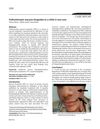
September 2023 in “Portuguese Journal of Dermatology and Venereology” This case report describes a 50-year-old man with folliculotropic mycosis fungoides stage IB, noting trichoscopic findings like dilated follicular openings, black dots, and dystrophic hairs, which are less commonly documented in this condition, suggesting trichoscopy could aid in early diagnosis.
 1 citations
,
October 2023 in “Journal of the Pakistan Medical Association”
1 citations
,
October 2023 in “Journal of the Pakistan Medical Association” This source describes a case of a 12-year-old male diagnosed with folliculotropic mycosis fungoides, presenting with an asymptomatic, erythematous plaque. Histology and immunohistochemistry confirmed FMF, which is typically rare in children and marked by follicular infiltration by CD4+ lymphocytes.
 January 2021 in “Hair transplant forum international”
 This article describes a new T-Fast multi-implanter that potentially reduces operating costs and surgical time by implanting two follicular unit excision grafts simultaneously, which may encourage clinics to adopt this technique.
 1 citations
,
January 2020
1 citations
,
January 2020 This study found that Ift20 is essential for hair follicle stem cell identity and hair regrowth, and it regulates keratinocyte migration during wound healing through focal adhesion integrin recycling, independently of ciliogenesis.
This study found that the Arabidopsis thaliana protein Formin 2 localizes to plasmodesmata and is crucial for regulating their permeability by anchoring actin filaments, which affects virus susceptibility.
36 citations
,
February 1998 in “Journal of Anatomy” This study used fibre optic confocal imaging to visualize subsurface structures in live mouse skin, revealing cellular details and blood vessel networks that dynamic events could be studied in vivo.
 28 citations
,
February 2020 in “Clinical Ophthalmology”
28 citations
,
February 2020 in “Clinical Ophthalmology” This article discusses intraoperative floppy iris syndrome during cataract surgery and highlights the importance of awareness and preoperative documentation of its risk factors, emphasizing a multidisciplinary approach to management.
3 citations
,
February 2020 in “DOAJ (DOAJ: Directory of Open Access Journals)” This review discusses the challenges of managing intraoperative floppy iris syndrome during cataract surgery and highlights the importance of preoperative risk assessment and multidisciplinary collaboration, reporting no new clinical results.
This study found that the protein Formin 2 helps regulate cell-to-cell transport in thale cress by stabilizing actin filaments at plasmodesmata, with its absence leading to increased permeability and vulnerability to viral infections.
20 citations
,
January 2017 in “Experimental Dermatology” In this study, deleting the Igf1 receptor in specific skin cells of mice affected hair follicle cycling but not overall skin health, suggesting Igf1r's role in hair cycle regulation through Bmp-4 activation.
50 citations
,
June 1993 in “European journal of biochemistry” This article reviews the regulation of gene expression and assembly of intermediate filaments but presents no new findings.
2 citations
,
March 2011 in “International Journal of Dermatology” This case report describes an 18-year-old male with IFAP syndrome, confirmed by total hair loss, severe photophobia, and characteristic skin changes, marking a rare presentation of the condition.
November 2017 in “DOAJ (DOAJ: Directory of Open Access Journals)” This study found an IFIS incidence rate of 3.18% among cataract surgeries in a Chinese hospital and identified reserpine, clozapine, and post-panretinal photocoagulation as new risk factors.
 1 citations
,
April 2017 in “Journal of Investigative Dermatology”
1 citations
,
April 2017 in “Journal of Investigative Dermatology” In this study, D-OCT imaging revealed distinct structural and vascular changes in patients with frontal fibrosing alopecia, highlighting the technique's potential for diagnosing and monitoring the condition's activity.
August 2024 in “Scientia Horticulturae” In this study, researchers observed that inoculation with Funneliformis mosseae significantly enhanced growth, biomass, and root architecture in trifoliate orange plants, with variations in auxin levels and gene expression, suggesting PtPIN6 as a key gene involved in root hair development regulation.
32 citations
,
July 2017 in “Oncotarget” This study found that intermittent treatment with FTI lonafarnib and sulforaphane may be a promising therapeutic approach for children with Hutchinson-Gilford progeria syndrome, as it improved the cellular phenotype.
 6 citations
,
January 2019 in “The American Journal of Dermatopathology”
6 citations
,
January 2019 in “The American Journal of Dermatopathology” This study discovered that adipose tissue infiltration at the isthmus level appears significantly more often in frontal fibrosing alopecia cases compared to controls, suggesting a potential role in the condition's pathology.
 14 citations
,
June 2021 in “British journal of dermatology/British journal of dermatology, Supplement”
14 citations
,
June 2021 in “British journal of dermatology/British journal of dermatology, Supplement” This paper presents consensus guidelines for standardized diagnostic criteria and assessment methods for frontal fibrosing alopecia to improve clinical research and data collection globally.
September 2023 in “JEADV Clinical Practice” This study identified key dermoscopic features in folliculotropic mycosis fungoides patients, showing that dilation of follicular openings and spiky follicular keratosis are specific indicators of follicular involvement, potentially aiding in diagnosis, classification, and treatment decisions.

This report presents a case of IFAP syndrome with the typical symptoms of alopecia universalis, severe photophobia, and follicular ichthyosis, but provides no additional clinical findings or conclusions.
1 citations
,
November 2022 in “International journal of trichology” This case report describes a 6-year-old girl with IFAP syndrome who showed good improvement in cutaneous symptoms after one month of acitretin treatment.
27 citations
,
February 2003 in “Cell and Tissue Research” This study found that FM dyes are effective markers for tracing live Merkel cells in in vitro experiments, as they remain visible for at least seven days and highlight cell shape better than quinacrine.
This review summarizes evidence suggesting that the ratio of Myo-Inositol to D-Chiro-Inositol in follicular fluid is crucial for oocyte and embryo quality.
The researchers reported that human foreskin fibroblasts isolated by enzyme digestion method proliferated faster and were purified more quickly than those isolated by the inverted tissue culture method; additionally, post-psoralen photoactivation therapy moderately repaired UVB-induced damage in these fibroblasts, suggesting potential clinical applications.
January 2022 in “Essentials in ophthalmology” This review discusses risk factors for intraoperative floppy iris syndrome, emphasizing tamsulosin and other α1 blockers, and underscores the importance of preoperative screening to mitigate surgical complications, but it reports no new results.
13 citations
,
January 2018 in “International Journal of Trichology” In this study, intralesional triamcinolone acetonide injections were associated with halting the progression of frontal fibrosing alopecia in female patients and showed minimal adverse effects, but the efficacy as sole therapy remains unclear pending further trials.