 1 citations
,
December 2025 in “Selçuk tıp dergisi/Selçuk Üniversitesi Tıp Fakültesi dergisi”
1 citations
,
December 2025 in “Selçuk tıp dergisi/Selçuk Üniversitesi Tıp Fakültesi dergisi” In this cross-sectional study, researchers observed that patients with hidradenitis suppurativa, particularly women, had lower 2D:4D finger length ratios compared to healthy controls, suggesting a potential link to prenatal androgen exposure and disease severity, though further prospective research is needed to confirm this hormonal impact.
 May 2025 in “Journal of Craniofacial Surgery Open”
 This case study observed that high-intensity focused ultrasound treatment significantly improved hair density and reduced hair loss in a female patient with androgenetic alopecia, with no adverse events reported.
 74 citations
,
January 2006 in “Endocrine journal”
74 citations
,
January 2006 in “Endocrine journal” Low-dose gonadotropin treatment is effective for infertility in women with PCOS, leading to high ovulation rates and comparable pregnancy rates with fewer complications.
19 citations
,
March 1994 in “Fertility and sterility” This study found that treatment with a GnRH agonist and estrogen and progestin replacement significantly improved hirsutism scores and hair growth rates in women with polycystic ovarian disease.
 April 2019 in “Journal of the Endocrine Society”
 In this case report, a 48-year-old woman's hyperandrogenism, presenting with symptoms like acne and hirsutism, was attributed to a benign Leydig cell tumor, which resolved after surgical removal.
January 2020 in “Proyecto de investigación:” This study found a significant association between AGDAC measurements and the presence of PCOS, suggesting it could be an effective clinical tool in diagnosing the condition and its phenotypes, especially when combined with AMH.
 9 citations
,
June 2014 in “European Journal of Obstetrics & Gynecology and Reproductive Biology”
9 citations
,
June 2014 in “European Journal of Obstetrics & Gynecology and Reproductive Biology” Blood AMH levels are higher in women with PCOS than in those with other similar conditions.
2 citations
,
January 2016 in “Experimental Dermatology” This symposium updated participants on the latest advances in understanding and managing hidradenitis suppurativa, emphasizing the need for individualized treatment plans and highlighting recent progress in therapies and epidemiology.
 January 2026 in “In Vivo”
 This study found that hidradenitis suppurativa is associated with an elevated risk of developing urolithiasis, suggesting shared inflammatory pathways and the need for vigilant kidney monitoring in affected individuals.
 1 citations
,
June 2021 in “The Indonesian Biomedical Journal”
1 citations
,
June 2021 in “The Indonesian Biomedical Journal” This study concluded that 2-hour oral glucose tolerance tests are crucial for screening glycemic disorders in women with PCOS, as HbA1c was found to be an unsatisfactory tool for predicting glycemic disorders within this group.
 6 citations
,
October 2014 in “Endokrynologia Polska”
6 citations
,
October 2014 in “Endokrynologia Polska” This study found that hirsutism is more prevalent in Chinese women with PCOS compared to the general population, and the Ferriman-Gallwey score is a good predictor for diagnosing PCOS in this group.
4 citations
,
January 2025 in “Diagnostics” This article reviews the use of high-frequency ultrasonography to visualize nail units and scalps in dermatology, highlighting its potential benefits for disease assessment and treatment monitoring, but reports no new clinical results.
7 citations
,
April 1992 in “Journal of steroid biochemistry and molecular biology/The Journal of steroid biochemistry and molecular biology” The authors concluded that plasma levels of 3α-diolG, ADTG, and DHTG in women with hyperandrogenic disorders primarily reflect adrenal androgen contributions rather than peripheral action, suggesting a potential index for treatment effectiveness.
 May 2021 in “Journal of the Endocrine Society”
 This case report describes a 47-year-old woman diagnosed with a rare Sertoliform endometrioid carcinoma of the ovary, emphasizing its early-stage presentation and generally favorable prognosis.
 4 citations
,
March 2021 in “Case Reports”
4 citations
,
March 2021 in “Case Reports” In this case study, a 71-year-old woman with postmenopausal hirsutism was diagnosed with a Leydig cell tumor and endometrial carcinoma, with hirsutism improving one month after surgery.
February 2025 in “Clinical Chemistry” This case study reported a 34-year-old woman presenting with secondary amenorrhea, hirsutism, and obesity showed elevated testosterone and anti-Müllerian hormone levels, leading to the exclusion of nonclassical congenital adrenal hyperplasia as a diagnosis.
 13 citations
,
June 2018 in “Journal of Womens Health”
13 citations
,
June 2018 in “Journal of Womens Health” This study found that in women with PCOS, suppressive therapy using spironolactone plus oral contraceptives improved hirsutism more effectively than either treatment alone, with initial scores predicting success.
August 2021 in “Pediatrics in review” This case study reports that a 16-year-old girl with hirsutism and menstrual irregularities was diagnosed with a benign steroid cell ovarian tumor, after high testosterone levels indicated a potential androgen-secreting source.
 2 citations
,
August 2021 in “The Journal of Urology”
2 citations
,
August 2021 in “The Journal of Urology” This study reported that seminal vesiculoscopy combined with transurethral resection of ejaculatory ducts and balloon dilation effectively resolved hematospermia and improved symptoms in a patient whose condition was unresponsive to medical treatments.
 10 citations
,
June 2010 in “Fertility and Sterility”
10 citations
,
June 2010 in “Fertility and Sterility” In this study, patients with polycystic ovary syndrome self-reported higher hirsutism scores compared to clinician assessments, but only clinician scores correlated with biochemical markers of hyperandrogenism.
October 1984 in “Kidney international” This case report describes a 23-year-old woman with a history of ambiguous genitalia and complex medical conditions, including a pelvic mass and hirsutism, observed from childhood to adulthood.
 July 2021 in “Advances in laboratory medicine”
 This article reviews differential diagnosis approaches for 46,XY DSD, proposing a diagnostic algorithm focused on biochemical and genetic data, without presenting new clinical results.
1 citations
,
September 2021 in “Journal of Cosmetic Dermatology” This study demonstrated that B-mode ultrasound and shear-wave elastography could differentiate individuals at risk of developing androgenetic alopecia from healthy individuals by assessing cranial subcutaneous tissue thickness and epidermis-dermis stiffness.
Ultrasound alone isn't enough to diagnose PCOS.
 19 citations
,
August 1999 in “European journal of endocrinology”
19 citations
,
August 1999 in “European journal of endocrinology” This study concluded that neither basal nor ACTH-stimulated 17-OHP concentrations effectively indicate carrier status for 21-hydroxylase deficiency among Slovenian hyperandrogenic women, recommending molecular analysis of the CYP21 gene for reliable screening.
 54 citations
,
June 2015 in “Australasian Journal of Dermatology”
54 citations
,
June 2015 in “Australasian Journal of Dermatology” This study reports that oral spironolactone may be a useful and low-cost first-line treatment for hidradenitis suppurativa in women, with relatively few side effects.
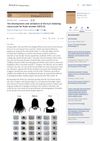 October 2023 in “The Journal of Dermatology”
 This study developed and validated the Hair-Shedding Visual Scale for Asian Women, finding it to be an effective tool for identifying FPHL and TE.
April 2020 in “International journal of reproduction, contraception, obstetrics and gynecology” This case study discussed a postmenopausal female with androgenic alopecia and hirsutism due to a Leydig cell tumor, suggesting the importance of further workup in women with severe hirsutism or androgenic alopecia.
September 2018 in “Fertility and Sterility” In this study, researchers observed that overweight Taiwanese women with PCOS who carry the HSD3B1 1245C allele have a significantly higher risk of developing androgenic alopecia compared to those with the wild-type allele.
7 citations
,
January 2022 in “Case Reports in Endocrinology” This case series observed that ovarian hyperthecosis can manifest with hyperandrogenism and insulin resistance in postmenopausal women, even when serum testosterone levels are below diagnostic thresholds, suggesting potential gaps in current diagnostic criteria.