5 citations
,
May 2022 in “Diagnostics” This study found that certain lncRNA gene polymorphisms in HOTAIR and MALAT1 are associated with increased susceptibility to systemic lupus erythematosus, potentially informing clinical applications.
7 citations
,
January 1990 July 2024 in “Journal of Investigative Dermatology” This study found that systemic treatment with DS77754007, a KLK5 inhibitor, improved skin symptoms in a mouse model of Netherton Syndrome more effectively than certain antibody treatments, suggesting KLK5 inhibition as a promising therapeutic approach for this condition.
January 2014 in “Max Planck Digital Library” This research describes mouse models to explore Kindlin-1's role in skin disorders, including Kindler syndrome, revealing novel integrin-independent pathways potentially leading to skin tumors.
30 citations
,
July 1993 in “Journal of Investigative Dermatology” 100 citations
,
December 2002 in “Journal of biological chemistry/The Journal of biological chemistry” This study identified a domain on human chromosome 21q22.1 containing various high glycine-tyrosine and high sulfur keratin-associated protein genes, revealing their diverse expression in hair-forming cells.
50 citations
,
July 2008 in “British Journal of Dermatology” 5 citations
,
June 2008 in “British Journal of Dermatology” 1 citations
,
January 1989 in “Springer eBooks” 3 citations
,
January 2013 in “Journal of cosmetics, dermatological sciences and applications” This study found that the new HCC additive enhances the permeation of pigments and active ingredients into hair, suggesting potential use in developing functional cosmetic hair products.
December 2016 in “The journal of investigative dermatology/Journal of investigative dermatology” This study revealed that Patched receptors establish a Hedgehog signaling gradient in developing hair follicles, which may influence their formation and potentially offer a diagnostic tool for distinguishing Hedgehog-driven tumors.
272 citations
,
September 2001 in “Journal of Biological Chemistry” This study cataloged human type II hair keratins, detailing their expression and differentiation roles in hair follicles and comparing them with type I keratins to explore keratin-pairing principles.
6 citations
,
December 1990 in “PubMed” This study examined the expression patterns of various cytokeratins in the outer root sheath of human anagen hair follicles, noting distinct differentiation patterns and localization of keratin markers.
25 citations
,
September 1995 in “Biochemistry and Cell Biology” This study found that high levels of human cytokeratin 16 expression in transgenic mice lead to skin lesions and altered keratinocyte structure, suggesting potential implications for human skin disorders and wound healing.
 62 citations
,
April 2008 in “Neurobiology of aging”
62 citations
,
April 2008 in “Neurobiology of aging” This study identified a new genetic locus, ahl4, on distal Chromosome 10 that contributes to the early-onset, severe hearing loss in A/J mice compared to B6 mice.
25 citations
,
August 2020 in “Experimental eye research/Experimental Eye Research” This review discusses cornea-specific keratin expression patterns in human and mouse development and reports no new experimental results; it highlights the need for investigating keratin mutations' role in pathology.
9 citations
,
June 2017 in “American journal of ophthalmology. Case reports” This case report identifies a novel CDH3 gene mutation associated with hypotrichosis with juvenile macular dystrophy in a 13-year-old Turkish girl, highlighting implications for future genetic analysis and counseling.
6 citations
,
February 2013 in “British Journal of Dermatology” Androgens significantly regulate hair keratin K37 expression.
198 citations
,
November 1989 in “The Journal of Cell Biology” This study reported that K14 expression patterns and keratin filament organization in human skin's hair follicles differ from those in the epidermis, indicating distinct differentiation programs.
 24 citations
,
June 2012 in “BMC Research Notes”
24 citations
,
June 2012 in “BMC Research Notes” This study outlines the Human Gene Correlation Analysis tool, which classifies human genes by coexpression levels and identifies overrepresented annotation terms in correlated gene groups, with no new clinical results reported.
1 citations
,
May 2004 in “Biochemical and Biophysical Research Communications” This study identified nine novel KRTAP5 family genes associated with human hair formation, demonstrating preferential expression in hair roots and suggesting their role in hair development.
 52 citations
,
October 1999 in “Developmental Dynamics”
52 citations
,
October 1999 in “Developmental Dynamics” This study found that the hairless gene in mice has a more extensive role in development than previously thought, as indicated by its expression in various tissues and associated abnormalities in hr/hr mutants.
7 citations
,
February 2011 in “Journal of dermatology” This study identified a specific LIPH gene mutation (736T>A) as common in Japanese patients with autosomal recessive woolly hair/hypotrichosis, potentially indicating its role in the condition's manifestation within this population.
 June 2020 in “bioRxiv (Cold Spring Harbor Laboratory)”
 This study found that the HoxC gene cluster is crucial for the development of hair and nails in mice, with key regulation by two mammalian-specific enhancers.
5 citations
,
June 2015 in “The Journal of Dermatology” This study identified "HTLV-1-associated lichenoid dermatitis" as a skin condition in HTLV-1-infected individuals, characterized by reactive eruptions associated with increased immunity toward infected CD4+ T cells.
30 citations
,
January 1963 in “PubMed” 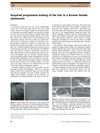 1 citations
,
October 2012 in “The Journal of Dermatology”
1 citations
,
October 2012 in “The Journal of Dermatology” This letter to the editor describes a case of acquired progressive kinking of the hair in a Korean female adolescent, but no new research findings are reported.
49 citations
,
March 1996 in “Experimental Brain Research” 9 citations
,
April 2019 in “Journal of Structural Biology” Keratin fibers in hair twist left-handed.
 171 citations
,
July 2007 in “Journal of Investigative Dermatology”
171 citations
,
July 2007 in “Journal of Investigative Dermatology” The researchers reported that DHT-inducible DKK-1 may play a significant role in DHT-driven balding by inhibiting hair follicle cell growth and promoting apoptosis in androgenetic alopecia.