8 citations
,
January 2023 in “Skin Research and Technology” This study found that treatment with fractional 1064 nm picosecond Nd:YAG laser effectively reduced post-acne erythema in adult Chinese patients without causing scarring or pigmentation issues, though some experienced temporary erythema, oedema, pruritus, and acne eruptions.
2 citations
,
November 2025 in “Healthcare” This study found that among young patients with acne vulgaris, combining a 675 nm red-light laser with isotretinoin led to more rapid and pronounced improvement in lesion severity compared to laser treatment alone, without adverse events.
 8 citations
,
December 2015 in “Daehan han'yi hag'hoeji/Journal of Korean medicine”
8 citations
,
December 2015 in “Daehan han'yi hag'hoeji/Journal of Korean medicine” This study found that transtherapy, a treatment using Korean medicine, significantly improved acne scars, reducing the scarring grade from an average of 3.5 to 1.5 in moderate and severe cases.
 5 citations
,
June 2016 in “TURKDERM”
5 citations
,
June 2016 in “TURKDERM” This review discusses various dermatological scoring systems used to objectively assess disease severity and guide treatment decisions, reporting no new clinical results.
 June 2026 in “Aesthetic Cosmetology and Medicine”
 This study reported that patients with mild to detectable androgenetic alopecia showed subjective improvement and a favorable safety profile after receiving a polynucleotide-based intradermal gel, with only one case of mild injection-site erythema noted among 60 participants over three months.
 April 2017 in “Journal of Investigative Dermatology”
 This study found that 10% carbamide peroxide significantly reduced acne lesions compared to a vehicle solution, suggesting it as an effective and safe alternative to benzoyl peroxide for treating mild to moderate acne.
 October 2023 in “Skin research and technology”
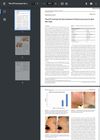
 This study evaluated the effectiveness of a 675 nm laser device on facial acne scars in patients with darker skin types, finding that 67% reported excellent improvement and 33% reported good improvement, with significant enhancements in skin texture and appearance after five treatments.

research Acne
4 citations
,
January 2019 This analysis examines acne vulgaris using an integrative approach, highlighting its links with psychopathology, lifestyle, and diet, but reports no new results.
January 2025 in “Dermatologic Therapy” In this study, treatment with fractional CO2 laser combined with recombinant humanized type III collagen led to significantly better improvements in atrophic acne scars compared to laser treatment with saline, attributed to collagen upregulation and MAPK pathway activation in human dermal fibroblasts.
 1 citations
,
March 2013 in “The European Journal of Contraception & Reproductive Health Care”
1 citations
,
March 2013 in “The European Journal of Contraception & Reproductive Health Care” This publication discusses the political rationale behind the French regulator ANSM's decision to withdraw Diane®-35 from the market, in response to health concerns associated with third-generation oral contraceptives.
October 2024 in “Cosmetics” This study found that while most women reported aesthetic improvement after PRP facial injections, objective skin analyzer data showed no significant changes, but midface volume improvement was more likely in those with lower platelet counts and higher estradiol levels.

This review highlights the cosmeceutical potential of tropical herbs due to their bioactive compounds like flavonoids and saponins, which offer antioxidant and anti-inflammatory benefits, though it notes challenges such as lack of standardized formulations and large-scale validation in current research.
 1 citations
,
January 2021 in “Wiadomości Lekarskie”
1 citations
,
January 2021 in “Wiadomości Lekarskie” This experimental study on male rats found that a gel containing carbon dioxide extract of hops effectively promoted wound healing in severe acne by enhancing skin regeneration and exhibiting anti-inflammatory, bactericidal, and antimycotic properties.
 37 citations
,
January 2013 in “Postepy Dermatologii I Alergologii”
37 citations
,
January 2013 in “Postepy Dermatologii I Alergologii” This article discusses isotretinoin for severe acne vulgaris, noting its effectiveness but also highlighting significant side effects on skin, mucous membranes, and hair; it reports no new clinical results.
 2 citations
,
January 2022 in “Journal of Cutaneous and Aesthetic Surgery”
2 citations
,
January 2022 in “Journal of Cutaneous and Aesthetic Surgery” This study suggests the mechanical effect of injecting a solution is more important than the solution's nature in treating atrophic acne scars, with UBM sonography proposed for objective assessment.

The document concludes that dermatology training and grading scales need to better represent dark-skinned individuals to improve diagnosis and assessment of skin conditions.
 August 2020 in “Universidad Peruana de Ciencias Aplicadas (UPC)”
 This study found that platelet-rich plasma appeared more effective than control treatments as an additional therapy for improving acne scars in several clinical trials.
 11 citations
,
February 2003 in “Baillière's best practice & research. Clinical obstetrics & gynaecology/Baillière's best practice and research in clinical obstetrics and gynaecology”
11 citations
,
February 2003 in “Baillière's best practice & research. Clinical obstetrics & gynaecology/Baillière's best practice and research in clinical obstetrics and gynaecology” This review discusses the relationship between acne, body hair, and androgenic stimulation in adolescent girls, emphasizing treatment decisions based on disease severity rather than endocrine findings.
 151 citations
,
August 2010 in “British Journal of Dermatology”
151 citations
,
August 2010 in “British Journal of Dermatology” This guideline reviews the diagnosis of androgenetic alopecia and offers expert consensus recommendations tailored to males, females, and adolescents, but reports no new clinical results.
 1 citations
,
April 2006 in “Seminars in Reproductive Medicine”
1 citations
,
April 2006 in “Seminars in Reproductive Medicine” This review discusses the multifactorial causes of female sexual dysfunction and reports no clinical results; it emphasizes the need for thorough evaluation before considering androgen therapy.
 February 2023 in “Cosmoderma”
 This study found that combining red light therapy with oral beta-carotene significantly improved photoaging treatment outcomes compared to red light therapy alone, with Group A showing a 56.12% reduction in photoaging scores over 12 weeks versus 44.78% in Group B.
 August 2024 in “Archives of Dermatological Research”
 Acne severity is not related to the type or severity of androgenetic alopecia.
 5 citations
,
February 2021 in “Dermatology and Therapy”
5 citations
,
February 2021 in “Dermatology and Therapy” This study found that two sessions of platelet-rich plasma mesotherapy significantly improved symptoms in patients with corticosteroid-induced rosacea-like dermatitis without further treatment.
 April 2023 in “Journal of Investigative Dermatology”
 In this study, Nd:YAG picosecond lasers using fractional micro-lens array were found to have a comparable effect to ablative fractional Er:YAG lasers in treating atrophic acne scars, with better safety profiles but slightly less patient satisfaction.
 April 2026 in “Clinical Dermatology Review”
 In this study, patients with keratosis pilaris exhibited significant quality of life impairment, with histopathology and dermoscopy revealing consistent skin and hair changes.
September 2025 in “Middle East Fertility Society Journal” This study found that 10.3% of female high school students in Islamabad screened positive for PCOS, with associations including irregular menstrual cycles and higher BMI among those testing positive.
 17 citations
,
August 2007 in “Bioorganic & Medicinal Chemistry Letters”
17 citations
,
August 2007 in “Bioorganic & Medicinal Chemistry Letters” This study found that a specific amino-pyridine compound showed potent androgen receptor antagonist activity, stimulating hair growth in mice and reducing sebum production in a hamster model.
7 citations
,
August 2024 in “Skin Research and Technology” The study's findings are unreliable due to retraction.
 82 citations
,
May 2016 in “Best Practice & Research in Clinical Obstetrics & Gynaecology”
82 citations
,
May 2016 in “Best Practice & Research in Clinical Obstetrics & Gynaecology” This article outlines the clinical features, evaluation, and treatment strategies for androgen excess in polycystic ovary syndrome, highlighting important diagnostic and management approaches but reporting no new research results.
 1 citations
,
August 2024 in “Journal of Cutaneous and Aesthetic Surgery”
1 citations
,
August 2024 in “Journal of Cutaneous and Aesthetic Surgery” In this study, 65% TCA showed better improvement for acne scars compared to 50% GA, but GA may be a safer alternative with fewer adverse effects.