 June 2026 in “Indian Journal of Postgraduate Dermatology”
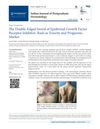
 In this reported case, a 50-year-old man developed an acneiform rash, a common skin side effect of EGFR inhibitor therapy, after starting lapatinib for breast cancer; treatment with doxycycline and hydrocortisone cream led to significant improvement within one week.
10 citations
,
August 2024 in “Chemical Engineering Journal” This study found that a microenvironment-responsive ATAN-Met hydrogel system improved infective diabetic wound healing by enhancing re-epithelialization, neurovascular and hair follicle regeneration, and exhibited antibacterial and immunoregulatory effects, activated beneficial pathways, and responded to glucose/ROS for drug release.
 48 citations
,
November 1992 in “International Journal of Dermatology”
48 citations
,
November 1992 in “International Journal of Dermatology” This article discusses the history and terminology of toxic epidermal necrolysis but reports no new clinical results.
28 citations
,
May 2023 in “Current Opinion in Colloid & Interface Science” June 2026 in “Precision medicine and engineering.” In this study, researchers created a hydrogel that reduces oxidative stress and releases a pro-angiogenic drug in response to enzyme activity, which accelerated healing and improved tissue regeneration in chronic diabetic wounds during in vivo experiments.
 13 citations
,
November 2019 in “Scientific reports”
13 citations
,
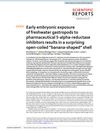
November 2019 in “Scientific reports” This study found that inhibiting 5α-reductase in molluscs provokes a specific shell morphology, suggesting gastropods might have unique 5α-reductase substrates absent in vertebrates.
April 2011 in “Cancer Research” In this study, ginsenoside 20(S)-protopanaxadiol-aglycone (PPD) was shown to downregulate androgen receptor expression and inhibit tumor growth in prostate cancer cells.
March 2024 in “Journal of functional biomaterials” This study demonstrated that a strain of lactic acid bacteria from kimchi, identified as Pediococcus inopinatus, showed antibacterial activity against certain oral pathogens and effectively bleached stained artificial teeth and inhibited biofilm formation, offering potential for addressing teeth discoloration and halitosis.
 7 citations
,
April 2006 in “Experimental Neurology”
7 citations
,
April 2006 in “Experimental Neurology” Finasteride blocks deoxycorticosterone's anticonvulsant effects in infant rats, but indomethacin doesn't.
 April 2019 in “Journal of Investigative Dermatology”
 This study suggests that dietary grape powder may reduce the severity of atopic dermatitis in a mouse model, highlighting its potential in both prevention and intervention settings.
July 2023 in “JAAD Case Reports” 6 citations
,
May 2023 in “Molecules” In this study, dry powder inhalers containing Cepharanthine were administered to rats with acute lung injury, significantly reducing pulmonary edema, hemorrhage, and inflammatory markers, suggesting its potential as an effective anti-inflammatory treatment when inhaled directly into the lungs.
48 citations
,
February 2025 in “Advanced Materials” This study found that a glucose-activated hydrogel significantly improved chronic diabetic wound healing by regulating blood glucose and enhancing the wound microenvironment, achieving a threefold increase in recovery rate compared to commercial dressings.

In this retrospective case series, therapeutic responses to immunomodulatory and incretin-based therapies for Dercum's disease showed considerable individual variation, suggesting these treatments might be exploratory options when surgery isn't feasible, though further controlled studies are needed for definitive conclusions.
 1 citations
,
August 2023 in “Journal of Dentomaxillofacial Science”
1 citations
,
August 2023 in “Journal of Dentomaxillofacial Science” This study found that freeze-dried homologous platelet-rich plasma (FD HPRP) increased osteocalcin levels in cultured osteoblasts, suggesting its potential to support bone regeneration in periodontal treatment.
 14 citations
,
October 2003 in “Annals of Oncology”
14 citations
,
October 2003 in “Annals of Oncology” In this study, the researchers observed that the severity of capecitabine-induced hand-foot syndrome in advanced gastric cancer patients was not linked to the IVS14+1G→A mutation in the DPYD gene.
7 citations
,
August 1996 in “The Journal of Clinical Endocrinology and Metabolism”  February 2010 in “Journal of The American Academy of Dermatology”
 A woman with Degos disease managed her condition for nine years with medications and had two healthy pregnancies, while a separate finding suggests a possible link between female pattern hair loss and high blood pressure.
April 2026 in “Future Medicinal Chemistry” This article discusses the impact of PROTACs technology in transforming drug discovery with its novel degradation mechanism, but it reports no new experimental findings.
 15 citations
,
July 2023 in “EClinicalMedicine”
15 citations
,
July 2023 in “EClinicalMedicine” This review discusses the toxicities associated with antibody-drug conjugates in breast cancer treatment and proposes strategies for monitoring and managing these adverse effects, but it reports no new clinical results.

In this case report, the authors documented a fatal instance of Stevens-Johnson syndrome in an elderly woman potentially triggered by doxycycline and flucloxacillin, emphasizing the importance of recognizing such rare but severe drug reactions in older patients.
60 citations
,
August 1969 in “British Journal of Dermatology” This study used an autoradiographic technique to observe that germicides in surfactants are primarily deposited on the stratum corneum of guinea-pig and human skin.
 16 citations
,
January 2023 in “Acta Biomaterialia”
16 citations
,
January 2023 in “Acta Biomaterialia” This study reported that a new bioinspired injectable hydrogel, CQCS@gel, showed promise as a multifunctional wound dressing by achieving rapid hemostasis and promoting the healing of infected skin wounds in both in vitro and in vivo tests.
 May 2026 in “Zenodo (CERN European Organization for Nuclear Research)”
 This study presents a hypothesis that the EDAR V370A allele was positively selected in East Asian populations due to the stable aquatic resources in Late Pleistocene northern China, which may have offset the allele's metabolic costs and provided a selective advantage.
15 citations
,
June 2023 in “Molecules” This study focused on developing agarose/fucoidan hydrogels for the encapsulation of pancreatic cells, reporting that these materials supported cell viability and self-organization into pseudo-islets over 7 days, highlighting potential for diabetes treatment applications.
 May 2026 in “Zenodo (CERN European Organization for Nuclear Research)”
 This study describes a novel cancer therapy, ONCO-NK-TRANSITION-GM1, that offers a 60-80% cure rate across multiple cancer types using existing pharmaceutical manufacturing technologies, and costs $50 per dose, presenting a more accessible alternative to current therapies.
September 2026 in “Angewandte Chemie International Edition” In this study, SEU-302, a newly synthesized covalent organic framework, demonstrated potent photodynamic antibacterial effects, showing effective elimination of Staphylococcus aureus, wound healing promotion, and inflammation reduction both in vitro and in vivo, highlighting its therapeutic promise against bacterial infections.
January 2025 in “SSRN Electronic Journal” This study developed a bioinspired hydrogel (BD@HH6) that exhibited strong antimicrobial and antioxidant properties, accelerated wound healing in mice by promoting angiogenesis and reducing inflammation, and represents a potential new approach for managing chronic wound infections without relying on antibiotics.
 32 citations
,
June 2012 in “PLoS ONE”
32 citations
,
June 2012 in “PLoS ONE” This study found that locally injected zalutumumab in healthy volunteers induced a papulopustular rash similar to systemic EGFR inhibitors, and that IL-8 inhibition reduced this dermatological side effect.
December 2022 in “Zenodo (CERN European Organization for Nuclear Research)” Puradrop Extra Strength Gummies claim to support weight loss and boost energy using natural ingredients.