1 citations
,
September 2023 in “Portuguese Journal of Dermatology and Venereology” This case report describes a 50-year-old man with folliculotropic mycosis fungoides stage IB, noting trichoscopic findings like dilated follicular openings, black dots, and dystrophic hairs, which are less commonly documented in this condition, suggesting trichoscopy could aid in early diagnosis.
14 citations
,
January 2014 in “Annals of Dermatology” This report describes two cases of folliculotropic mycosis fungoides with syringotropism, highlighting indolent progression despite the disease's typically aggressive nature, suggesting aggressive treatment might not be necessary.
 6 citations
,
January 2017 in “British Journal of Dermatology”
6 citations
,
January 2017 in “British Journal of Dermatology” This article reviews frontal fibrosing alopecia, exploring its characteristics, demographics, and associated conditions, and calls for controlled trials due to an increase in worldwide cases; it reports no new findings.
April 2019 in “Journal of Investigative Dermatology” Targeting immune pathways like JAK/STAT may help treat frontal fibrosing alopecia.
21 citations
,
October 2007 in “Journal of Investigative Dermatology” Fetuin-A helps wounds heal without scars by promoting cell movement.
 April 2018 in “Journal of Investigative Dermatology”
 In this study, injecting Fetuin A into embryonic mouse wounds led to scar formation, suggesting the protein may play a role in scar development by promoting collagen production.
2 citations
,
January 2016 in “Dermatology online journal” This case report describes a 46-year-old man diagnosed with frontal fibrosing alopecia, a condition primarily affecting postmenopausal women, highlighting its rare occurrence in men.
 71 citations
,
October 2008 in “The journal of investigative dermatology/Journal of investigative dermatology”
71 citations
,
October 2008 in “The journal of investigative dermatology/Journal of investigative dermatology” This study presents a novel in vitro assay using human folliculoid microspheres to research hair growth, which may facilitate preclinical testing of hair growth-modulatory agents.
10 citations
,
December 1990 in “Archives of Dermatological Research” This study explored the carbohydrate composition of plasma cell membranes in human embryonic epidermis over various gestational ages and found specific patterns that may inform future diagnostic and therapeutic approaches for dermatoses.
7 citations
,
July 2021 in “The Journal of Dermatology” This study in Asian females found that higher use of moisturizers and sunscreen among FFA patients may reflect appearance concerns rather than indicating a direct link to the disease mechanism.
March 2005 in “Journal of the American Academy of Dermatology” This study found that key amino acids lost from hair due to weathering can be successfully reintroduced through cosmetic treatments, improving hair strength and aesthetics.
 January 2019 in “Springer Reference Medizin”
 This article reviews the role of factor Xa inhibitors like Rivaroxaban and suggests they may eventually replace vitamin K antagonists, but their side effects require further clarification.
8 citations
,
March 2007 in “International Journal of Cosmetic Science” This study observed that the glucose linoleate derivative 6‐O‐GL supported hair follicle growth and survival in vitro, acting as a stable lipid precursor and energy provider.
 4 citations
,
April 2018 in “Biotechnology Letters”
4 citations
,
April 2018 in “Biotechnology Letters” Human growth factor 20 can boost mouse whisker growth.
In this study, researchers found that FGF9 plays a significant role in sheep wool growth by accelerating the proliferation and cell cycle of dermal papilla cells, potentially through regulation of the Wnt/β-catenin signaling pathway.
 2 citations
,
July 2022 in “Frontiers in Medicine”
2 citations
,
July 2022 in “Frontiers in Medicine” This review discusses the current understanding of frontal fibrosing alopecia's pathogenesis, highlighting genetic susceptibility, immune response involvement, and possible links to steroid hormones, but reports no new clinical results.
 23 citations
,
April 2021 in “Journal of Clinical Medicine”
23 citations
,
April 2021 in “Journal of Clinical Medicine” This review compiles existing data on frontal fibrosing alopecia and highlights the promise of 5-alpha reductase inhibitors as a treatment option, while noting the need for clarity on its cause and progression.
 1 citations
,
October 2008 in “Expert Review of Dermatology”
1 citations
,
October 2008 in “Expert Review of Dermatology” This review discusses frontal fibrosing alopecia, noting its frequent misdiagnosis and highlighting the need for larger studies to better understand its epidemiology, causes, and treatment options; it reports no new clinical findings.
November 2025 in “Preprints.org” This review reports that the monosaccharide composition of polysaccharides significantly impacts their bioactivity, highlighting various roles for glucans, galactans, mannans, fructans, and pectin in immune regulation, antioxidant effects, and other biological functions.
8 citations
,
July 2017 in “The journal of investigative dermatology/Journal of investigative dermatology” This study identified four circulating microRNAs as highly predictive of frontal fibrosing alopecia status, suggesting potential roles in diagnostics and disease understanding.
In this study, Fgf20 was found to trigger movement and morphogenesis in dermal fibroblasts, facilitating dermal condensate formation essential for hair follicle development.
August 2025 in “Journal of Investigative Dermatology” Fibronectin is essential for hair follicle regeneration and may help rejuvenate aged skin.
22 citations
,
March 2007 in “European journal of pediatrics” This study found that scanning electron microscopy revealed considerable abnormalities in hair morphology in MPS I, II, IIIA, and IIIB patients, potentially related to heparan sulfate accumulation.
 39 citations
,
July 2015 in “British Journal of Dermatology”
39 citations
,
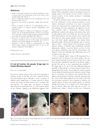
July 2015 in “British Journal of Dermatology” This article discusses the pseudo 'fringe sign' in frontal fibrosing alopecia, highlighting that it is not solely related to traction, and it reports no new clinical results.
August 2019 in “Journal of the American Academy of Dermatology” Frontal fibrosing alopecia may be caused by an autoimmune reaction and hormonal imbalance.
 40 citations
,
June 2011 in “Journal of biological chemistry/The Journal of biological chemistry”
40 citations
,
June 2011 in “Journal of biological chemistry/The Journal of biological chemistry” This study revealed that deficiency in the enzyme FA2H in mice affected sebaceous gland function, altered sebum composition, and caused cycling alopecia, highlighting FA2H's role in hair follicle homeostasis.
6 citations
,
February 2019 in “Journal of dermatology” This report details a rare case of favus in Japan, identifying Trichophyton schoenleinii in a 63-year-old woman through DNA sequencing, who was successfully treated with oral terbinafine and topical luliconazole.
 April 2018 in “Journal of Investigative Dermatology”
 This study suggests that human hair follicles may operate their own Cori cycle, synthesizing glycogen from lactate under conditions of lactic acidosis.
 September 2024 in “Journal of the American Academy of Dermatology”
 This study found that phenoxyethanol is the most common contact allergen in over-the-counter hair loss products, but its role in the development or exacerbation of frontal fibrosing alopecia remains unclear.