November 2014 in “International Society of Hair Restoration Surgery” This announcement explains the Fellow designation for hair restoration surgeons meeting specific educational criteria, without reporting new research findings.
2 citations
,
September 1971 in “Metabolism, clinical and experimental” In this study, patients with testicular feminization syndrome showed limited anabolic responsiveness to dihydrotestosterone, potentially due to reduced affinity of nuclear receptor sites for androgenic steroids rather than defective testosterone conversion.
3 citations
,
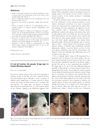
May 2024 in “Indian Journal of Dermatology” In this case report, researchers identified a potential adverse skin reaction, called SDRIFE or Baboon syndrome, caused by the drug tofacitinib in a 19-year-old woman being treated for alopecia subtotalis, leading the authors to recommend discontinuation of the drug.
 39 citations
,
July 2015 in “British Journal of Dermatology”
39 citations
,
July 2015 in “British Journal of Dermatology” This article discusses the pseudo 'fringe sign' in frontal fibrosing alopecia, highlighting that it is not solely related to traction, and it reports no new clinical results.
 1 citations
,
May 2025 in “Frontiers in Medicine”
1 citations
,
May 2025 in “Frontiers in Medicine” In this case series, dual-targeted therapy was observed to provide promising clinical responses in refractory inflammatory bowel disease, with 88.23% to 100% response rates across 9 months and an endoscopic response in 88.89% of evaluated patients, though some adverse events occurred.
11 citations
,
October 2002 in “Pharmacology Biochemistry and Behavior” This study found that formalin-induced pain in rats nearly eliminates testosterone in the brain and spinal cord by likely increasing 5α-reductase activity, but normalizes serum levels after 24 hours.
21 citations
,
May 2014 in “Toxicological Sciences” This study found that skin exposure to toluene diisocyanate in mice creates immune-recognition reservoirs in the skin's stratum corneum and hair follicles, potentially leading to sensitization and allergic reactions.
1 citations
,
January 2022 in “Annals of Dermatology” In this case report, researchers identified a novel homozygous missense mutation in the MBTPS2 gene associated with the mild form of IFAP syndrome in a 7-year-old boy.
 17 citations
,
May 2011 in “Movement Disorders”
17 citations
,
May 2011 in “Movement Disorders” Finasteride significantly reduced tics and obsessive-compulsive symptoms in patients with Tourette syndrome.
 22 citations
,
October 2020 in “Frontiers in Cell and Developmental Biology”
22 citations
,
October 2020 in “Frontiers in Cell and Developmental Biology” This study found that resveratrol and fisetin promoted hair growth in mice by inducing telomerase reverse transcriptase expression, which activates hair follicle stem cells and transitions follicles from a resting to a growth phase.
January 2019 in “Florida International University Digital Commons (Florida International University)” This research describes using advanced mass spectrometry imaging techniques to analyze gunshot residue and map molecular components in biological samples, such as tumors and mosquito ovarian follicles, at unprecedented spatial resolution and specificity.
April 2026 in “Case Reports in Dermatology” In this case report, a woman with Graham-Little-Piccardi-Lassueur Syndrome and hidradenitis suppurativa showed significant improvements in both conditions after six months of treatment with tofacitinib, a Janus Kinase inhibitor, with no recurrence or adverse events noted during a two-year follow-up.
January 2018 in “Haydarpaşa Numune Hastanesi tıp dergisi” This study hypothesizes that the sulfonamide group in tamsulosin might contribute to its association with intraoperative floppy iris syndrome.
 41 citations
,
December 2008 in “Current Opinion in Ophthalmology”
41 citations
,
December 2008 in “Current Opinion in Ophthalmology” This review describes techniques to manage intraoperative floppy iris syndrome linked to alpha-1 blocker use in cataract surgery, highlighting the need for patient disclosure of medication use but reports no new clinical results.
 December 2016 in “Journal of Dermatology and Dermatologic Surgery”
 In this study, the Instant Follicular Hair Unit Transplant technique demonstrated superior hair growth compared to conventional FUE in patients with androgenetic alopecia, although it requires a steeper learning curve for surgeons.
 46 citations
,
May 2011 in “Movement Disorders”
46 citations
,
May 2011 in “Movement Disorders” This article contains additional supporting information available online but presents no new research findings.
 September 2022 in “PubMed”
 Entadfi, a mix of finasteride and tadalafil, is used for BPH.
50 citations
,
May 2020 in “FEBS Letters” This review discusses techniques for analyzing the cell cycle, highlighting emerging tools for measuring cell cycle speed at single-cell resolution in live animals, and reports no new results.
4 citations
,
May 2023 in “Cells” In this study, baricitinib treatment improved the differentiation of skin-derived precursors into adipocytes for diseases like Hutchinson-Gilford progeria syndrome, suggesting potential benefits when combined with lonafarnib.
5 citations
,
April 2021 in “Journal of Academic Research in Medicine” In this study, the free androgen index (FAI) was found to be a reliable marker for diagnosing and monitoring adolescent girls with hyperandrogenism, suggesting clinical reference values for PCOS, obesity, and idiopathic hirsutism.
5 citations
,
January 2015 in “Case reports in medicine” In this case report, a novel missense mutation c.1360G>C (p.Ala454Pro) in the MBTPS2 gene was identified in a boy with typical IFAP syndrome and severe atopic features, although no phenotype/genotype correlation was established.
1 citations
,
January 2008 March 2022 in “Oncology Times” In this study, tebentafusp-tebn improved overall survival in patients with metastatic uveal melanoma compared to standard therapies, despite higher rates of significant adverse events.
 28 citations
,
July 2007 in “Development”
28 citations
,
July 2007 in “Development” In this study, inactivating the TAF4 subunit of transcription factor TFIID in mouse epidermis disrupted gene expression linked to skin and hair function, and increased tumor risk.
 April 2026 in “Human Genome Variation”
 In this study, researchers identified a recurrent MBTPS2 splice-site variant as a mutational hotspot in IFAP syndrome across diverse families, with phenotype severity suggesting the influence of additional modifiers.
November 2025 in “Journal of Investigative Dermatology”  January 2022 in “International review of movement disorders”
 In this review, the authors found that cannabinoids and steroid-related drugs show potential for treating Tourette syndrome, but existing evidence is limited and further research is needed to confirm their efficacy and safety.
May 2022 in “Reactions Weekly” This study highlights the successful design of recombinant fortilin constructs for potential drug development targeting atherosclerotic plaque formation in cardiovascular disease.