November 2023 in “Neurosurgical Review” This study examined frontotemporal craniotomy in bald male patients, finding that incisions along the superior temporal line, though not concealed in the hairline, resulted in excellent cosmetic outcomes, safety, and patient satisfaction without complaints of visible scars or complications.
2 citations
,
September 2020 in “bioRxiv (Cold Spring Harbor Laboratory)” This study demonstrated that ablation of individual somatostatin-expressing interneurons increased activity in nearby neurons of the mouse motor cortex during motor learning.
 24 citations
,
July 2016 in “Revue Neurologique”
24 citations
,
July 2016 in “Revue Neurologique” This review discusses treatment options for tics in Gilles de la Tourette syndrome, highlighting existing therapies and potential future advancements, but reports no new clinical findings.
 9 citations
,
August 2014 in “Journal of The American Academy of Dermatology”
9 citations
,
August 2014 in “Journal of The American Academy of Dermatology” This article discusses the authors' concerns over the misinterpretation of studies linking smoking and frontal fibrosing alopecia, clarifying that neither study suggests smoking is protective against the condition.
 46 citations
,
November 1997 in “Journal of Neural Transmission”
46 citations
,
November 1997 in “Journal of Neural Transmission” Seborrhea in Parkinson's disease may be linked to hormones, not autonomic impairment.
 September 2011 in “Urology”
 This study reports on biofeedback treatment for dysfunctional voiding in three adult cases, providing insights into this condition when diagnosed beyond childhood.
 6 citations
,
June 2016 in “Experimental Dermatology”
6 citations
,
June 2016 in “Experimental Dermatology” This article reviews the pathogenesis of frontal fibrosing alopecia, highlighting the potential genetic and environmental contributions, particularly the use of sunscreens, and calls for further research into effective treatments.
 20 citations
,
September 2019 in “Epidemiology and Psychiatric Sciences”
20 citations
,
September 2019 in “Epidemiology and Psychiatric Sciences” This review discusses post-SSRI sexual dysfunction syndrome and highlights its significant clinical and regulatory implications, but reports no new findings.
July 2013 in “Neurosurgery” This review discusses the use of spinal fMRI to investigate the brainstem and spinal cord and highlights its potential for understanding functional integration, but it reports no new experimental results.
28 citations
,
November 2017 in “Molecular and cellular endocrinology” This review examines the roles of testosterone, dihydrotestosterone, and estradiol in activating male sexual behavior in laboratory animals and humans, reporting no new clinical results.

This preclinical study found that finasteride withdrawal in rats caused inflammation in the gut and hypothalamus, while allopregnanolone treatment partially reduced these effects, suggesting potential therapeutic benefits for post-finasteride syndrome.
 8 citations
,
October 2013 in “The Journal of Spinal Cord Medicine”
8 citations
,
October 2013 in “The Journal of Spinal Cord Medicine” In this study, fungal infections and seborrheic dermatitis were identified as the most common skin conditions among spinal cord injury patients referred to dermatology, impacting quality of life.
 December 2010 in “Dermatologic Surgery”
 Finasteride's effectiveness on the frontal hair loss area is not well-studied or confirmed.
May 2025 in “Journal of Clinical Medicine” This study suggests that women with alopecia have decreased microcirculation oscillations, which may imply neuroinflammation as a factor in the disease's pathogenesis.
 15 citations
,
December 2017 in “Journal of The European Academy of Dermatology and Venereology”
15 citations
,
December 2017 in “Journal of The European Academy of Dermatology and Venereology” This letter discusses potential pathogenetic links among frontal fibrosing alopecia, androgenetic alopecia, and fibrosing alopecia in a pattern distribution and reports no new clinical findings.
 63 citations
,
October 2011 in “Archives of Dermatology”
63 citations
,
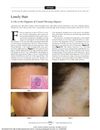
October 2011 in “Archives of Dermatology” Isolated long hairs at the original hairline can help diagnose Frontal Fibrosing Alopecia.
 2 citations
,
April 2023 in “Cutis”
2 citations
,
April 2023 in “Cutis” This systematic review discusses the treatment characteristics and outcomes for frontal fibrosing alopecia specifically in Black patients with skin of color, addressing a gap in clinical evidence due to underrepresentation in studies.
29 citations
,
January 2020 in “Frontiers in endocrinology” This paper considers fibrodysplasia ossificans progressiva as a segmental progeroid syndrome, which may help uncover mechanisms of normal aging and suggest targets for new treatments.
 2 citations
,
July 2020 in “Giornale italiano di dermatologia e venereologia”
2 citations
,
July 2020 in “Giornale italiano di dermatologia e venereologia” A woman with frontal fibrosing alopecia experienced unusual hair growth after using a specific topical lotion.
 26 citations
,
September 2018 in “Neurobiology of Disease”
26 citations
,
September 2018 in “Neurobiology of Disease” This study found that both finasteride and dutasteride significantly reduced L-DOPA-induced dyskinesia in a rat model of Parkinson's disease, with dutasteride showing greater effectiveness at lower doses.
9 citations
,
January 2023 in “Journal of Clinical Medicine” This study presents a validated questionnaire, the FFA-QLI, which effectively assesses and differentiates the quality of life impact among patients with frontal fibrosing alopecia, showing greater sensitivity in identifying severe cases than the DLQI.
 30 citations
,
December 2017 in “Journal of The American Academy of Dermatology”
30 citations
,
December 2017 in “Journal of The American Academy of Dermatology” This correspondence discusses proposed updates to the diagnostic criteria for frontal fibrosing alopecia, emphasizing the importance of differentiating it from other types of alopecia.
 37 citations
,
April 2019 in “Journal of The American Academy of Dermatology”
37 citations
,
April 2019 in “Journal of The American Academy of Dermatology” This review assessed the effectiveness of various treatments for frontal fibrosing alopecia and found that intralesional steroids and 5α-reductase inhibitors showed the most positive outcomes in slowing or halting hair loss, though the lack of placebo-controlled studies and consistent outcome measures limits definitive conclusions.
1 citations
,
October 2025 in “Journal of Investigative Dermatology” In this study of women with frontal fibrosing alopecia, delgocitinib cream improved the molecular signature of lesions and demonstrated potential as a treatment, showing significant transcriptomic changes and some clinical improvements over 12 weeks compared to a cream vehicle.
 April 2023 in “JAAD international”
 This study observed that among a Moroccan population with frontal fibrosing alopecia, common comorbidities included lichen planus pigmentosus (36.8%), rosacea (28.9%), thyroid disorders (23.7%), and dyslipidemia (21.1%), highlighting potential relationships mediated by shared inflammatory or metabolic pathways.
 21 citations
,
October 2017 in “Journal of the European Academy of Dermatology and Venereology”
21 citations
,
October 2017 in “Journal of the European Academy of Dermatology and Venereology” This study reports that variable environmental factors, including dietary habits, may contribute to the increasing incidence and diverse clinical presentations of frontal fibrosing alopecia.
 17 citations
,
September 2013 in “The International Journal of Neuropsychopharmacology”
17 citations
,
September 2013 in “The International Journal of Neuropsychopharmacology” This study found that neonatal finasteride treatment in male rats altered hippocampal GABAA receptor subunit expression and led to increased anxiety-like behavior in response to progesterone in adulthood.
 January 2015 in “Hair transplant forum international”
 This snippet mentions an increase in women seeking surgical hair restoration and subsequently encountering more cases of frontal fibrosing alopecia, but the abstract doesn't contain results or conclusions.
 5 citations
,
October 2018 in “Dermatologic therapy”
5 citations
,
October 2018 in “Dermatologic therapy” This case report describes the first recorded instance of congenital triangular alopecia in the mid-frontal scalp region, challenging the assumption that it is restricted to the frontotemporal area.
April 2025 in “International Journal of Dermatology” This article proposes renaming frontal fibrosing alopecia to frontal fibrosing alopecia syndrome to better reflect its varied presentations and enhance understanding and treatment approaches.