
This study utilized a mouse model of traumatic brain injury to reveal that acute neurotrauma triggers widespread lipid metabolism reprogramming and storage lipid accumulation in microglial and monocyte populations, leading to lysosomal dysfunction, inhibited autophagy, and exacerbated inflammation through a pathological feedback loop.
 73 citations
,
July 2013 in “The Journal of Sexual Medicine”
73 citations
,
July 2013 in “The Journal of Sexual Medicine” This study observed that androgenic alopecia patients taking finasteride had altered neuroactive steroid levels and persistent depression symptoms even after stopping the treatment.

This abstract is a navigation and policy notice for a website and does not contain any research findings.
22 citations
,
April 2013 in “International Journal of Dermatology” Frontal fibrosing alopecia can occur with lichen planus pigmentosus, needing careful diagnosis and treatment.
 February 2025 in “Ciencia Latina Revista Científica Multidisciplinar”
 This in-silico study found that Finasteride interferes with neurotransmitters and may increase psychopathology when it decomposes into a carboxylic acid similar to Cortisol.
February 2022 in “Brazilian Journal of Health Review” In this study, researchers found that among women with frontal fibrosing alopecia and hyperpigmented facial lesions, most cases were diagnosed with lichen planus pigmentosus, while some were identified as melasma or drug-induced.
3 citations
,
March 2024 in “Journal of the American Academy of Dermatology” Low-dose naltrexone helps improve symptoms and stabilize frontal fibrosing alopecia and lichen planopilaris.
 April 2023 in “Journal of Investigative Dermatology”
 This study found that mitochondrial dysfunction in T cells led to defective hair follicle stem cell function and premature skin aging signs in a mouse model.
 9 citations
,
November 2018 in “International Journal of Medical Reviews”
9 citations
,
November 2018 in “International Journal of Medical Reviews” This review discusses the prevalence and etiologies of sexual dysfunction in young men, highlighting the increased recognition of organic causes alongside psychosomatic factors, and reports no new clinical results.
June 2020 in “Journal of Drugs in Dermatology” This case report highlights that frontal fibrosing alopecia can occur in black patients and may resemble androgenetic alopecia, underscoring the importance of considering FFA when diagnosing frontotemporal alopecia in this population.
 8 citations
,
November 2018 in “Australasian Journal of Dermatology”
8 citations
,
November 2018 in “Australasian Journal of Dermatology” This study adds evidence suggesting a genetic component to frontal fibrosing alopecia, with daughters experiencing an earlier onset than their mothers, although the clinical pattern remains similar to non-familial cases.
1 citations
,
August 2025 in “Frontiers in Neuroscience” This review discusses cellular senescence in relation to ALS and explores how targeting senescent cells could potentially serve as a treatment strategy, but it reports no new clinical findings and emphasizes that this link is not yet conclusively established.
April 2026 in “Therapeutic Advances in Drug Safety” This study developed a new clustering model to improve detection of drug-induced cognitive disorder risk signals, finding that it identified drugs with moderate risk signals, like Carbidopa/Levodopa, missed by traditional methods, enhancing clinical assessment comprehensiveness.
15 citations
,
April 1997 in “Muscle & Nerve” 5 citations
,
April 1997 in “Muscle & Nerve” 30 citations
,
January 2020 in “Fertility and Sterility” This review discusses the evidence for post-finasteride syndrome as a condition potentially induced by finasteride and dutasteride, associating them with sexual dysfunction, depression, anxiety, and suicidal ideation in a subset of men, and reports no new clinical results.
10 citations
,
February 2017 in “European journal of neuroscience/EJN. European journal of neuroscience” This study found that local synthesis of 17β-estradiol and 5α-dihydrotestosterone, combined with specific stimulation patterns, is crucial in determining the direction and strength of long-term synaptic effects in the hippocampal CA1 region of male rat slices.
 December 2015 in “Actas Dermo-Sifiliográficas”
 This review addresses the challenges in treating frontal fibrosing alopecia, highlighting the limited effectiveness of medical treatments and the demand for hair transplantation despite its risks, but it reports no new clinical results.
 April 2022 in “JAAD International”
 This study suggests that vitamin D deficiency is likely not involved in the development of frontal fibrosing alopecia, as patients showed similar vitamin D levels to those with female pattern hair loss.
 March 2023 in “Journal of clinical review & case reports”
 This study observed that in Mexico, Frontal Fibrosing Alopecia predominantly affects postmenopausal women, with an increased incidence in recent years, and highlights the challenge of early diagnosis to prevent irreversible hair loss.
 26 citations
,
December 2019 in “Neurobiology of Stress”
26 citations
,
December 2019 in “Neurobiology of Stress” This review discusses adverse effects of 5 alpha-reductase inhibitors, particularly persistent side effects such as post-finasteride syndrome, and highlights the need for further investigation.
June 2014 in “Reactions Weekly” Finasteride can cause muscle weakness and eye movement issues, even at low doses.
9 citations
,
May 2021 in “Frontiers in aging neuroscience” This study found that long-term use of triterpenoids from Ganoderma lucidum may improve brain function and alleviate aging-related issues in normal and Alzheimer's mouse models.
 33 citations
,
August 2013 in “British Journal of Dermatology”
33 citations
,
August 2013 in “British Journal of Dermatology” Lack of small, fine hair on the front hairline is a key sign of frontal fibrosing alopecia.
 26 citations
,
June 2018 in “Australasian Journal of Dermatology”
26 citations
,
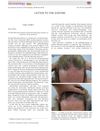
June 2018 in “Australasian Journal of Dermatology” Stopping sunscreen use on the forehead led to hair regrowth in a woman with frontal fibrosing alopecia.
 August 2022 in “IntechOpen eBooks”
 This review discusses treatments for frontal fibrosing alopecia and lichen planopilaris, noting that systemic 5-alpha reductase inhibitors are most effective for stabilization and potential hair regrowth, but reports no new clinical results.
 December 2021 in “Innovation in aging”
 This study found that frailty independently raises the risk of clinical BPH progression and serious adverse events in older men, suggesting that shared decision-making is essential when considering medical therapy for frail patients.
24 citations
,
July 2018 in “British Journal of Dermatology” Contact allergies might contribute to frontal fibrosing alopecia.
13 citations
,
January 2018 in “International Journal of Trichology” In this study, intralesional triamcinolone acetonide injections were associated with halting the progression of frontal fibrosing alopecia in female patients and showed minimal adverse effects, but the efficacy as sole therapy remains unclear pending further trials.
 47 citations
,
June 2011 in “Movement Disorders”
47 citations
,
June 2011 in “Movement Disorders” The LRRK2-G2019S mutation in Parkinson's disease has a lifetime penetrance of 25-35%, and finasteride may help reduce symptoms in adult male Tourette syndrome patients.