 29 citations
,
September 1989 in “Journal of The American Academy of Dermatology”
29 citations
,
September 1989 in “Journal of The American Academy of Dermatology” This article describes cases of unusual scalp whorl patterns, including triple parietal and right temporal whorls, that were associated with normal development, and discusses theories of hair whorl development.
 April 2001 in “Dermatologic Surgery”
 This article proposes a standardized naming system for areas of the balding scalp to improve communication among hair restoration professionals, but it reports no clinical results.
 8 citations
,
April 2001 in “Dermatologic Surgery”
8 citations
,
April 2001 in “Dermatologic Surgery” This proposal presents a standardized system for naming areas of the balding scalp to improve communication among hair restoration professionals, defining major regions and introducing new landmarks.
 July 2026 in “Pakistan Armed Forces Medical Journal”
 In this study, researchers observed that men with androgenic alopecia in a Pakistani population had significantly lower hair density than those without hair loss, particularly at the frontal and parietal scalp regions.
 139 citations
,
June 2003 in “Journal of Investigative Dermatology Symposium Proceedings”
139 citations
,
June 2003 in “Journal of Investigative Dermatology Symposium Proceedings” This article reviews androgenetic alopecia in women, highlighting diagnosis criteria and noting that topical minoxidil is currently the only proven treatment for hair growth; it reports no clinical trial findings.
 5 citations
,
September 2011 in “Pediatric Dermatology”
5 citations
,
September 2011 in “Pediatric Dermatology” This case report describes androgenetic alopecia in two young siblings, highlighting its occurrence in children and suggesting a possible familial pattern given their mother's similar condition.
May 2023 in “Experimental Dermatology” In this viewpoint, researchers discussed the possible role of the developmental origin of scalp dermis in influencing the specific pattern of hair follicle miniaturization seen in male pattern hair loss, noting that frontal follicles are more susceptible while occipital follicles remain largely terminal.
 August 2007 in “CRC Press eBooks”
 This article discusses how dihydrotestosterone (DHT) contributes to male pattern baldness by affecting genetically sensitive hair follicles and includes no new research findings.
 May 2024 in “Cytotherapy”
 In this study, a 40-year-old man with hair loss showed complete hair regrowth and no relapse 24 weeks after receiving umbilical cord mesenchymal stem cell and secretome injections, highlighting their potential for alopecia treatment, although further research involving larger populations is needed.
 May 2022 in “Hair transplant forum international”
 This study concluded that hair transplants including the parietal eminence area can enhance aesthetic balance and provide indirect cosmetic benefits, even when the vertex is left untreated due to limited donor availability.
 October 2024 in “Journal of Cutaneous and Aesthetic Surgery”
 The authors suggest that during hair transplantation for hair loss, the parietal eminence area should be prioritized along with the mid-scalp to address future noticeable thinning, especially since this area often becomes more conspicuous over time.
 4 citations
,
January 2020 in “Skin appendage disorders”
4 citations
,
January 2020 in “Skin appendage disorders” This case report describes a unique presentation of frontal fibrosing alopecia characterized by a hair loss pattern that resembles the Greek letter upsilon, supported by trichoscopic and histological findings.
December 2022 in “JEADV Clinical Practice” In this study, researchers found that using a handheld digital microscope, hair diameter was a better determinant of perceived alopecia severity in androgenetic alopecia than hair density.
 January 2024 in “Journal of Cosmetic Dermatology”
 This study suggests that male androgenetic alopecia and female pattern hair loss follow distinct progression pathways, characterized by different trichoscopic patterns related to hair diameter and follicular unit changes.
325 citations
,
June 1994 in “Archives of Dermatology” This study observed that progressive frontal recession in postmenopausal women may exhibit features of fibrosing alopecia, suggesting a distinct reaction pattern from typical lichen planopilaris.
 19 citations
,
August 2018 in “International Journal of Dermatology”
19 citations
,
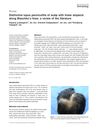
August 2018 in “International Journal of Dermatology” In this study, lupus panniculitis of the scalp was associated with a high incidence of recurrence and progression to systemic lupus erythematosus, despite various treatments showing complete response within weeks.
15 citations
,
June 2015 in “Journal of Craniofacial Surgery” This study suggests that surgical intervention for scalp infantile hemangiomas, often necessary due to complications like alopecia and ulceration, generally leads to good aesthetic outcomes and satisfactory hair growth.
 June 2025 in “Italian Journal of Dermatology and Venereology”
 In this study, researchers characterized alopecia areata incognita in men, finding that all 29 male patients had concurrent androgenetic alopecia, and treatment with ultra-potent topical corticosteroids and minoxidil led to remission in 4-8 months.
 January 2024 in “Institutional Repositories DataBase (IRDB)”
 This study developed a method to measure local steroid hormone concentrations in hair, providing new insights into hormone dynamics associated with androgenetic alopecia.
 26 citations
,
February 2011 in “Anais Brasileiros De Dermatologia”
26 citations
,
February 2011 in “Anais Brasileiros De Dermatologia” This review discusses the pathophysiology, diagnosis, and treatment of polycystic ovary syndrome, emphasizing the critical importance of early diagnosis and treatment to prevent metabolic complications and improve quality of life.
2 citations
,
January 2014 in “Indian dermatology online journal” This report describes a case of isolated congenital atrichia combined with nevus flammeus.
 6 citations
,
January 2013 in “Genetics and Molecular Research”
6 citations
,
January 2013 in “Genetics and Molecular Research” This study found that women with androgenetic alopecia demonstrated higher androgen receptor gene expression compared to controls, with a correlation found between higher AR expression and fewer CAG repeats in the AR gene.
 30 citations
,
December 2017 in “Clinical, Cosmetic and Investigational Dermatology”
30 citations
,
December 2017 in “Clinical, Cosmetic and Investigational Dermatology” This study found significant differences in hair density, non-vellus hair diameter, and percentage of miniaturized hair between normal women and those with female pattern hair loss, particularly in the midscalp and parietal areas.
 17 citations
,
May 2013 in “Oral and Maxillofacial Surgery Clinics of North America”
17 citations
,
May 2013 in “Oral and Maxillofacial Surgery Clinics of North America” This article reviews the complex challenges of managing scalp and cranial deformities post-trauma or surgery, advocating for better multidisciplinary approaches to enhance outcomes, but reports no new results.
 4 citations
,
April 2016 in “Plastic and reconstructive surgery. Global open”
4 citations
,
April 2016 in “Plastic and reconstructive surgery. Global open” This study found that scalp medical tattooing effectively improved cosmetic appearance and concealed bifid parietal whorls without complications in the patients evaluated.
 3 citations
,
February 2022 in “Cureus”
3 citations
,
February 2022 in “Cureus” This study observed an alopecia syphilitica-like pattern of hair loss in a woman with frontal fibrosing alopecia, suggesting it may be another atypical presentation of the condition.
 23 citations
,
November 2018 in “Journal of the European Academy of Dermatology and Venereology”
23 citations
,
November 2018 in “Journal of the European Academy of Dermatology and Venereology” This study observed that frontal fibrosing alopecia is increasingly diagnosed in Italian Caucasian females, often showing premenopausal onset and eyebrow alopecia as an early sign.
 14 citations
,
September 2016 in “Journal of Cutaneous Pathology”
14 citations
,
September 2016 in “Journal of Cutaneous Pathology” This review discusses the classification and diagnosis of primary scalp alopecia, focusing on scarring and non-scarring types, and reports no new clinical results; it emphasizes simplified diagnostic pathways and tissue processing techniques.
 14 citations
,
January 2006 in “Australasian journal of dermatology”
14 citations
,
January 2006 in “Australasian journal of dermatology” This case report describes an atypical presentation of alopecia areata in a 53-year-old postmenopausal woman, which may resemble frontal fibrosing alopecia and complicate diagnosis.
 2 citations
,
January 2020 in “Journal of The European Academy of Dermatology and Venereology”
2 citations
,
January 2020 in “Journal of The European Academy of Dermatology and Venereology” Balding men have harder scalps.