
This study reports that follicular cells isolated from murine skin can regenerate hair follicles after being injected into nude mouse skin, with the regeneration process relying on cell interactions, recipient sites, and cell numbers.
8 citations
,
July 2004 in “Journal of morphology” This study explored the structure and keratin composition of marsupial hairs, finding similarities in keratin localization to hairs in placental mammals, and highlighting potential roles of trichohyalin and transglutaminase during hair development and shedding.
12 citations
,
April 2019 in “Nature protocols” This study describes a protocol for generating a fully functional 3D integumentary organ system from murine induced pluripotent stem cells, including the formation of hair follicles and sebaceous glands that function in vivo.
 July 2025 in “Clinical Dermatology Review”
 In this case report, researchers observed multiple trichofolliculomas in family members, noting this as a rare manifestation of typically singular hair follicle hamartomas.
 21 citations
,
November 2010 in “Journal of molecular medicine”
21 citations
,
November 2010 in “Journal of molecular medicine” This study found that deleting FoxN1 in specific thymic epithelial cells disrupted the 3D thymic structure and led to age-dependent formation of 2D epithelial cysts, highlighting FoxN1's critical role in thymic morphogenesis.
37 citations
,
February 2005 in “Journal of Investigative Dermatology” This research suggests that defects in keratinocyte differentiation due to putrescine accumulation in SSAT transgenic mice lead to skin changes and hair loss, and reducing putrescine can promote hair regrowth.
35 citations
,
January 2000 in “Journal of comparative neurology” This study re-examined the structure of lanceolate endings in rat vibrissae, suggesting that their apical cones may function as a transducer site for detecting hair movements.
17 citations
,
March 2005 in “Journal of Investigative Dermatology” This study found that human hair follicle bulge stem cells exhibited autofluorescence, potentially due to high flavin- and NAD-related compound levels, highlighting the need to consider this when using fluorescent antibodies for studying these cells.
 31 citations
,
January 2021 in “Experimental Dermatology”
31 citations
,
January 2021 in “Experimental Dermatology” This review discusses recent advancements in generating appendage-bearing skin organoids from pluripotent stem cells and their potential applications in dermatological research, but reports no new clinical results.
22 citations
,
July 1998 in “Journal of Investigative Dermatology” This study identified and characterized a gene called 4C32, which is expressed in the periderm of embryonic mouse skin and has a structure similar to keratin-associated proteins.
22 citations
,
October 2007 in “Journal of Investigative Dermatology” Stem cells in mouse nails are found in the nail matrix and may control nail growth.
 December 2012 in “Journal of dermatological science”
 This study observed that Langerhans cells and melanocytes migrated to hair follicle sites during human embryogenesis, suggesting that Langerhans cells acquire immunoregulatory properties there.
 1 citations
,
October 2013
1 citations
,
October 2013 This chapter discusses stem cell activity in feather and hair follicles, emphasizing how stem cells maintain their population by cycling between quiescence and activation in specialized niches but reports no new results.
 25 citations
,
June 2022 in “Developmental cell”
25 citations
,
June 2022 in “Developmental cell” In this study, Hedgehog signaling in dermal papilla fibroblasts was found to accelerate hair growth and induce follicle multiplication in mice via the SCUBE3/TGF-β pathway, with some effects observed in human scalp hair follicles.
 April 2026 in “Frontiers in Cell and Developmental Biology”
 This study found that PGRP-S expression in mouse epidermis is specific to certain hair follicle epithelia, depending on the skin region, and can be transiently induced in flank skin hair follicle epithelium after exposure to Staphylococcus aureus, suggesting a role in environmental surveillance.
3 citations
,
September 2024 This study developed 3DEEP, a tissue clearing and spatial transcriptomic method, to map hair follicle development in a single time point from a 12-hour-old mouse, detailing molecular stages, signaling dynamics, and structural changes within developing follicles.
32 citations
,
May 1999 in “Biochemical and Biophysical Research Communications” This study found that the gene BSSP, a serine protease, is predominantly expressed in sebaceous glands and is overexpressed in nude mouse skin.
 10 citations
,
November 2016 in “International Journal of Cosmetic Science”
10 citations
,
November 2016 in “International Journal of Cosmetic Science” This study proposed the existence of a membrane-like structure between the cuticle and cortex in human hair, which may provide strong protection against external stimuli.
 2 citations
,
January 2018 in “International Journal of Biochemistry & Physiology”
2 citations
,
January 2018 in “International Journal of Biochemistry & Physiology” This study identified two new Wnt genes, EsWnt1 and EsWnt4, in red starfish, with their expression patterns suggesting a role in wound healing and regeneration.
January 1992 in “Proceedings of the New Zealand Society of Animal Production” This study observed that key signaling events controlling hair growth in ferret follicles occur between 0 and 4 days after melatonin implantation, highlighting distinct processes in follicular regeneration and fibre growth.
January 2003 in “Jiefangjun yixue zazhi” In this study, the researchers observed that the expression of certain growth factors and their receptors increases with gestational age, implying a role in skin development, structure maintenance, and wound healing.
13 citations
,
January 2002 in “Biological chemistry” This study found that hair follicle-specific keratins can form different structural assemblies depending on ionic conditions, with hair cortex keratins requiring physiological salt conditions to form intermediate filaments.
 8 citations
,
November 2020 in “Frontiers in Cell and Developmental Biology”
8 citations
,
November 2020 in “Frontiers in Cell and Developmental Biology” This study reported that exogenous R-spondin-1 can restore hair follicle neogenesis in adult mouse cells, highlighting differences in gene expression and signaling pathways between fetal and adult dermal papilla cells.
 191 citations
,
November 1959 in “Annals of the New York Academy of Sciences”
191 citations
,
November 1959 in “Annals of the New York Academy of Sciences” This article reports electron microscope studies on the structure of hair and wool, but it does not present new clinical findings.
 9 citations
,
July 2010 in “British Journal of Dermatology”
9 citations
,
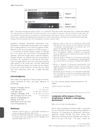
July 2010 in “British Journal of Dermatology” This article reports on lentiginosis observed within plaques of linear atrophoderma of Moulin and discusses its potential classification as a twin-spotting phenomenon but provides no new clinical research results.
 13 citations
,
December 2018 in “Development, Growth & Differentiation”
13 citations
,
December 2018 in “Development, Growth & Differentiation” This study found that male and female chicken feather morphology and color patterns can be extrinsically modified through molting and resetting the stem cell niche during regeneration.
In this study, the researchers found that EGF and EGFR play crucial roles in goat fetal skin development, with their expression increasing progressively during gestation.
 April 2021 in “Journal of Investigative Dermatology”
 In this study, researchers observed that different ERK signal activation dynamics during hair follicle regeneration are linked to cell fate specification and are affected by distinct upstream signaling pathways.
 330 citations
,
December 2009 in “Cell stem cell”
330 citations
,
December 2009 in “Cell stem cell” This study suggests that skin-derived precursors from Sox2(+) hair follicle dermal cells have the potential to function as dermal stem cells, supporting hair morphogenesis, dermal maintenance, and wound-healing.
August 1994 in “Journal of Dermatological Science”