November 2024 in “Stem Cell Research & Therapy” A new method improves the isolation of hair follicle cells for better hair growth research.
 September 2024 in “Journal of Cosmetic Dermatology”
 This report describes ARTAS, a robotic hair transplant technology with advanced mechanical and recognition capabilities, which has gained popularity in China since 2016 due to its ease of use and efficient hair follicle harvesting.
 August 2024 in “OSMANGAZİ JOURNAL OF MEDICINE”
 This study reported no significant association between vaspin and visfatin -4689G/T gene polymorphisms and alopecia areata in the Turkish population, although the visfatin GT genotype may pose a risk factor for the condition.
 June 2024 in “Journal of Dermatology & Cosmetology”
 This comparison study identified non-shaven FUT long hair (FUL) restoration as potentially offering more aesthetic benefits and fewer scars than FUE or conventional FUT for treating various types of alopecia.
 January 2024 in “Authorea (Authorea)”
 In this retrospective study of 1,415 male hair transplant patients, punch technology improvements for the FUE method were associated with an increased number of total grafts and multi-hair follicular units over time, making FUE a preferred choice for hair transplantation.
 January 2024 in “International Journal of Trichology”
 This study found that regardless of alopecia type, follicular unit extraction resulted in good patient satisfaction concerning appearance and visual age.
 January 2024 in “Wiadomości Lekarskie”
 This review discusses the advantages of robotic hair transplantation using the ARTAS iX robot compared to manual Follicular Unit Extraction, emphasizing enhanced precision, speed, and hair preservation capabilities, and reports no clinical results.
 December 2023 in “Clinical, cosmetic and investigational dermatology”
 This study found that no-shave long hair-follicular unit excision using a skin-responsive device, without recess-tipped punches, yielded low graft transection and shaft break rates, improved procedure speed, and increased surgeon willingness.
 June 2023 in “Journal of Cosmetic Dermatology”
 This study found that FUE megasession with a specific surgical design is an effective and satisfactory treatment for Asian patients with high-grade male androgenetic alopecia, achieving natural hair density and high patient and doctor satisfaction, with minimal side effects.
 December 2022 in “Himi, himijn tehnologijn hùrèèlèngijn èrdèm šinžilgèènij bùtèèl”
 This study found that using the "Khalgai" hair care products enriched with copper and zinc for 28 days led to increased hair density, diameter, and follicular unit count in women, indicating improved hair morphology.
 December 2022 in “Research Square (Research Square)”
 In this study, type I interferon response-related genes activated by RIG-1 and IL-17 signaling pathways were significantly up-regulated in both hair follicles and skin tissues affected by chronic discoidal lupus erythematosus.
 October 2022 in “Research Square (Research Square)”
 This study found that type I interferon response-related genes activated by RIG-1 and IL-17 pathways were significantly up-regulated in hair follicle and skin samples with chronic discoidal lupus erythematosus.
 March 2022 in “International Journal of Health Sciences”
 In this animal study, topical pentoxifylline was associated with improved hair regrowth in cyclophosphamide-induced hair loss in male Swiss albino rats.
 March 2021 in “Revista Medicina Cutánea Ibero-Latino-Americana”
 This review discusses diagnostic tools for scarring alopecias, emphasizing trichoscopy as a low-cost, non-invasive method for more accurate diagnosis, although it reports no new clinical results.
 November 2020 in “Bali Medical Journal”
 This review discusses the potential of PRP treatment for alopecia areata, highlighting reported hair growth improvements but notes the need for randomized clinical trials to confirm efficacy.
 May 2020 in “Research Square (Research Square)”
 This study used cashmere goats to reveal distinct intermediate states of dermal papilla cells, each with specific roles in hair growth, shedding, and regeneration.
 April 2019 in “Advances in Cosmetic Surgery”
 The document concludes that ongoing medical therapy is crucial for preventing hair loss, and surgical options can restore hair, with future treatments for hair loss being promising.
 November 2018 in “Springer eBooks”
 The document concludes that hair transplant clinics should focus on effective marketing, online presence, and quality patient care, while the industry should promote high standards and education through organizations like FUE Europe.
 July 2018 in “Nasza Dermatologia Online”
 The authors report two clinical cases of scarring alopecia in a mother and daughter, suggesting a potential link between frontal fibrosing alopecia and ulerythema ophryogenes.
 May 2017 in “InTech eBooks”
 This review discusses various types of primary cicatricial alopecias, categorized by the predominant type of inflammatory cells involved, and reports no new clinical results.

The document recommends a multidisciplinary approach and experience sharing to advance facial feminization surgery as a medical field.
 April 2016 in “Journal of The American Academy of Dermatology”
 This study suggests that low-cost videomicroscopes may not be reliable for diagnosing hair and scalp disorders due to limitations in color quality and resolution.
 April 2016 in “Journal of The American Academy of Dermatology”
 This study suggests that low-cost videomicroscopes may inaccurately assess certain features in hair and scalp disorders compared to standard videodermatoscopy, limiting their reliability for trichoscopy.
 April 2016 in “Journal of The American Academy of Dermatology”
 The study suggests low-cost videomicroscopes may identify some hair shaft features but are unreliable for comprehensive scalp trichoscopy compared to standard devices, due to color and resolution limitations.

Modern hair restoration techniques can effectively treat hair loss and provide natural-looking results.
 January 2016 in “Elsevier eBooks”
 This chapter reviews trichoscopic criteria and diagnostic features for various hair and scalp conditions, emphasizing their utility in non-invasive diagnosis, but reports no new clinical results.
 May 2015 in “Journal of the American Academy of Dermatology”
 Certain drugs and supplements may contribute to hair loss in the frontal hairline in older women.
 January 2015 in “Scientific Works. Series C, Veterinary Medicine”
 This study found that canine demodicosis diagnosis is complicated by the absence of typical lesions and the presence of atypical symptoms like itching and generalized erythema, challenging traditional diagnostic approaches.
 March 2013 in “Revista Brasileira de Cirurgia Plástica”
 This article reviews advances in hair transplant techniques such as megasessions of micro and mini grafts, highlighting platelet growth factors' potential to enhance hair density, without reporting new clinical findings.
 April 2012 in “Informa Healthcare eBooks”
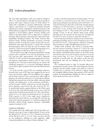
 Lichen planopilaris is a rare, chronic condition causing hair loss, mainly in middle-aged women, and early treatment is important to prevent permanent baldness.