1 citations
,
May 2024 in “Skin Appendage Disorders” In this study, researchers analyzed trichoscopy findings in black patients with FFA to aid in precise diagnosis and treatment, highlighting the importance of understanding disease characteristics to improve hair care in this group.
17 citations
,
September 2022 in “Biomaterials Research” This study found that the film-trigger applicator system enhanced drug delivery efficiency and skin penetration of dissolving microneedles compared to traditional patch systems in both lab and animal models.
 March 2013 in “CRC Press eBooks”
 This review discusses the development and history of follicular unit transplantation and reports no new clinical results.
August 2026 in “Canadian Journal of Health Technologies” This study found that Litfulo improved hair regrowth in patients aged 12 and older with severe alopecia areata but did not meaningfully improve anxiety or depression symptoms compared to placebo.
May 2022 in “Zenodo (CERN European Organization for Nuclear Research)” This promotional content discusses hair transplant options in Fort Lauderdale, advising against certain methods but provides no research findings; readers are encouraged to call a specialist for more information.
 81 citations
,
January 2003 in “The FASEB Journal”
81 citations
,
January 2003 in “The FASEB Journal” This study found that follistatin and activin interactions are important for hair follicle development and cycling in mice, suggesting that they may regulate processes involving BMP-2 and its antagonist.
 August 2015 in “Dermatología Argentina”
 This study reviewed 18 postmenopausal women with frontal fibrosing alopecia, noting frontotemporal hairline recession and eyebrow loss, often treated with steroids, triamcinolone, and other medications.
9 citations
,
November 1980 in “Geburtshilfe und Frauenheilkunde” In this study, prolonged intravenous Fenoterol infusion was associated with intensive hair growth in most patients, although hormonal changes typically linked to such effects were not observed.
September 2024 in “Journal of the American Academy of Dermatology” This study found that MF patients with darker skin types show slower initial improvement with NB-UVB phototherapy, highlighting disparities in treatment efficacy that warrant further investigation.
1 citations
,
January 1987 in “Veterinary Dermatology” The study reported that topical 0.1% tacrolimus improved proliferative and necrotizing otitis externa in cats, with complete lesion resolution in some cases.
 April 2018 in “Journal of Investigative Dermatology”
 In this first-in-human study, BLZ-100, an intraoperative fluorescent imaging agent, was administered to 21 patients before skin cancer surgery and was found to be well tolerated without serious adverse effects, suggesting its potential to help distinguish cancerous from non-cancerous tissue based on fluorescence.
 7 citations
,
June 2010 in “Journal of The American Academy of Dermatology”
7 citations
,
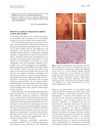
June 2010 in “Journal of The American Academy of Dermatology” This paper reports a single case of lichenoid cutaneous sarcoidosis that was unresponsive to standard treatments but showed marked improvement with the administration of oral tranilast.
March 2003 in “Rosa P: A digital library for transportation research (United States Department of Transportation)” This article presents a toolkit created by the FTA to help transit agencies manage employees' use of medications that could impact public safety, but it reports no new results.
226 citations
,
February 1999 in “British Journal of Dermatology” This study reported that a treatment regimen of oral rifampicin and clindamycin for 10 weeks effectively managed folliculitis decalvans, with most patients experiencing no recurrence after one or multiple courses.
January 2003 in “Hepatology” 10 citations
,
May 2020 in “Dermatologic therapy” In this study, a patient with recalcitrant lichen planopilaris and frontal fibrosing alopecia showed significant improvement after receiving four doses of the interleukin-23 monoclonal antibody tildrakizumab.
2 citations
,
January 2014 in “Dermatology Online Journal” This article reviews hair-thread tourniquet syndrome, discussing its demographics, causes, and current treatment methods, but presents no new clinical findings.
28 citations
,
January 1985 in “Journal of the American Academy of Dermatology” This report presents a case of pili torti in a young girl with citrullinemia, a novel association not previously documented.

This case study documented a 36-year-old woman with postpartum-onset frontal fibrosing alopecia who showed significant improvement in hair regrowth after early combination therapy with dutasteride, tofacitinib, and intralesional triamcinolone acetonide, suggesting potential benefits of multimodal treatment in this typically irreversible condition.
2 citations
,
December 2015 in “Journal of dermatology” This letter to the editor discusses excessive hair growth observed around local β-interferon injection sites for malignant melanoma but reports no new clinical results.
 37 citations
,
January 2023 in “Ophthalmology and Therapy”
37 citations
,
January 2023 in “Ophthalmology and Therapy” In this study, more than 25% of children experienced axial length shortening greater than 0.05 mm/year following repeated low-level red-light therapy.
 September 2013 in “Hair transplant forum international”
 This abstract describes frontal fibrosing alopecia, a type of cicatricial alopecia identified in post-menopausal women, and reports no new clinical findings.
 March 2025 in “Journal of Cosmetic Dermatology”
 This study explored the effects of TTFE on male androgenic alopecia, finding that topical application increased hair density, follicular diameter, and scalp hydration while reducing water loss and sebum production in a 12-week trial.
5 citations
,
March 2021 in “Hepatitis Monthly” This study found that tenofovir alafenamide fumarate (TAF) is an effective and safer alternative to tenofovir disoproxil fumarate (TDF) for chronic hepatitis B, with fewer long-term side effects like nephrotoxicity and decreased bone density.
 3 citations
,
May 2023 in “International Journal of Molecular Sciences”
3 citations
,
May 2023 in “International Journal of Molecular Sciences” In this study, researchers observed that phospholipid-calcium carbonate hybrid nanoparticles effectively delivered Tofacitinib citrate topically, which significantly inhibited hair follicle apoptosis and promoted hair growth in a mouse model of chemotherapy-induced alopecia, compared to a traditional Tofacitinib solution.
January 2016 in “Indian dermatology online journal” This case report describes a 50-year-old woman with frontal fibrosing alopecia who showed no improvement despite multiple treatments, including intralesional triamcinolone and topical glucocorticoids.
4 citations
,
January 2023 in “Skin Pharmacology and Physiology” This study observed that an ointment containing pine turpentine oil, larch turpentine, and eucalyptus oil showed significant improvement over placebo in lesion evolution, responder rates, and patient assessments for treating acute folliculitis, while being well-tolerated across treatments.
January 2026 in “Dermatologic Therapy” This review discusses folliculotropic mycosis fungoides, highlighting its diagnostic criteria and therapeutic strategies based on disease staging, but does not report new clinical findings.
 3 citations
,
February 2024 in “Journal of the American Academy of Dermatology”
3 citations
,
February 2024 in “Journal of the American Academy of Dermatology” This source discusses that while oral JAK inhibitors are used for treating lichen planopilaris and frontal fibrosing alopecia, they carry significant risk of adverse events; two cases showed promising results using tofacitinib cream as a safer topical alternative.