November 2014 in “International Society of Hair Restoration Surgery” This announcement explains the Fellow designation for hair restoration surgeons meeting specific educational criteria, without reporting new research findings.
 21 citations
,
April 1982 in “Genetics Research”
21 citations
,
April 1982 in “Genetics Research” In this study, researchers observed that mice with the naked gene showed frequent absence of hair cuticle and cortical cells during follicle growth, with abnormal keratin deposition also noted.
 August 2020 in “Pakistan Journal of Zoology”
 This study identified a novel genetic mutation, c.429delC in the hairless gene, associated with atrichia with papular lesions in two Pakistani families.
 16 citations
,
November 2022 in “eLife”
16 citations
,
November 2022 in “eLife” This study found that specific genetic changes in both coding and noncoding regions may have independently driven the evolution of hairlessness in various mammalian species through accelerated evolution.
55 citations
,
April 2008 in “Clinical Genetics” This report identifies a novel mutation in the ST14 gene in a female with autosomal recessive ichthyosis with hypotrichosis, highlighting similar features to previously reported cases.
 6 citations
,
August 2012 in “The Journal of Pediatrics”
6 citations
,
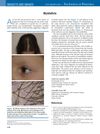
August 2012 in “The Journal of Pediatrics” This case report describes a 12-year-old girl diagnosed with monilethrix, characterized by fragile, beaded hair shafts, with no effective treatment currently available.
36 citations
,
September 2015 in “Orphanet Journal of Rare Diseases” This review discusses ichthyosis with confetti, highlighting its genetic basis, clinical features, diagnostic criteria, and current treatment options but reports no new clinical results.
In this study, researchers created a mouse model using CRISPR/Cas9 technology to investigate hypotrichosis simplex and woolly hair, finding that Krt71-knockout mice exhibited curly hair and developed complete hair shedding without immune deficiencies, mimicking conditions seen in humans and potentially aiding future hair disorder research.
August 2004 in “Veterinary Dermatology” This case report describes two guinea pigs infested with Acarus farris mites, which were successfully treated with Phoxim and removal of contaminated hay, leading to rapid resolution of skin lesions and alopecia.
51 citations
,
August 2013 in “The Journal of experimental medicine/The journal of experimental medicine” This study found that Wnt secretion is important for maintaining skin homeostasis in mice, as Evi-deficient mice developed psoriasis-like skin lesions and had an imbalance in immune cell populations.
June 2011 in “European Journal of Pediatric Dermatology” This study diagnosed an 11-year-old girl with initial androgenetic alopecia and monilethrix after observing unique hair shaft abnormalities and skin conditions, unlike her affected parents.
 44 citations
,
February 2012 in “The journal of neuroscience/The Journal of neuroscience”
44 citations
,
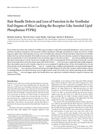
February 2012 in “The journal of neuroscience/The Journal of neuroscience” This study observed that Ptprq mutant mice exhibit significant abnormalities in hair bundle structure and vestibular dysfunction, suggesting similar issues may contribute to hearing loss and vestibular problems in humans with PTPRQ mutations.
 3 citations
,
June 2002 in “Transgenic Research”
3 citations
,
June 2002 in “Transgenic Research” This study suggests that inducible transgenic mice showing hair follicle changes similar to telogen effluvium in humans might serve as a useful model for understanding this type of hair loss.
 January 2011 in “Journal of Human Genetics”
 This study found a severe MBTPS2 gene mutation in a Japanese IFAP syndrome patient, suggesting other factors may influence the syndrome's clinical features compared to previously studied patients.
 December 2024 in “Genome Biology and Evolution”
 This study found that the Florida worm lizard has lost certain genes associated with claw development, which are present in other lizard species with claws, suggesting a link between the evolution of their limbless body and the loss of claw-related genes.
 January 2013 in “The Pan African medical journal”
 This report describes two cases of monilethrix in Afghan siblings, detailing the hair disorder's clinical presentation and potential influences on hair growth, such as hormonal changes and iron supplementation.
 June 2025 in “Journal of Biochemistry International”
 In this case report, the successful treatment of iodine deficiency in a one-month-old female buffalo calf with alopecia was described, highlighting the importance of early diagnosis and management to ensure proper growth and development.
October 2011 in “Indian journal of applied research” This journal's abstract provides no new research results, as it describes the profile and submission requirements for the Indian Journal of Applied Research (IJAR).
 September 2016 in “Journal of Dermatological Science”
 This study reports a case of GGCX syndrome in a 55-year-old Japanese male, characterized by PXE-like symptoms and coagulation deficiency, with an unreported phenotype of possible spinocerebellar degeneration.
 August 2016 in “Journal of Investigative Dermatology”
 This case report identifies a novel LIPH gene mutation linked to autosomal recessive woolly hair/hypotrichosis in a Japanese boy, expanding the spectrum of known mutations associated with this condition.
14 citations
,
January 2010 in “Dermatology” This study reports five cases of congenital triangular alopecia featuring a central island of short terminal hair, with the cause remaining unknown.
 January 2021 in “Veterinary research forum”
 In this study of a Holstein calf with severe congenital ichthyosis, researchers found increased plasma parameters and specific skin changes, highlighting the genetic and incurable nature of this disease in livestock.
 10 citations
,
March 2019 in “Human Genetics”
10 citations
,
March 2019 in “Human Genetics” This study identified a genetic variant in the SGK3 gene related to hairlessness in Scottish Deerhounds, suggesting a similar role for androgen-independent hair loss in humans.
16 citations
,
September 2006 in “The Journal of Immunology” This study identified that mouse MILL1 and MILL2 are glycoproteins distinct from human MICA/B, primarily due to their association with β2-microglobulin and TAP-independent surface expression.
 October 2023 in “IJEM case reports”
 This case report describes the diagnosis and management of a 15-year-old girl with complete androgen insensitivity syndrome, highlighting the importance of thorough physical exams for early detection and treatment planning.
This study suggests that specific genetic changes, including mutations in protein-coding genes and noncoding regions, have contributed to the evolution of hairlessness in multiple mammalian species.
 December 2013 in “Appetite”
 This study identified a nonfunctional Itpr3 gene in BTBR mice, attributed to a 12-bp deletion, which likely causes their simultaneous hair loss and taste perception deficits.
 9 citations
,
February 2018 in “The Journal of Dermatology”
9 citations
,
February 2018 in “The Journal of Dermatology” This study identified a novel splice site mutation in the LIPH gene associated with autosomal recessive woolly hair, contributing to understanding the genetic basis of this condition.
 December 2022 in “Curēus”
 This case report describes a 5-year-old girl with atrichia with papular lesions, whose diagnosis was confirmed through genetic testing identifying mutations in the hairless gene.
 11 citations
,
December 2014 in “The American journal of pathology”
11 citations
,
December 2014 in “The American journal of pathology” This study found that a genetic deletion causing truncated desmoglein 3 protein in mice led to severe pathologies, including cyclic hair loss and immunodeficiency, suggesting possible implications for human desmosome-related diseases.